
The Commodity Futures Trading Commission (CFTC) threw a lifeline to Kalshi on Tuesday, answering an appeal for help with an emergency declaration directing the company to continue operating in New York despite state orders to stop.
Unable to convince federal judges to stop New York from enforcing gaming laws against it, Kalshi petitioned the CFTC for relief immediately following a $36bn lawsuit filed by Letitia James, the state’s attorney general, according to a news release.
Chairman Michael Selig‘s emergency declaration marks the second time since 1980 the CFTC invoked that power, with the other coming last month when it ordered Michigan to stand up existing sports orders after that state also demanded Kalshi shut down such markets.
“The Commission finds that New York’s enforcement action and TRO motion constitute an emergency because they constitute a ‘major market disturbance which prevents the market from accurately reflecting the forces of supply and demand’ with respect to event contracts,” the order reads in part.
The regulator’s mandate sets up yet another court test of state vs. federal authority in overseeing prediction markets, as New York can appeal the emergency declaration to the Second Circuit or DC Circuit Court of Appeals.
What Selig said about New York v. Kalshi
Selig asserts that the CFTC ordered Kalshi to continue operations because the commission is “required by law to ensure order in (financial) markets.” Echoing the Trump administration’s recent pivot to messaging about communism in America, Selig assailed New York’s legal moves against Kalshi as part of an “iron curtain” of state authority.
“New York intends to make event contract derivatives waste away under its iron curtain of state gaming laws before the courts get the chance to issue final rulings,” Selig said in a statement. “Congress did not intend for derivatives exchanges to be regulated under a patchwork of state gaming laws.”
Selig responded directly to Kalshi “notifying it of an imminent market emergency that would arise if New York obtained a (temporary restraining order) against the company. Kalshi noted that the TRO would enjoin the operation of the DCM completely, not just a category of contracts, and would require the DCM to refund customers and disgorge profits from trades already completed.”
The order largely ignores the sports contracts at the heart of most state-level actions, instead focusing on markets with less interest from most traders to buttress its argument.
“If New York can force Kalshi to shut down, the market consequences would be swift and severe. Traders across the United States rely on exchanges like Kalshi to hedge and speculate on events associated with potential financial, economic, and commercial consequences.
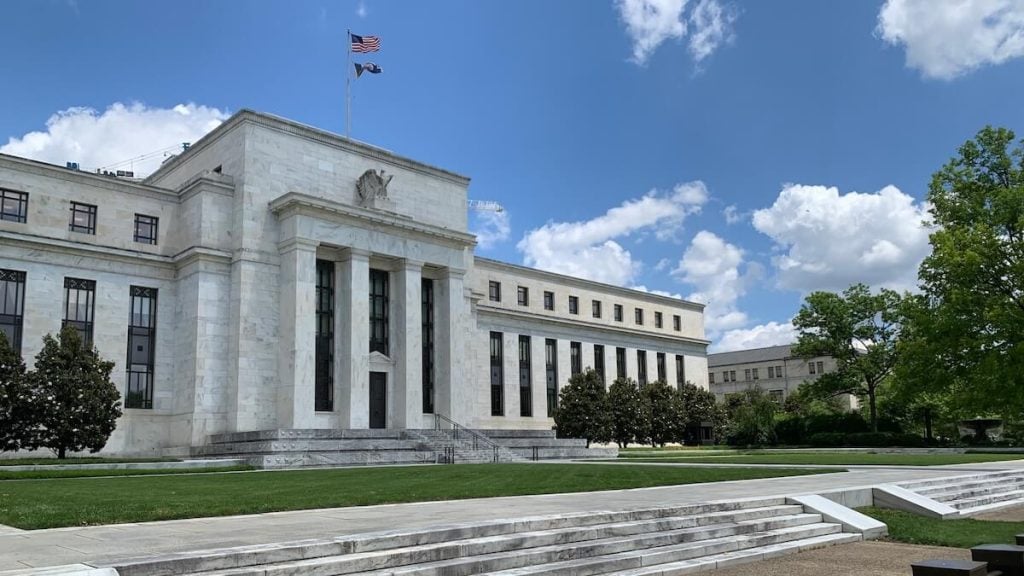
“For instance, traders can currently use Kalshi to take positions on whether the Federal Open Market Committee will move the Federal Funds Rate, when traffic in the Strait of Hormuz will return to normal levels, whether a crypto asset will reach a certain price, whether a State will experience a significant drought in a specific timeframe, and whether the United States will enter a recession in a specific quarter.”
SBC Americas requested comment on the CFTC action from James’s office but did not yet receive a response.
Is CFTC using Minnesota playbook?
Selig’s decision to utilize emergency authority appears pegged to what the CFTC sees as an open-ended portion of New York’s request for a temporary restraining order:
“The State also moved for a temporary restraining order (‘TRO’) that would prohibit Kalshi from ‘operating a business that offers contracts relating to sports, culture, elections, and other events’ ‘within or from New York or to persons in New York.’ New York offers no limitation on, or definition of, ‘other events,’ which means that it seeks to prohibit Kalshi from offering all event contracts.”
Attacking New York for casting too wide of a net in limiting Kalshi strongly resembles the reasoning of a Minnesota federal judge who gave the company its only recent court victory. Last month, Judge Katherine Menendez blocked Minnesota from enforcing a newly passed law banning all prediction markets in the state.
“… the exclusive jurisdiction Congress gave to the CFTC extends to transactions involving swaps that are conducted on DCMs, not to every conceivable event contract that Kalshi, Polymarket US, or any other DCM might host. If, as appears to be the case, Kalshi and Polymarket US are listing at least some event contracts that don’t meet the CEA’s definition of swaps, any permanent injunctive relief may be much narrower.
“But given the unique nature of Minnesota’s prediction market statute … a preliminary injunction maintaining the status quo until the merits of this case can be fully resolved is appropriate.”