
Our theory that there is never a quiet week when it comes to prediction markets bore out this week in a flurry of headlines, including:
- Gaming regulators worldwide pushing the Supreme Court to take New Jersey’s case against Kalshi
- The NFL and 39 states doing the same in separate SCOTUS filings
- Florida’s Seminole Tribe suing DraftKings over its prediction platform and more
Each Friday, SBC Americas rounds up some of the other developments you might have missed in ‘Prediction Markets Weekly’.
Tribes break ranks to partner with Kalshi
News emerged that four more Indian tribes in California and Oklahoma agreed to deals with Kalshi to launch prediction market apps:
- Alabama-Quassarte Tribal Town (Oklahoma)
- Alturas Indian Rancheria (California)
- Greenville Rancheria (California)
- Kletsel Dehe Wintun Nation (California)
- Alturas Indian Rancheria tribes (California)
This comes after Kalshi signed its first Tribal deal with the Tunica-Biloxi Tribe of Louisiana.
“More tribes are recognizing that federally regulated prediction markets offer a real path to new, sustainable revenue,” said Kalshi CEO Tarek Mansour, as quoted by CNN. “Prediction markets and Tribal economic development don’t have to be at odds. They can grow together … The future of this industry doesn’t have to be organized around conflict. It can be organized around opportunity, with Tribal nations participating as owners and helping shape what it becomes.”
Generally, Indian Country stands staunchly opposed to prediction markets’ expansion into sports, fighting the industry in public and in court. Organizations like the Indian Gaming Association (IGA) and California Nations Indian Gaming Association (CNIGA) are at the forefront of that effort, with the larger and more profitable tribes throwing their might behind litigation. All of the tribes partnered with Kalshi are comparatively smaller, independent nations.
The reporting brought responses from the likes of Pechanga Band of Indians member and IGA Conference Chair Victor Rocha and Oklahoma Indian Gaming Association (OIGA) Chairman Matthew Morgan.
“We view sports prediction market apps as undermining the Indian Gaming Regulatory Act and Oklahoma/tribal-state compacts by allowing illegal Class III gaming to infringe upon the sovereignty of tribal nations, and as undermining revenue streams that are critical to tribal government programs and services,” said Morgan.
“We are aware that out of the 575 federally tribes located across the country, a handful of tribes have signed a contract to offer a Kalshi-backed sports prediction market app. None of these tribes is a member tribe of OIGA, therefore we have no comment on their action.”
Federal government to review CFTC staff cuts
Over the last year or so, the Commodity Futures Trading Commission (CFTC) looked like a one-man show, given that the only one of the five commissioner seats currently filled is Chairman Michael Selig’s. That understaffing problem goes much deeper than the top level.
NPR reported on the extent of the agency’s staffing issues, writing that by the end of 2025, the CFTC had 21% fewer staff on its payroll than the previous 10-year average. Between January 2024 and January 2025 alone, staffing dropped 22%, and the number of CFTC enforcement actions fell almost 80% in 2025 compared to the annual average for the previous decade.
Now, the Government Accountability Office is investigating the CFTC for its workforce reduction after Sen. Elizabeth Warren (D-Mass.) asked the congressional watchdog to look into the matter this summer.
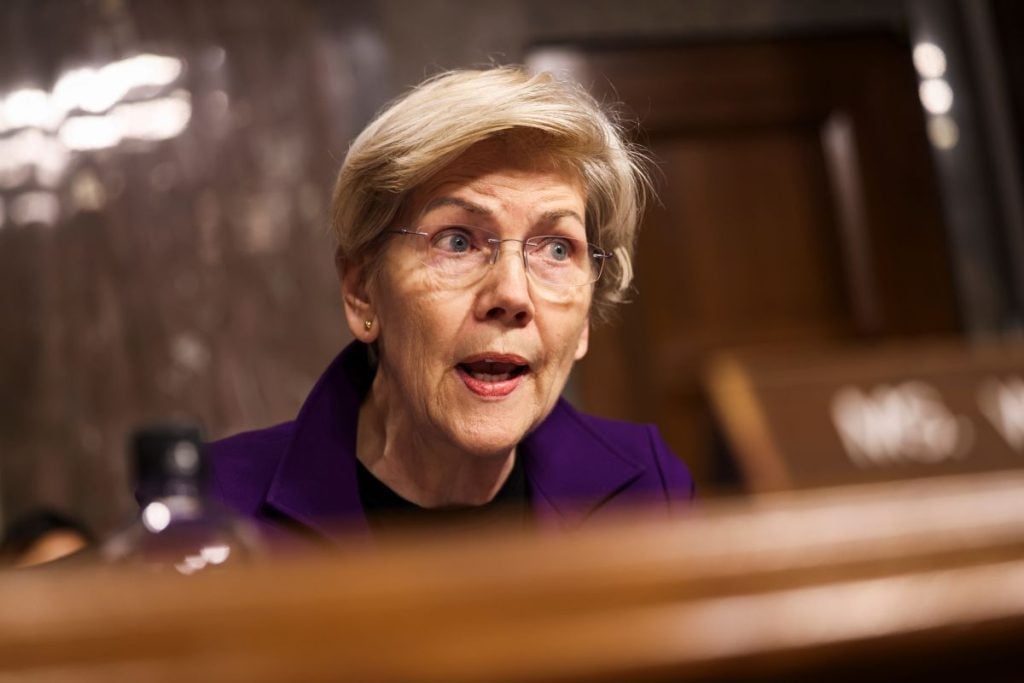
“I want to know whether or not the watchdog is actually out there doing a little barking, or has the watchdog been locked up somewhere back in the barn?” said Warren, as quoted by NPR.
The outlet notes that in the meantime, the Selig-led CFTC approved six new prediction markets registrants in 2025, three times the annual average over the last decade. It registered another six so far this year.
FanDuel owns FCM as CME Group gap widens
FanDuel was the first online gaming giant to announce plans to launch prediction markets back in August 2025 through a joint venture with CME Group. But amid skeptical public comments from CME Group Chairman Terry Duffy, major leadership changes at FanDuel and Flutter, and a glut of competition in the event contracts space, the company shifted its strategy.
First, it switched its sports contracts provider from CME to Crypto.com earlier this year. Now, it owns its registered futures commission merchant (FCM) license independent of CME.
National Futures Association (NFA) lists FanDuel-owned New Venture III LLC as a registrant as of Oct. 5., the result of a six-month application process. It is FanDuel’s second FCM, after the FanDuel Predicts platform that it co-owns with CME Group. FanDuel owns 49% of FanDuel Predicts, while CME Group holds the majority share.
In practice, the new independent FCM gives FanDuel more flexibility to pursue its own prediction markets strategy, including potentially by giving users access to contracts offered by designated contract markets (DCMs) such as Kalshi or Polymarket.
Acuña Jr. signs with Kalshi …
The Atlanta Braves‘ season might have ended, but Ronald Acuña Jr. secured himself a new teammate, becoming the first Major League Baseball player to sign a deal with a prediction market.
Kalshi broadcast its new ad with Acuña Jr. for the first time during Game 4 of the National League Division Series between the Braves and Dodgers on Wednesday, the game that eliminated Atlanta. Commercial and financial terms of the deal were not disclosed.
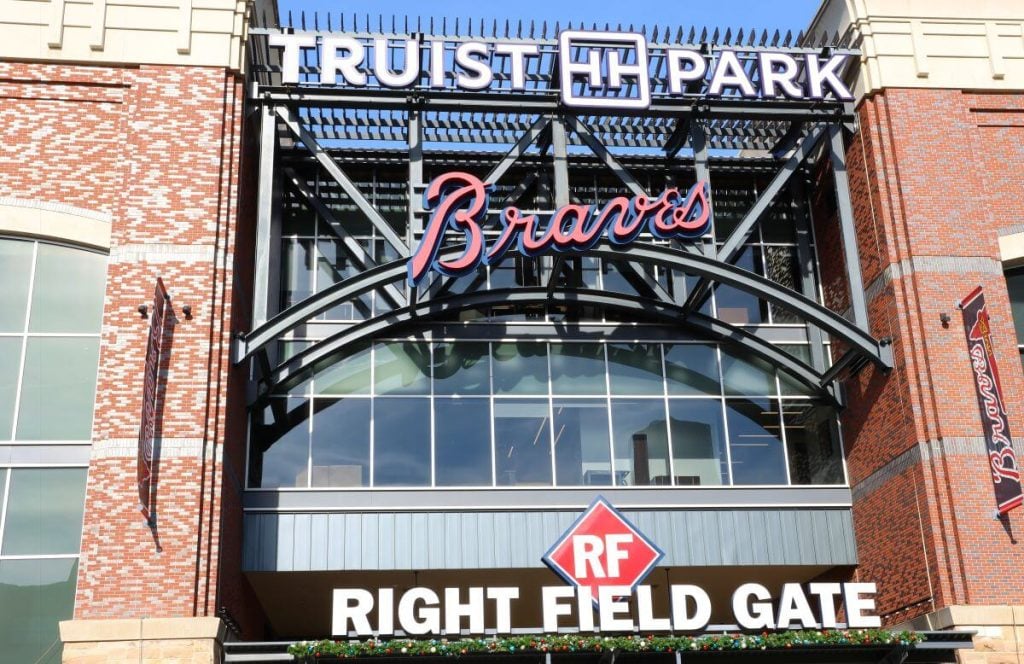
Acuña Jr. is far from the first athlete to associate themselves with prediction market operators. Kalshi counts the likes of Lionel Messi and Giannis Antetokounmpo among its affiliated celebrities, while Polymarket works with stars including LeBron James, Eli Manning, and Derek Jeter.
The Acuña Jr. deal is also the latest tie between the industry and MLB. Polymarket is an official prediction market partner of both the league and the New York Yankees, while Kalshi has official deals with five teams, including both Acuña Jr.’s Braves and the Dodgers. Novig was actually first out of the gate with a team deal when it signed with the New York Mets.
… while Wembanyama calls player-PM partnerships ‘sad’
In the same week that the Acuña Jr. ad dropped, another high-profile athlete decried his comrades’ decision to work with prediction market platforms.
As reported by outlets including The Athletic, San Antonio Spurs two-time All-Star Victor Wembanyama was asked if he would ever be a spokesperson for a prediction market company.
“Absolutely not,” he replied. “I will never do that. Honestly, I think it’s very sad to see some players promote it. Everybody does whatever they want, but without me …
“There was a dimension of money in the past. Not anymore. I’ve refused much, much more money than I’ve made for things that were not to my values. And now, I want to promote things that have a good impact, have a good influence, with who I can share messages and values. Obviously, we earn millions and millions — this is not our biggest strength. Our biggest strength is inspiring. I want to inspire in a good way. That’s the strongest thing I can do.”