
This week in prediction markets saw more litigation updates than most weeks, with significant court updates from Nevada, Minnesota, Wisconsin, and more, as well as the consolidated oral arguments related to Ohio and Tennessee in the Sixth Circuit.
And that’s just (some of) the court stuff. There was big M&A news, too, as Fanatics announced it is acquiring its own designated contract market and Underdog revealed that it agreed to a sale to UK-based IG Group valued at a total of $1.3bn.
What else happened this week? As always in Prediction Markets Weekly, we break down some of the things you may have missed amid the biggest headlines.
Second Circuit judge rejects Kalshi
In a week full of significant court developments, a judge in the U.S. Court of Appeals for the Second Circuit denied Kalshi’s motion for an injunction pending appeal. The company sought to block New York Attorney General Letitia James and other state officials from enforcing the Empire State’s gambling laws against Kalshi.
The judge declined to grant that immediate relief, meaning that New York can pursue injunctive relief and disgorgement against Kalshi in state court. The case will go before a three-judge panel in the appeals court, meaning that Kalshi’s wider appeal remains ongoing.
Kalshi’s latest setback comes after it was denied a preliminary injunction and emergency relief in federal district court in New York earlier this month. It now has no shield from enforcement actions in place in the biggest state-regulated sports betting market in the U.S., pending the next steps in the case.
Novig-Mets deal first MLB team prediction market partnership
Six weeks after Novig secured a Commodity Futures Trading Commission (CFTC) license to operate as a designated contract market (DCM), it made a splash on Thursday by announcing a deal described as the first partnership between a Major League Baseball (MLB) team and a prediction market platform.
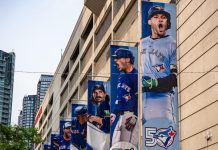
As the exclusive official prediction market partner of the New York Mets, Novig will get visibility across in-ballpark, broadcast, digital, and social channels, including prominent Citi Field signage, in-game and broadcast branding, and online digital and social content.
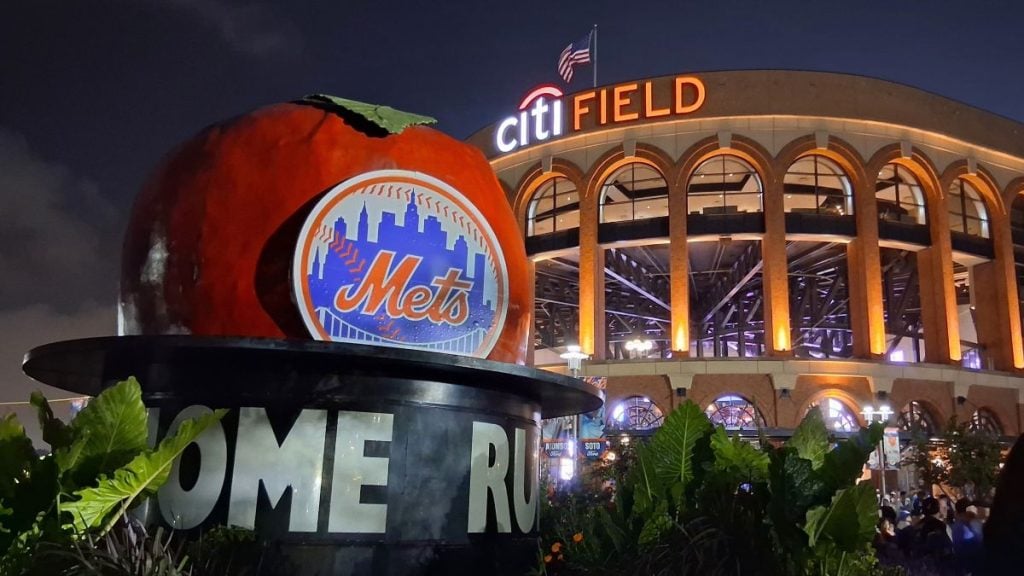
“Innovation is a defining characteristic of our business, and this partnership is another example of our commitment to staying at the forefront of the evolving sports landscape,” said Lew Sherr, the Mets’ President of Business Operations. “It reflects our broader goal of delivering unique experiences for our fans and continuing to attract industry-leading partners who want to grow alongside the Mets.”
Novig also revealed that it recently became an MLB Authorized Prediction Market, joining Polymarket with that status, and added that it intends to fully launch its prediction markets offering in August.
Novig CEO and co-founder Jacob Fortinsky said the collaboration introduces “a new way for fans to engage with the game that is transparent, regulated and built on integrity.” The designation establishes participation in MLB’s integrity program, which includes collaboration on comprehensive market monitoring, reporting protocols, and restricting markets that present an integrity risk to MLB.
Minnesota governor latest to issue executive order
Minnesota Gov. Tim Walz issued an executive order on Tuesday that will prevent state employees from using nonpublic information gained through their work in order to trade on prediction markets.
“It is clear that the Trump administration and companies like Kalshi are more interested in lining their pockets than protecting public trust and keeping people safe,” read a statement from Walz. “Regardless of Trump’s grift, I am taking executive action to reinforce the strong ethical standards we have in Minnesota.”
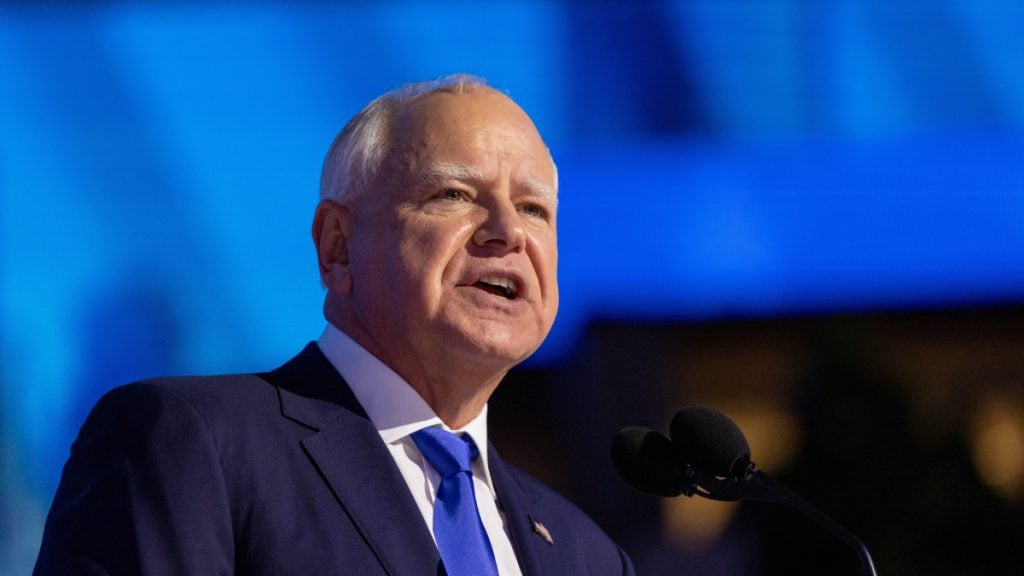
Walz’s move comes after federal judge Katherine Menendez granted the CFTC a preliminary injunction barring the state from implementing the law it passed earlier this year to ban all prediction markets from operating in Minnesota. The state was the first in the nation to sign off on a blanket ban after the legislation passed with bipartisan support in both the House and Senate.
Other state governors, including California’s Gavin Newsom and Arizona’s Katie Hobbs issued similar executive orders in recent months as the issue of insider trading on prediction markets stays top of mind outside the gambling industry bubble.
NCLGS takes predictable stance on predictions
In the same month that the National Council of Legislators From Gaming States (NCLGS) Summer Meeting put prediction markets discussion front and center, NCLGS published a new resolution outlining its official stance on the vertical. In short (and in unsurprising news), it states that “gambling policy should remain grounded in the authority of the states.”
“NCLGS exists to provide legislators with objective, substantive education on the most important issues facing gaming policy,” said Juliann Barreto, Chief Operating Officer of Spectrum Gaming Group, which serves as NCLGS Executive Director. “Prediction markets represent one of the most significant emerging issues confronting state policymakers, and we have ensured that our members hear directly from experts on all sides of the debate.”
NCLGS stressed that it supports the principle that states should retain primary authority over the regulation of gaming within their jurisdictions, and that the role of tribal authorities and gaming compacts should be preserved.
“As Congress and federal agencies continue to evaluate prediction markets, NCLGS encourages policymakers to carefully consider the impact that any federal action could have on existing state and tribal gaming policies,” the statement added.
Senate tribal committee next in line for prediction markets discussion
A queue is forming in Congress as committees line up to dive into the topic of prediction markets.
- In April, the House of Representatives Committee on Agriculture quizzed CFTC Chairman Michael Selig in a hearing
- In May, the Senate Commerce Subcommittee on Consumer Protection, Technology, and Data Privacy ended up having a lengthy discussion of prediction markets during a sporting integrity meeting
- In July, the House Committee on Agriculture’s Commodity Markets, Digital Assets, and Rural Development Subcommittee spent two hours focusing on sports contracts, market integrity, and the CFTC’s actions in court
Next week, it will be the turn of the Senate Committee on Indian Affairs, which will host a roundtable entitled ‘Tracking Prediction Markets’ Exponential Growth: Tribal Implications and Beyond‘ on Aug. 4. That committee, led by senators from Alaska and Hawaii has members from numerous states with deep tribal gaming ties and limited if any legal sports betting, including Minnesota, New Mexico, Oklahoma, North and South Dakota, and Washington.