
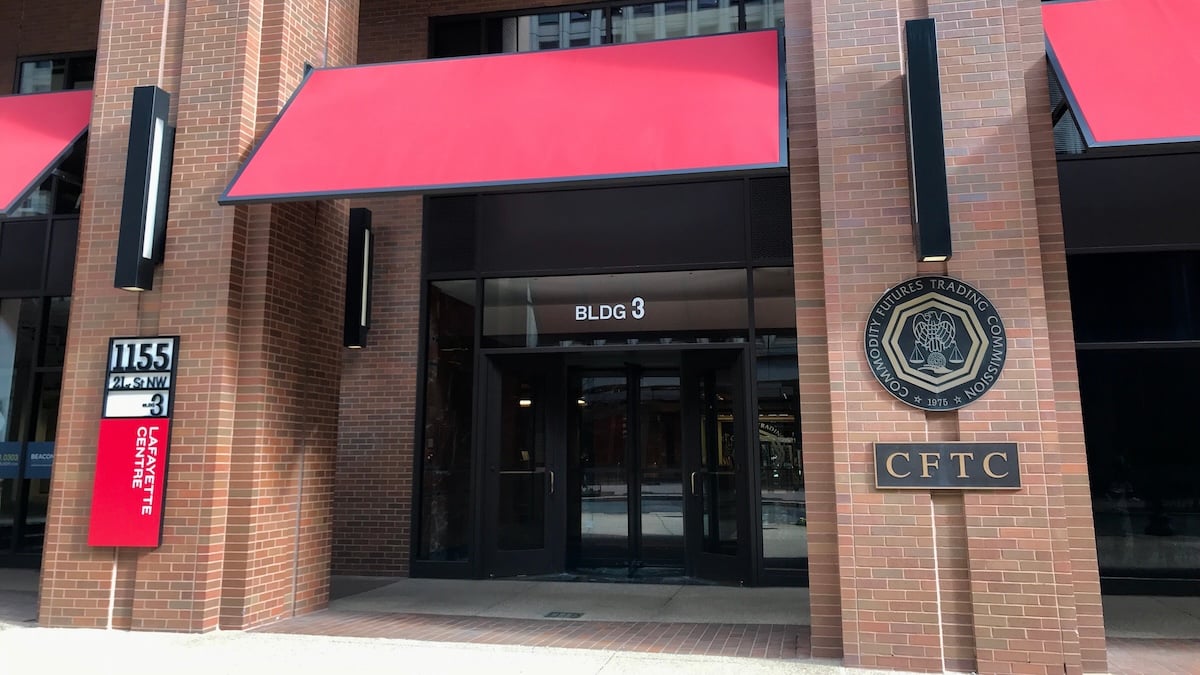
The Commodity Futures Trading Commission (CFTC) released an interim rule Friday aiming to separate sports event contracts from traditional sports wagers after recent federal court rulings cast doubt on certain similarities.
The interim final rule said bets placed with state- or tribal-licensed sportsbooks and casinos are not swaps under the Commodity Exchange Act or regulated by the CFTC.
“Casino-style gambling products are not derivatives,” CFTC Chairman Michael Selig said a release. “Just as the CFTC has done with respect to other products historically regulated by the states, the Commission today provides clarity regarding the limits of its regulatory remit by codifying the exclusion of casino-style gambling products from the ‘swap’ definition.”
The interim rule takes effect as soon as it is published in the Federal Register. Comments are due 30 days after publication.
In a separate notice requesting comments for proposed rulemaking to further define swaps, Selig said event contracts “are commodity derivatives squarely within the CFTC’s regulatory remit under the Commodity Exchange Act and are within the agency’s exclusive jurisdiction.” That rule will aim to define swaps to include event contracts based on “sports, politics, cultural, and weather-related events.”
The rules come while the U.S. Supreme Court weighs New Jersey‘s petition in Flaherty v. KalshiEX. In the past week, that petition drew supporting briefs from gaming regulators, 39 states and the District of Columbia, and the National Football League.
CFTC targets court arguments
The interim rule appears to be a direct response to the Sixth and Ninth Circuit rulings favoring states in their battles with prediction markets. Both courts ruled against Kalshi in part because they saw no legal difference between a sports event contract and a sportsbook wager. If one is a swap, they reasoned, the other must be too, which would put every sports bet under federal law.
The agency called the premise behind those rulings “erroneous” and said it led the courts to read limits into the swap definition that are not in the statute.
The agency said its approach is supported by the Third Circuit‘s April ruling for Kalshi in New Jersey. That ruling said that if “far-fetched scenarios” like bingo games or ping-pong matches arose, Congress had given regulators the power to “further define” swaps.
The rule said it “implements the Third Circuit’s suggested approach.”
How the CFTC definition works
The CFTC lists five ways event contracts differ from sportsbook bets, many of which echo prediction market contentions in court cases throughout the country:
- Event contracts trade on a central order book at prices set by the market, while sportsbook sets its own odds.
- Event contracts are cleared through a clearinghouse.
- Congress addressed “gaming” event contracts in the act’s special rule on event contracts.
- Exchanges have listed event contracts under federal oversight since the 1990s.
- In the derivatives industry, these contracts are known as swaps.
The agency admitted that “a person can achieve similar economic exposure” through either product. It argues that does not make the two the same, comparing them to insurance and credit default swaps.
The rule also said it does not change any legal rights, because the CFTC already treats sportsbooks as outside its jurisdiction. It describes the rule’s main benefit as reducing “interpretive uncertainty.”