KEY TAKEAWAYS
- A federal judge in San Francisco barred Kalshi from offering sports event contracts on the lands of the California tribes who are suing the prediction market operator.
- The order marks the first preliminary injunction any tribe has secured against Kalshi, following a September Ninth Circuit ruling that the contracts likely qualify as Class III gaming under IGRA.
- The tribal decision adds to a growing federal-state-tribal split over sports event contracts, which now awaits potential U.S. Supreme Court action.
Kalshi now faces a court order to keep its sports contracts off tribal land in California.
On Wednesday, U.S. District Judge Jacqueline Scott Corley of the Northern District of California granted tribes’ motion for a preliminary injunction in Blue Lake Rancheria v. Kalshi.
The order comes following a Ninth Circuit Court of Appeals ruling in favor of the tribes in September.
Is Kalshi legal in California on tribal lands now?
The one-page order enjoins the prediction markets operator from offering “any sports contracts” on the plaintiff tribes’ Indian lands. It covers contracts that “facially involve, relate to, or reference”:
- Baseball
- Basketball
- Boxing
- Chess
- eSports
- Football
- Golf
- Hockey
- Motorsports
- Pickleball
- Soccer
- Tennis
- Wrestling
- Ultimate Fighting Championship
The tribes must deliver maps of their California land boundaries to Kalshi by Nov. 13. The company then has 21 days to report to the court on the steps it took to comply.
Corley reverses course after Ninth Circuit remand
The injunction caps a turnaround in the case. Corley denied tribes’ first injunction request in November 2025. She found the tribes unlikely to succeed under either the Indian Gaming Regulatory Act (IGRA) or the Lanham Act, and she treated Kalshi’s yes-or-no contracts as products regulated under the Commodity Exchange Act (CEA).
The Ninth Circuit rejected that analysis in September. A unanimous panel held that Blue Lake Rancheria and Chicken Ranch Rancheria of Me-Wuk Indians are likely to succeed in showing Kalshi’s sports contracts violate IGRA and the tribes’ gaming ordinances when users enter them from tribal land.
“Kalshi may reshuffle the cards, but it cannot change the hand: Its sports event contracts are class III gaming,” Judge M. Margaret McKeown wrote.
The panel also rejected Kalshi’s argument that the contracts occur only where its New York exchange and servers sit. It found the contracts are “located on Indian lands” when a user buys one from tribal territory. Also, it held that even if the contracts were swaps, the CEA’s grant of exclusive jurisdiction to the Commodity Futures Trading Commission (CFTC) would not displace IGRA.
The Circuit panel then sent the case back to Corley to weigh irreparable harm, the balance of equities and the public interest. The panel affirmed the dismissal of the tribes’ Lanham Act false-advertising claim.
Irreparable harm separates California from Wisconsin
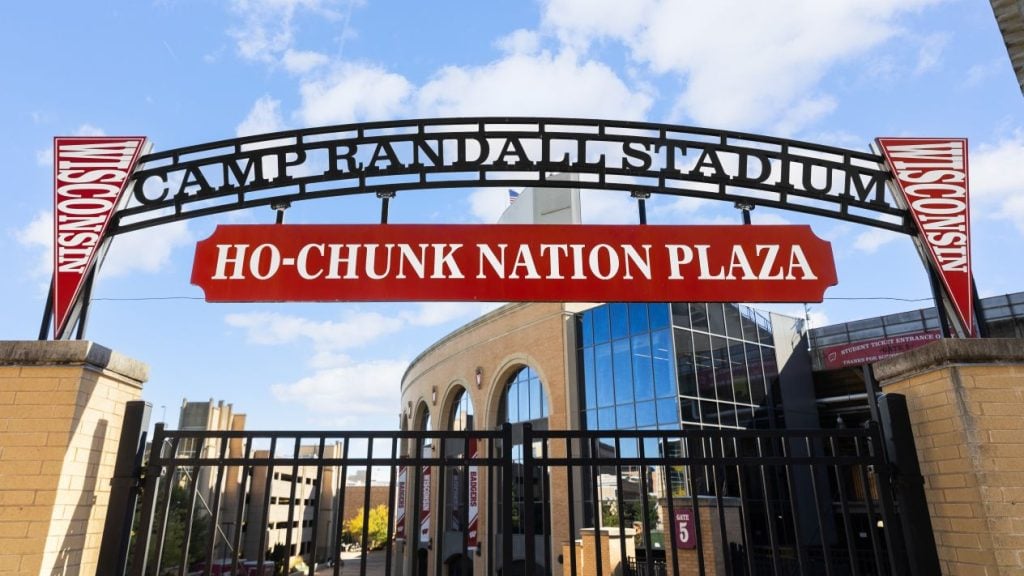
In May, U.S. District Judge William Conley denied the Ho-Chunk Nation‘s injunction request against Kalshi and Robinhood in Wisconsin.
Conley allowed the Ho-Chunk’s core IGRA claims to proceed but found no irreparable harm. He wrote that the tribe offered no evidence of declining casino attendance or revenue, or even one customer switching to Kalshi, and described any interim loss as marginal and compensable.
The California tribes were able to demonstrate irreparable harm to secure the injunction. Tribes elsewhere now have an appellate holding on the merits from the Ninth Circuit and a district court finding that the remaining injunction factors favor the tribes.
Nationwide fight likely heading to Supreme Court
The tribal case is one front in a broader national fight over who regulates sports event contracts.
The Ninth Circuit ruled on Aug. 28 in Kalshi’s Nevada case that its sports contracts are likely not swaps protected by the CEA, clearing state regulators to enforce gaming law. On Wednesday, the same panel denied Kalshi’s request for rehearing and rehearing en banc, leaving the U.S. Supreme Court as Kalshi’s only path to reverse that decision.
The Third Circuit reached the opposite conclusion in April, holding that the CEA likely preempts New Jersey‘s attempt to regulate Kalshi. New Jersey petitioned the Supreme Court on Sept. 2, and petitions from Robinhood and Crypto.com followed.
The Court extended Kalshi’s response deadline to Dec. 7.
A coalition of 130 federally recognized tribes and 15 tribal organizations filed an amicus brief urging the justices to take the New Jersey case. Attorneys general from 38 states and Washington, D.C., the NFL and the American Gaming Association filed briefs backing New Jersey as well.