State-level gaming regulators, legislators and attorneys general throughout the U.S. spent the past few months drawing clear lines on their views of the legality of prediction markets like Kalshi and Polymarket.
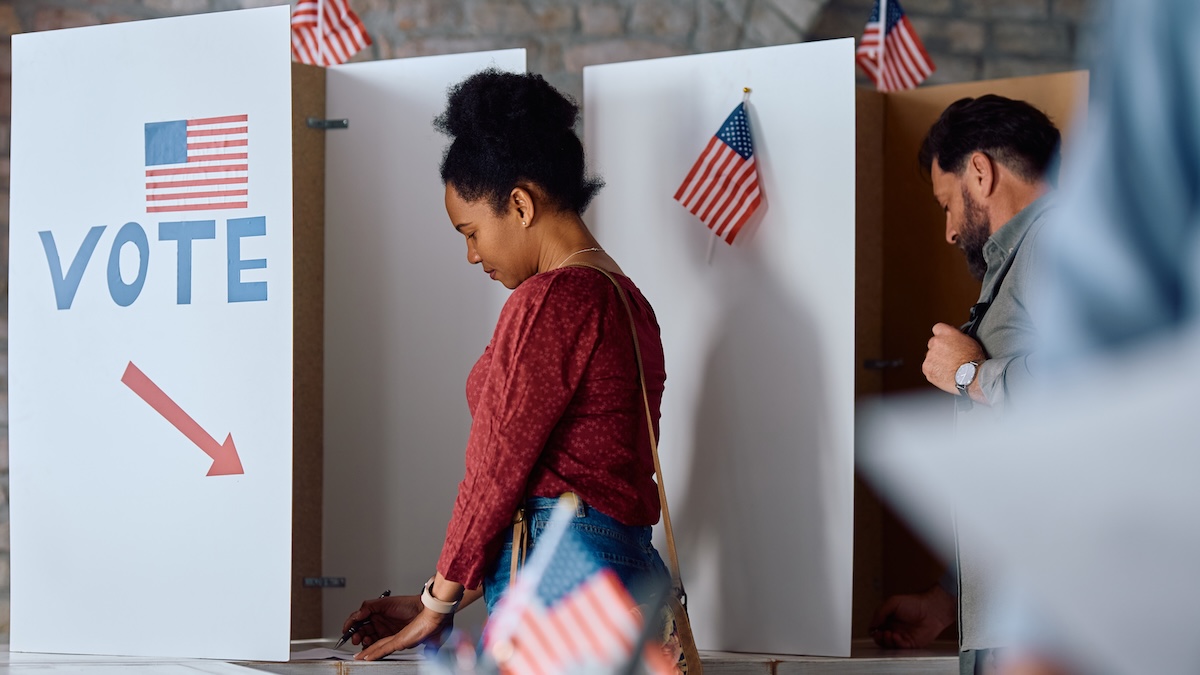
A new division of government could provide the next front of attack against prediction markets: elections departments.
A report this week from Maryland Matters details the misgivings held by Maryland Elections Administrator Jared DeMarinis about election-based markets. DeMarinis questions the lawfulness of money put down on the outcome of elections.
“To me, they are making a wager. They are making a bet,” DeMarinis told Maryland Matters. “Putting money in the prediction market, saying a candidate is likely to win or lose the election, is making a wager.”
Maryland’s stand on making a prediction markets ‘bet’
That view aligns closely with an April executive order from DeMarinis’s boss, Maryland Gov. Wes Moore.
Following the charges filed against an Army soldier for allegedly using classified information about military movement against Venezuela President Nicolas Maduro, Moore issued an order banning state employees from using nonpublic information for financial gain, notably via prediction markets.
“The recent rise of ‘prediction markets,’ which allow individuals to bet on the occurrence specific outcomes, or gamble on real world events, for financial gain has opened the possibility that State employees can use knowledge obtained through their government service to enrich themselves personally;” Moore’s order reads in part.
Whether to ‘go after’ prediction markets, traders or both?
Maryland legislators did not join those in the 15 other states that introduced some form of prediction markets legislation in 2026. As in other states, however, election betting is not legal in Maryland, a fact to which DeMarinis alludes.
“Whether or not I go after the prediction markets — I don’t know,” DeMarinis said in the report. “This is something we are looking at and it’s definitely under review.”
He later reinforced those remarks in comments for an ABC News story on election betting.
“If we have credible information about illegalities and it’s not within our civil citation authorities, we will of course refer those matters to the office of the state prosecutor for enforcement,” DeMaranis told ABC News. “This is going to be a growing issue and something that we need to stop in its infancy.”
Election betting started new prediction markets boom
Long before sports event contracts created the current legal furor around predictions operators, a lawsuit about whether those companies could offer election markets sparked the flame.
Kalshi’s 2024 court victory over the CFTC allowed the operator to resume offering election-based markets after being stopped a year earlier by the regulator. The original issue stemmed from Kalshi seeking to offer markets on which party would take control of the houses of Congress following the upcoming election.
A federal appeals court ruled that despite the then-CFTC chair’s contention that allowing prediction markets to take real-money action on political outcomes would the body into an “election cop”, the federal regulator did not meet the bar for proving it.
“Ensuring the integrity of elections and avoiding improper interference and misinformation are undoubtedly paramount public interests, and a substantiated risk of distorting the electoral process would amount to irreparable harm,” the ruling read in part. “The problem is that the CFTC has given this court no concrete basis to conclude that event contracts would likely be a vehicle for such harms.”
The CFTC’s approach to prediction markets changed drastically after Donald Trump won his second presidential term in November 2024. The regulator flipped from opposing event contracts for politics and sports to filing lawsuits backing the markets across the U.S. in the past few months.