
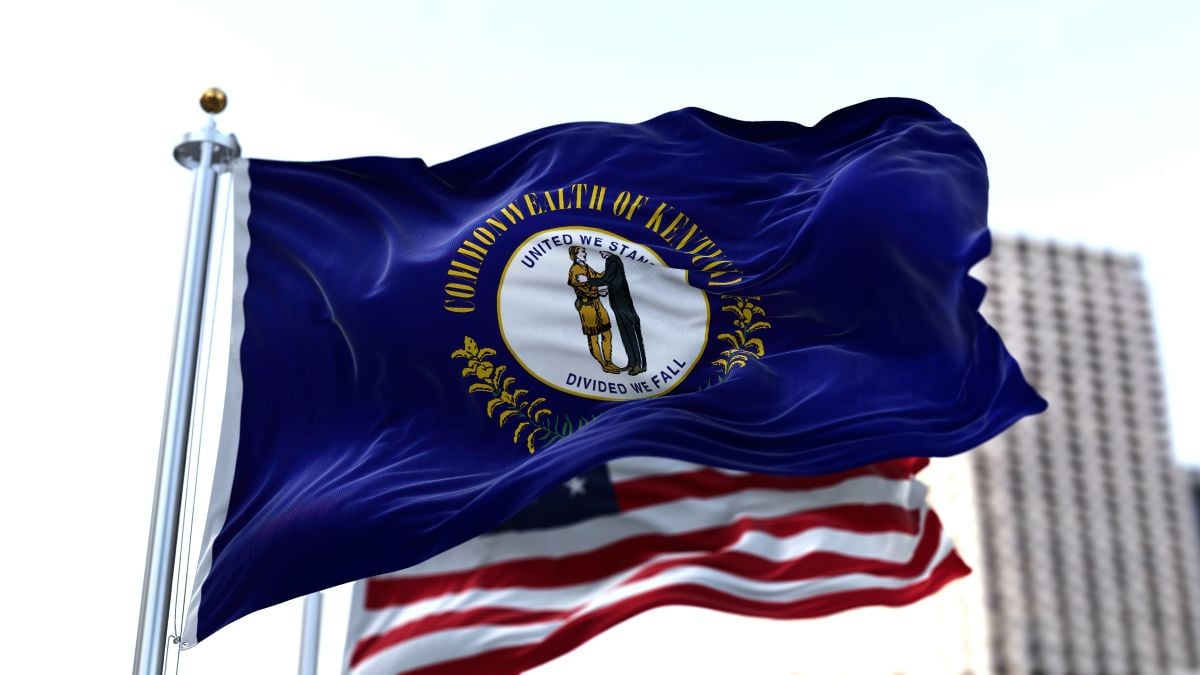
The Commodity Futures Trading Commission (CFTC) filed a lawsuit against Kentucky on Tuesday in a bid to block the Republican state from trying to tax and restrict prediction markets via a new state law.
In a press release announcing its latest legal action against a state, the federal agency cited Kentucky’s civil enforcement actions in state court against prediction market platforms, as well as the new law that looks to charge those operators for event contract trading within the state.
“Kentucky is the latest state attempting to shut down federally-regulated event contracts,” said CFTC Chairman Michael Selig in a press release. “Prediction markets provide Kentuckians with valuable information about the likelihood of future events and offer risk management products relied on by Kentucky businesses and individuals.
“As I’ve consistently pledged, the CFTC is firmly committed to maintaining its exclusive jurisdiction over prediction markets, and today’s lawsuit against Kentucky is yet another example of the Commission protecting its federal interests.”
What is Kentucky trying to do with prediction markets?
The fight in the Bluegrass State has emerged in recent weeks after the state passed laws that would do two major things:
- Tax all prediction market transactions in Kentucky at 14.25% of the contract price, starting Jan. 1, 2027
- Ban licensed gaming operators from working with operators or suppliers that facilitate event contract trading within the state, as of July 1, 2026

Earlier this month, a coalition of leading prediction market operators sued Kentucky officials, arguing that the new “discriminatory” taxation scheme unlawfully singles out federally regulated event contract exchanges. The Coalition for Fair Markets membership includes three big rivals in the prediction markets space:
- Crypto.com
- Kalshi
- Polymarket
Like the CFTC’s new filing, the coalition’s complaint asked for a preliminary injunction to block the state from enforcing the laws. In the CFTC’s new complaint, it claimed that the state-approved tax makes it “impossible” for prediction markets to operate in Kentucky.
Kentucky Attorney General Russell Coleman, a defendant in that lawsuit, told SBC Americas that his office would defend its statutes and its residents from “out-of-state companies that seek to cancel Kentucky’s sports betting laws.”
Within days, Coleman launched three new lawsuits targeting “illegal sports betting and gambling”, filing against not only Kalshi and Polymarket but also sweepstakes and social gaming giant VGW. The AG seeks permanent injunctions preventing the companies from operating in Kentucky, as well as significant civil penalties and restitution.
CFTC’s crusade against states turns red
By responding to the furor with its own litigation offensive in the U.S. District Court for the Eastern District of Kentucky, the CFTC illustrated yet again that it will continue to fight on behalf of its registrants against state governments and gaming regulators.
Kentucky is the ninth state to be sued by the CFTC over its stance on prediction markets, and the commission has also submitted amicus briefs to the U.S. Court of Appeals for both the Sixth and Ninth Circuits. The eight previous battlegrounds where the CFTC has chosen to take a stand are:
- Arizona
- Connecticut
- Illinois
- Minnesota
- New Mexico
- New York
- Rhode Island
- Wisconsin
Those eight states all have something in common: their respective governors are Democrats. Now, the Donald Trump administration’s CFTC has taken its court crusade across party lines; Kentucky is the first GOP-governed state to be sued by the CFTC over prediction markets.
In each case, like in the new Kentucky lawsuit, the CFTC alleges that states are overstepping their bounds by trying to ban, tax, or otherwise address federally regulated event contract platforms. The commission maintains that it has exclusive jurisdiction over such products and that its federal authority pre-empts state gaming laws.
In the opposite corner, states allege that prediction market platforms are violating their gaming laws, as well as other laws in some cases, with a particular emphasis on how sports event contracts resemble sports wagering.
Earlier this month, Selig’s CFTC published prediction market rule proposals that took a generally lenient and permissive stance on prediction markets’ sports offerings, a position that has received pushback from gaming associations, tribes and tribal gaming entities, former CFTC leaders, and more.