
A new poll of Americans with at least a basic understanding of prediction markets found that one in five respondents thinks the rise in popularity of the sector is a good thing for U.S. society.
The survey conducted by The Politico Poll in collaboration with Public First asked numerous questions of 1,667 adults, with a focus on people who “showed some understanding” of what prediction markets are.
The results suggest that the majority believe that event contracts trading is tantamount to some form of gambling, and that markets on elections and politics should be illegal. A significant proportion of respondents had concerns over rigged markets, insider trading, and the potential for increased gambling addiction.
Prediction markets not a net positive, say Americans
Noting that companies such as Kalshi and Polymarket allow adults to “bet” on things such as sports and elections, the first question in the survey asked: “Do you think prediction markets becoming more popular and widespread is a positive or negative thing for American society?”
In total, 20% of respondents said they believed it was a positive:
- Very positive: 7%
- Somewhat positive: 13%
- Neither positive nor negative: 28%
- Somewhat negative: 16%
- Very negative: 16%
- Don’t know: 24%
As with many of the sets of responses, the sentiment varied depending on age group. Around one in four men (24%) said they thought prediction markets were a positive, and the proportion climbed to 28% for people of either gender between 18 and 44 years old.
Small group has used a prediction market
Meanwhile, 6% of all respondents said they have placed a “bet” on a prediction market, equating to approximately one in every 17 respondents. More than half (53%) of the full sample size said they would not consider doing so.
The 18-34 demographic is the most engaged, with 12% having already used a prediction market platform and another 30% saying they would consider it. The level of existing use and openness to future use decreases steadily as people get older.
The poll also asked people with some familiarity with prediction markets whether they viewed them as a form of gambling.
More than one-third (36%) responded that prediction markets “are gambling platforms no different than sportsbooks and casinos,” while another 20% said that prediction markets “offer gambling products, but should be treated differently than sportsbooks and casinos.” Only 8% said that prediction markets do not offer gambling products and are more like financial exchanges.
So who should regulate prediction markets?
One-third (33%) said that the government should impose stricter restrictions on who can use prediction markets and what they can “bet” on. One in five (19%) said they thought the level of regulation is sufficient, while 11% said there should be looser restrictions on event contract trading.
So, as the federal vs. state battle continues in courts across the country, who exactly do Americans think should regulate prediction markets?
- Federal government: 28%
- Self-regulation: 17%
- States: 15%
- No regulation needed: 8%
Election trading, ‘mention markets’ should be banned
Another notable conclusion was that while more than half (53%) of respondents with some understanding of prediction markets said that betting on sports should be legal, and at least four in 10 said the same for predicting things like the weather and awards show winners, politics was a thornier issue.
Only 30% said they thought that prediction markets trading on election outcomes should be allowed, with 44% saying it should be illegal. Even fewer (27%) said that trading on comments that public figures like President Donald Trump might make should be legal, while 40% believe those kinds of so-called “mention markets” should be banned.
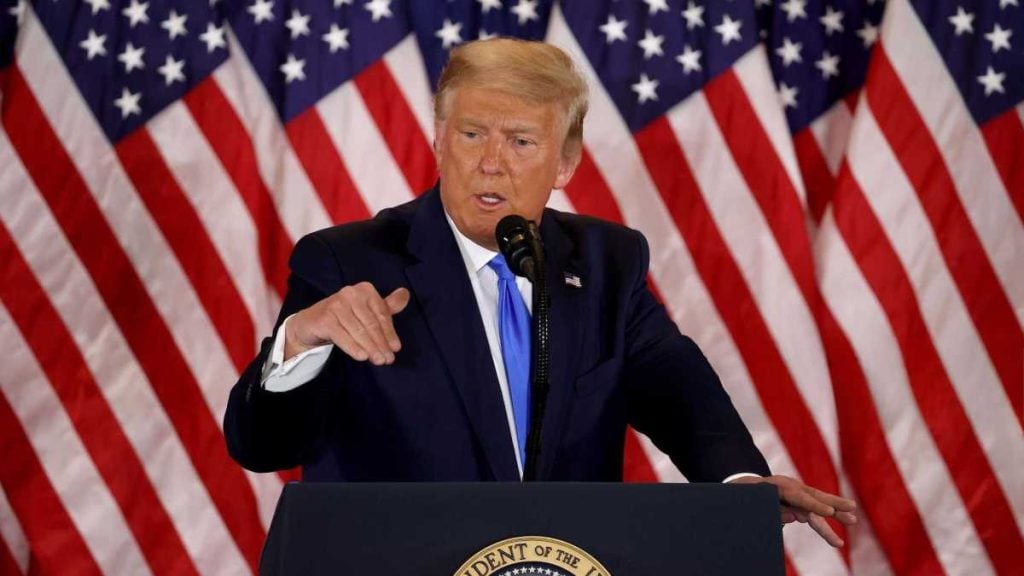
Even so, roughly one in seven (14%) of that cohort of respondents said that elected officials, candidates, and their staff should be allowed to bet on their own elections.
Manipulation, insider trading big concerns
The Politico Poll also asked all respondents (not only the cohort familiar with prediction markets) to list up to three of the biggest “downsides” of the rise in popularity of prediction markets, from a total list of 10 options.
The results demonstrated that, amid wider-lens controversies over trading manipulation and sport integrity, those were top-of-mind issues. The top four chosen responses were:
- “The market could be rigged or manipulated” – 28%
- “Increased gambling addiction” – 28%
- “People losing money that they cannot afford to lose” – 27%
- “Enables insider trading on the markets” – 21%
Plenty of informed people ‘don’t know’ about prediction markets
Finally, one of the most striking conclusions from the survey is that even those respondents who “showed some understanding” of prediction markets do not feel qualified to answer a lot of questions about them.
“Don’t know” repeatedly appears as a significantly popular answer throughout the survey. In particular, that response got roughly one-third or more of the votes in response to several fundamental questions about prediction markets, including:
- Whether the government imposes enough restrictions on the industry: 37%
- How comparable prediction markets are to online gambling: 36%
- Who should regulate the platforms: 32%
- Whether trading on “mention markets” (32%), celebrity events (32%) or gas prices (30%) should be legal