
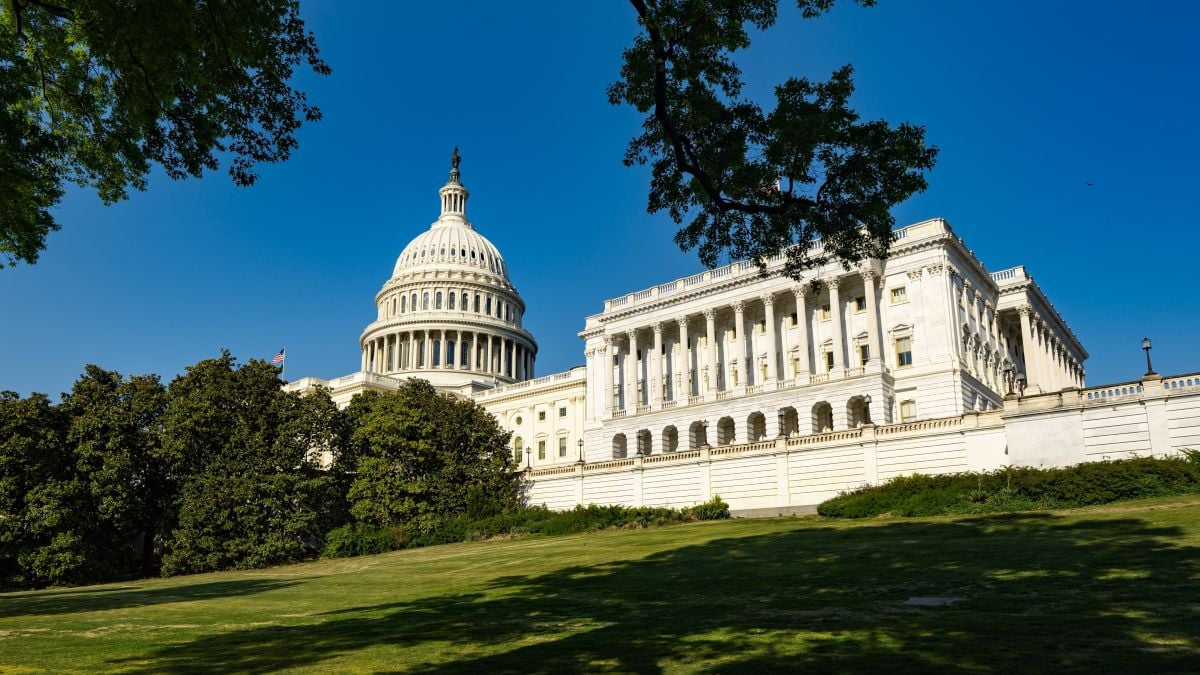
Several senior tribal gaming leaders and Ohio’s Solicitor General urged Congress to take swift and firm action to halt the spread of sports prediction markets at a Senate Committee on Indian Affairs roundtable on Tuesday.
Senators from states with close ties to tribal gaming, including several in which online sports betting is not legal, heard opinions and testimonies from several people during the Aug. 4 session:
- Tehassi Hill, Vice Chairman of the Indian Gaming Association (IGA)
- Jamie Hummingbird, Chairman of the National Tribal Gaming Commissioners & Regulators (NTGCR)
- Dr. Harry Levant, Director of Gambling Policy at the Public Health Advocacy Institute
- Mark Macarro, President of the National Congress of American Indians (NCAI)
- Mathura Sridharan, Solicitor General, State of Ohio
When is sports betting not sports betting?
The roundtable followed trains of thought similar to those expressed by tribal organizations and state authorities for more than a year. Fundamental is the idea that sports event contracts are functionally no different from sports betting, and they therefore undermine state gaming authority and tribal exclusivity, and threaten tribal revenues.
“They claim to be innovators, but they have invented nothing,” Hill said of prediction market platforms, with Kalshi and Polymarket in particular cited by name throughout the meeting. “Prediction markets offer bets identical to those of legal, regulated sportsbooks: moneylines, totals, parlays, prop bets. The difference is that prediction markets avoid our regulatory systems to protect consumers and the integrity of American sports.”
That view was shared by the Vice Chair of the committee, Sen. Brian Schatz (D-Hawaii), in his opening remarks: “I want to quote a federal judge in the Ninth Circuit on pending litigation: ‘It looks like gambling to me’.
“We forget to look at the app and see how it may or may not differ from FanDuel or [Bet]MGM sports betting. The real answer is that if you want to bet on the Philadelphia 76ers to win the NBA championship, you can do so through a gambling app, or you can do so through a prediction market app. The consumer experience is exactly the same.”
Why does CFTC only have one commissioner?
Tribal leaders and organizations have pushed back against prediction markets on numerous occasions through several avenues since last year, including letters to the CFTC, written and verbal pleas to Congress, and lawsuits in multiple states.
“No one voted for this,” said the IGA’s Hill, who is also Chairman of Wisconsin’s Oneida Nation. “Congress did not pass a law. This is happening because one person has declared that online sports gambling is legal in every state, including Hawaii and Alaska, and on every Indian reservation.”
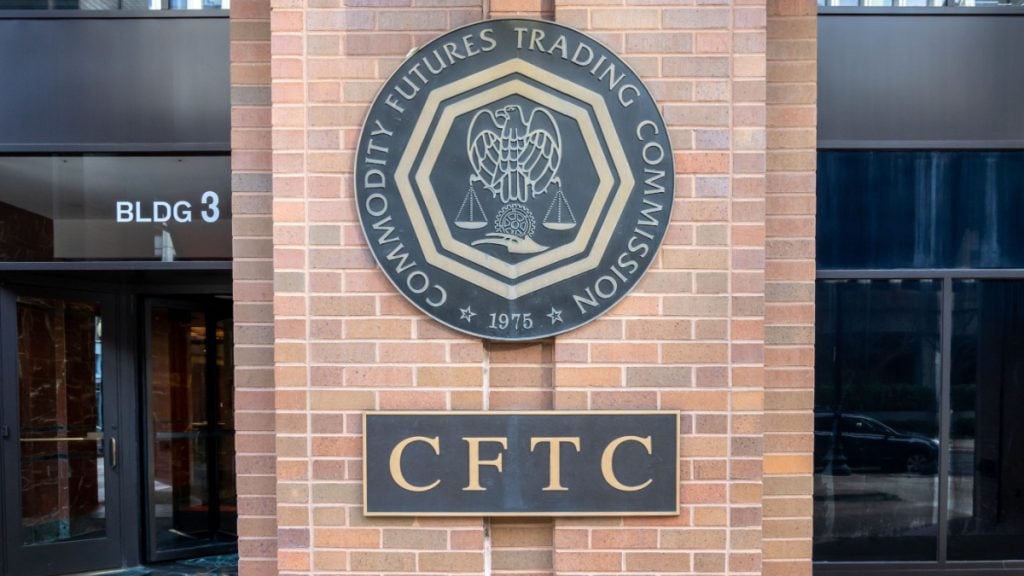
The one person to whom Hill referred is Commodity Futures Trading Commission (CFTC) Chair Michael Selig, whose agency issued a proposed regulatory stance on prediction markets in June that took a broadly permissive view on sports event contracts.
Just as happened two weeks ago during a House committee meeting on prediction markets, members scrutinized the fact that while the CFTC is supposed to be made up of five commissioners, Selig is the only one in place. Macarro urged the importance of staffing the commission fully, calling its current setup “an abomination”.
CFTC’s lack of tribal consultation is ‘glaring’
Macarro said Congress must focus on enforcing the existing provision within the Dodd-Frank Act that suggests that the Commodity Exchange Act itself prohibits event contracts on “gaming”.
In her own opening remarks, committee chair Sen. Lisa Murkowski (R-Alaska) noted that she and Schatz sent a letter to the CFTC to urge the commission to conduct extensive formal tribal consultations. That, tribal leaders maintained, simply has not happened.
“The CFTC is advancing prediction market products that function like gaming without ever sitting down with the tribes whose economies and legal rights are directly in the crosshairs,” said Macarro, who also serves as chairman of the Pechanga Band of Mission Indians in California. “There has not been a formal notice, nor a meaningful dialogue, not even an acknowledgment that, as a federal agency, the CFTC does have a responsibility to tribal nations to consult.
“This failure is especially glaring, given the stakes.”
Those stakes, said the tribal leaders, include potentially millions of dollars in lost revenue for tribes, job losses, and forced reduction of Indian support services.
“What is about to happen to Indian country’s revenue pales in comparison to anything that we could do to replace it,” said Schatz.
What can Congress do to rein in prediction markets?
Simply put, said the witnesses, the federal government and Congress are on the verge of setting what Macarro called “a dangerous precedent”.
Hummingbird laid out Indian Country’s argument in one sentence: “If the federal government permits CFTC-regulated platforms to offer sports wagers nationwide outside of tribal and state gaming systems, it would create a federal loophole that bypasses [the Indian Gaming Regulatory Act], undermines tribal-state compacts, and displaces nearly 40 years of hard-won intergovernmental cooperation.”
The roundtable panelists had several suggestions for how Congress should act. Hill urged federal legislators to:
- Advance the Prediction Markets Are Gambling Act, which would ban sports betting- and casino-style event contracts
- Enforce a similar ban by ensuring that the pending CLARITY Act includes language to prohibit sports and casino prediction markets
- Stop “the outrageous CFTC rule proposal that constitutes the height of regulatory agency capture”
Meanwhile, Sridharan, whose state is fighting legal battles including against Kalshi in the U.S. Court of Appeals for the Sixth Circuit, cast aspersions on whether or not the CEA is fit for purpose as enabling legislation for prediction markets. Arguing that there is a “fundamental difference” between sports betting and the kind of traditional derivatives the CEA was built for, she told senators that the CLARITY Act must explicitly define whether the CEA covers sports contracts.
“It’s not just about whether state law is preempted, which is the second question; the first question is: Does the Commodity Exchange Act even cover this?,” Sridharan said. “… What we’re looking for is the clear definition that this new financial market should not allow these type of gaming prediction markets in the way they’re trying to do right now with wagering and gambling. I think that would be very helpful.”
If Congress concludes that a federal rule is appropriate, Sridharan added that it must build upon state knowledge of regulating gambling, not replace it. “States have developed deep expertise in licensing, consumer protection, responsible gaming, integrity monitoring, enforcement, and protecting vulnerable populations. Those are precisely the issues prediction markets now present.”