
A federal judge in Utah on Tuesday denied a Kalshi ask for an injunction to stop state officials from enforcing gambling laws on the prediction markets operator.
U.S. District Court Judge Robert Shelby granted summary judgment to Utah, writing that the “court concludes the federal law relied upon by Kalshi does not preempt Utah’s ability to enforce its anti-gambling laws.” Shelby found the prediction market company’s argument that language changes in the Dodd-Frank Act allow for federal preemption to be an “implausible” reading of Congressional intent.
” … Kalshi concedes gambling is a field that has been ‘traditionally regulated by the states,’ not the federal government,” Shleby writes.
“The Supreme Court has stated that it is ‘quite sure the Government has a substantial interest in supporting the policy of [non-gambling] States, as well as not interfering with the policy of States that permit [gambling].’ Congress has attempted to support States in these efforts ‘since the early 19th century.’ It is simply implausible that Congress would silently reverse course though an Act addressing the 2008 housing financial crisis.”
Shleby also addresses the common argument made by prediction markets that they cannot comply with their federal requirements as well as state gambling laws.
“Kalshi has not demonstrated it would be impossible to comply with both Utah anti-gambling law and the CEA. Other than making conclusory statements that subjecting Kalshi to Utah law could eventually result in a ‘state-by-state patchwork’ that ‘would make operating a DCM functionally impossible,’ Kalshi has not explained why or how it would be impossible to manage different State requirements.
“Indeed, Kalshi’s event contracts each contain an appendix of ‘Trading Prohibitions’—some of which are specific to individual groups of people. Adding an additional category of prohibited participants in a sports-related event contract does not appear to be onerous. In short, Kalshi has not shown that compliance with both federal and state law is impossible.”
What happens next for Kalshi in Utah?
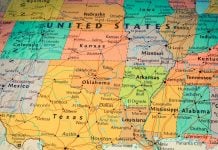
Should Kalshi choose to fight the ruling, its appeal would go to the Tenth Circuit Court of Appeals. The Tenth Circuit is comprised of:
- Colorado
- Kansas
- Oklahoma
- New Mexico
- Utah
- Wyoming
Utah state law does not allow any form of gambling. Governor Spencer Cox took aim at the Commodity Futures Trading Commission (CFTC) in February after its chair, Michael Selig, announced what would become the first of many court actions on behalf of prediction markets:
Just days later, Kalshi filed suit to block anticipated action against the company by Utah.
Kalshi run of hard luck with states continues
The Utah defeat continues a streak of unfavorable rulings for prediction markets operators:
- On Friday, New York AG Letitia James filed suit against Kalshi seeking $36 billion and the shutdown of the company’s operations in the state. James, on behalf of the state, filed in the first allowable minute after multiple courts denied Kalshi requests to prevent the New York State Gaming Commission (NYSGC) from enforcing an October 2025 cease-and-desist order.
- The Court of Appeals for the Sixth Circuit last week heard oral arguments in a combined consideration of opposing federal court decisions in Ohio and Tennessee about the legality of Kalshi’s offerings. Questions and comments from the panel of judges at times appeared pointed toward attorneys for the prediction market. “… There’s no express statement in the statute that Congress has said that licensure regarding gaming should be transferred from the state to the federal government. That just doesn’t exist,” Judge Eric Clay said about the company’s assertion that its offerings fall under the Commodities Exchange Act (CEA).
- Kalshi agreed last week to leave Nevada entirely by Aug. 12 after failing to geoblock users in the Silver State from accessing its platform. Geofencing users in any one state would appear to undermine the company’s argument for regulation under the CFTC, which most believe requires uniform access across the country.
- A local judge in Washington on July 20 granted an injunction preventing Kalshi from offering sports contracts, saying as part of ruling that the company “operates an online betting platform”.
The operator’s lone recent bright spot came from a district court judge in Minnesota, who temporarily blocked the state from implementing a new law banning all prediction markets.