
The Nevada Attorney General’s Office told an appeals court that Kalshi contradicted its own argument about the legality of prediction markets by accepting a new state-level tax on the products in North Carolina.
In a filing with the U.S. Court of Appeals for the Ninth Circuit, Nevada Deputy AG Abigail Pace argued that by not contesting North Carolina’s approved 6% tax rate on prediction market fees, Kalshi “undermines its arguments at every turn”.
Citing an Aug. 11 letter from Kalshi, Pace wrote in the Aug. 20 submission that although Kalshi maintains that the Commodity Exchange Act (CEA) leaves no room for state authority to be upheld alongside federal regulation of event contracts, the operator has in effect admitted that a state has the power to regulate its business.
The Nevada official described it as “stunning about-face, which would mean that (at a minimum) Kalshi cannot evade Nevada’s taxing provisions.”
Nevada says Kalshi undermined own pre-emption argument
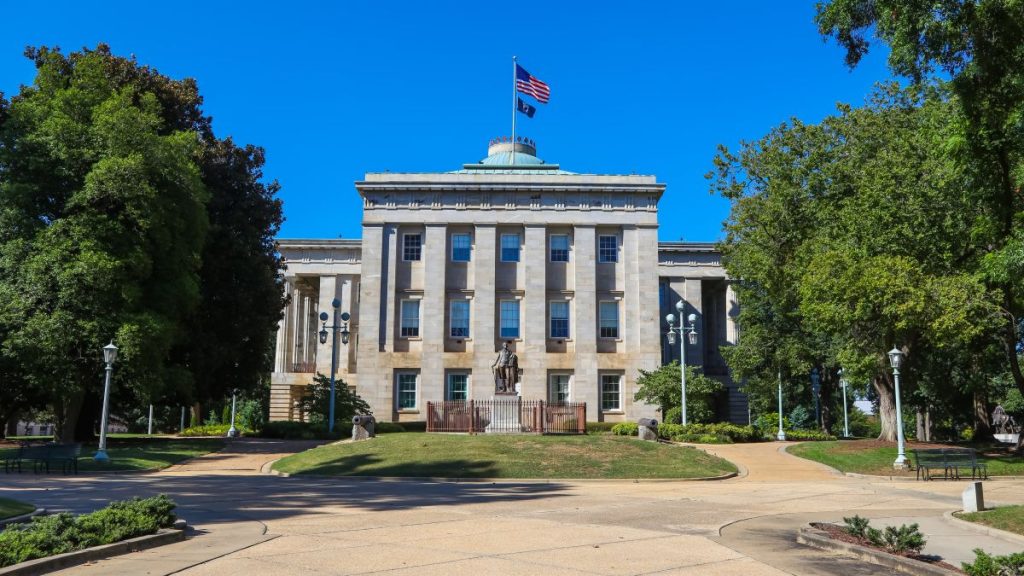
The bill referenced by Nevada’s new filing, S.B. 257, is the North Carolina state budget bill that Gov. Josh Stein signed in early July. That ratified a new levy of 6% on prediction markets’ net trading fee revenue, which is set to go into effect on Jan. 1, 2027.
Nevada cited a letter from Kalshi to the court in which the company allegedly argued that S.B. 257 validates the CFTC’s “exclusive federal regulatory authority” over sports event contracts. Nevada counter-argues that the North Carolina law confirms “that states have the authority to regulate appellants’ sports-, election-, and entertainment-related event contracts.”
“S.B. 257 acts directly in the very field Kalshi claims is preempted — on-DCM transactions,” added Pace’s filing. “Kalshi attempts to draw a distinction between regulating its contracts and taxing its revenue from these contracts, but that is purely a formalism. Both are forms of regulation by the state.”
Kalshi’s Head of Communications Elisabeth Diana responded to SBC Americas‘ request for comment by stating: “We can be federally regulated and pay state taxes.”
When does taxation become regulation?
According to Holland and Knight LLP Partner Josh Kirchner, who is also deputy team leader of the law firm’s gaming practice, that’s a fair statement “in a vacuum.”
Kirschner told SBC Americas that he does not believe that Nevada’s argument, framed in the way that it is, holds much weight. The Supreme Court decided that a state has the authority to tax otherwise federal activity that is preempted on either jurisdiction or conflict, he said, citing things such as interstate telecommunications and transport as examples.
“A state levying a tax within certain parameters does not necessarily eliminate preemption arguments,” Kirschner added. “One of those parameters would be where you’re taxing so punitively, or in such a way, that a court reasonably perceives it to actually be a regulatory roadblock that would violate the Supremacy Clause.
“I do think the North Carolina law, which was clearly written very carefully, does satisfy that narrow scope of a tax focused on state apportionment that does not discriminate in any meaningful way and is not kind of a stand-in for actual regulation of a field. I think it’s on safe ground there.”
The question, noted Kirschner, is where the line is drawn. He added that North Carolina’s statute requires that taxable prediction markets platforms must be registered with the Commodity Futures Trading Commission (CFTC) as a designated contract market (DCM) and comply with the CEA and its implementing regulations.
“Well, does that step beyond the bounds of purely levying a tax? Now you’re saying to them you also have to be federally compliant. Even if that doesn’t necessarily create a conflict with federal law and regulation, it is still a state regulatory or legislative overlay onto federal law … How far can that go before you reach the point of saying this is a stand-in for regulation that attempts to preempt federal law?”
No prediction markets court challenge in NC
S.B. 257 made North Carolina the third state to enact legislation this year that seeks to tax prediction markets, but there is a key fundamental difference.
The respective prediction markets tax measures in Illinois and Kentucky that passed earlier in 2026 each included not only a tax, but also attempts to license and regulate event contracts in a similar vein to online sportsbooks. Those two bills were each challenged in court:
- The Coalition for Fair Markets, which includes Kalshi, Polymarket US, and Crypto.com, sued Kentucky on June 12 to try to stop that state’s licensing and taxation plan for prediction markets
- The Commodity Futures Trading Commission (CFTC) then filed its own lawsuit in Kentucky on June 23, seeking a preliminary injunction against the state
- Meanwhile, Kalshi took the state of Illinois to court in an attempt to block its legislation that would require prediction market operators to pay licensing fees and a transaction tax fee
While the CFTC and its registrants took up arms against those bills, they mounted no such court challenge to the North Carolina law, which adds a tax but does not implement any licensing or regulatory requirements on prediction markets. Some observers have opined that by charging a tax on prediction markets but not regulating them, North Carolina has “tacitly approved” the products.
Kirschner opined that Kentucky and Illinois laws “certainly are punitive” in comparison with North Carolina. He added that Kalshi has made a fair distinction between the pure tax bill and the broader regulation legislation.
“[Congress] was silent on taxing authority, and I do think it’s a fair reading of U.S. jurisprudence to say that silence should read as an implicit approval to allow for state taxation of federal activity,” he explained. “But those two statutes certainly go above and beyond purely tax. In North Carolina, we’re really parsing the fine points of what is the difference between a tax regime that is not meant to be punitive and a tax that’s a stand-in for a regulatory regime.
“What Nevada is trying to accomplish here is to basically encourage the court to take the view that taxation and regulation are one and the same … I think Nevada is being very expansive in its view of what is regulation.”
Kalshi geoblocked Nevada this month
The latest filing in the Ninth Circuit is another step in the conflict between Nevada and Kalshi over the casino-centric state’s attempts to enforce its gambling laws against the company. Federal judges heard oral arguments in that case, which began in March 2025, in April 2026.
Meanwhile, a parallel battle between the parties in state court led to Kalshi agreeing to shut down its operations in Nevada.
After the company admitted that Nevada residents were still able to access its event contracts despite a preliminary injunction, Kalshi said in late July it would geoblock sports and other contracts within Nevada as of Aug. 12 at the latest, via a GeoComply-provided solution.