
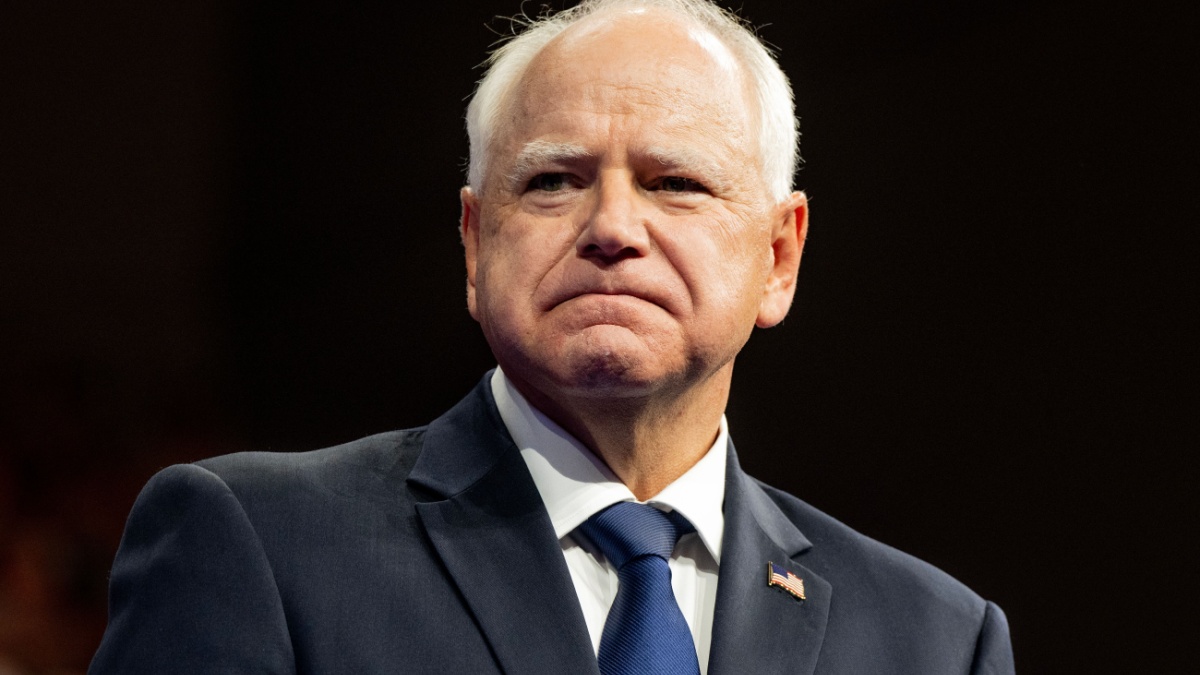
The Commodity Futures Trading Commission (CFTC) wasted no time in taking legal action against Minnesota after Gov. Tim Walz signed a prediction market ban into law.
On Tuesday, the CFTC announced that it filed a federal lawsuit against Minnesota in an attempt to prevent the state from imposing a ban on prediction markets starting Aug. 1.
According to documents filed in the U.S. District Court for the District of Minnesota, the CFTC is suing Minnesota, Walz and state Attorney General Keith Ellison, seeking injunctive and declaratory relief to stop the implementation of Senate File 4760, less than 48 hours after Walz signed the measure. Walz signed the legislation after House and Senate members advanced a committee report on the bill, sending it to his desk.
The measure is the first in the U.S. to explicitly ban the operation of prediction markets. It allows Minnesota to send cease-and-desist orders to prediction markets and outlaws event contracts based on sports, war, pop culture, weather and elections.
The measure also bans the advertising of prediction markets in Minnesota. Under SF 4760, the operation and advertising of prediction markets is a felony
“This Minnesota law turns lawful operators and participants in prediction markets into felons overnight,” said CFTC Chairman Michael Selig amid Walz signing SF 4760.
In the suit, Selig and the CFTC argue that the measure’s criminalization of the operation and advertising of prediction markets is “facially unlawful and unenforceable.” The basis for the argument is the CFTC’s “exclusive regulatory authority” over derivatives in the U.S., with the agency pointing to the Commodity Exchange Act (CEA) as the federal framework that allows the CFTC to oversee the operation of prediction markets nationwide.
The argument mirrors the CFTC’s legal proceedings in other states concerning the delivery of sports event contracts and whether the offerings provide access to “illegal gambling.”
CFTC brings farmers into latest argument
The CFTC also points to the use of prediction markets by farmers to “facilitate price discovery (information exchange), risk management (hedging), and speculation.”
“Minnesota farmers have relied on critical hedging products on weather and crop-related events for decades to mitigate their risks,” continued Selig. “Governor Walz chose to put special interests first, and American farmers and innovators last.”
The CFTC is seeking a preliminary injunction as the looming ban on prediction markets in Minnesota can have lasting effects, as other states debate the legality of the platforms.
“The injury to the United States, moreover, is irreparable and requires immediate injunctive relief. Constitutional violations, including Supremacy Clause violations, are always irreparable,” reads the complaint. “Furthermore, if Minnesota is permitted to enforce its law, the harm to the United States’s sovereign interests and regulatory jurisdiction could not be undone after final judgment. Preliminary injunctive relief is required to preserve the status quo during the pendency of the case.”
CFTC takes other states to court
Minnesota adds to a growing list of states facing lawsuits brought by the CFTC.
Last month, the CFTC teamed up with the Department of Justice to file lawsuits in three separate federal courts located in Arizona, Connecticut, and Illinois. The lawsuits were filed against governors and attorney generals in those respective jurisdictions.
The CFTC filed its suits in the three states to challenge “aggressive and overzealous” attempts by the states to oversee the regulation and operation of prediction markets.
“Despite the CFTC’s clear and longstanding exclusive jurisdiction to regulate event contracts under the Commodity Exchange Act, various states have attempted to outlaw, regulate, or otherwise restrain the activities of DCMs that facilitate trading in lawful event contracts,” said the CFTC in a statement last month. “Congress long ago decided that a national framework for commodity derivatives markets was preferable to the fragmented patchwork of state regulations.”
Most recently, the CFTC sued Wisconsin after its Attorney General Josh Kaul and the state Department of Justice filed civil lawsuits against a group of prediction markets. Kaul and Wisconsin filed the lawsuits claiming sports event contracts are illegal gambling.
The group of prediction markets facing legal action in Wisconsin include:
- Coinbase
- Crypto.com
- Kalshi
- Polymarket
- Robinhood
In Kaul’s suit, the state is seeking preliminary and permanent injunctions to prevent prediction markets from offering sports event contracts across the Badger State.
The CFTC’s response through a lawsuit of its own asks that the U.S. District Court for the Eastern District of Wisconsin declare that Kaul and Wisconsin’s actions are unconstitutional and violate the Supremacy Clause. The CFTC is seeking a permanent injunction against Kaul, Wisconsin, and Gov. Tony Evers.
The CFTC’s legal team is also in the midst of legal proceedings in New York, as the agency also seeks a permanent injunction against officials in the Empire State. The CFTC continues to argue its exclusive authority over prediction markets in New York, citing the CEA.
The suit was filed after the New York State Gaming Commission sent a C&D order to Kalshi in 2025, and the state sued Coinbase and Gemini for “illegal” activity last month.