This week has been busier than most in the world of prediction markets, from the CLARITY Act to the World Lottery Association’s warning to the furor over election betting in Wisconsin, and more.
But that’s the tip of the iceberg. This week in Prediction Markets Weekly, we highlight some of the things you might have missed.
Prediction markets: The Netflix docuseries
“I can’t wait for the Netflix documentary about this” has become something of a meme-ified reaction to a scandal or a high-profile talking point. Well, the prediction market docuseries is coming.
The streaming giant announced that the second edition of its Instadocs series, set to premiere on July 26, will peel back the curtain on prediction markets’ massive scale-up over the last year or so. ‘Instadocs: The Prediction Games‘ will feature interviews with the likes of:
- Commodity Futures Trading Commission Chair Michael Selig
- Kalshi CEO Tarek Mansour
- Polymarket CEO Shayne Coplan
Industry commenters such as The Event Horizon scribe Dustin Gouker were also interviewed during the making of the show.
And what would any kind of prediction markets-related announcement be without a firestorm? CNN reporter Marshall Cohen questioned the fact that the above trailer for the short-turnaround doc, which was filmed in Las Vegas in recent days, suggested people used Kalshi and Polymarket to trade on the FIFA World Cup final despite court-ordered Nevada bans.
He later stated that a Kalshi spokesperson told him that the company wants Netflix to take down the “misleading” trailer and said that one of the trades discussed in the trailer was placed in 2025, before the court order in Nevada.
Anyway, here’s your weekend viewing sorted.
Nevada Reps file bill to ban sports, casino contracts
Four months after Sen. Catherine Cortez Masto (D-NV) co-sponsored the ‘Prediction Markets Are Gambling Act‘ in the Senate, two Nevada Congressmen in the opposite chamber introduce the companion bill this week.
Reps. Steven Horsford (D-NV) and Mark Amodei (R-NV) filed the House version on Thursday. The legislation would ban event contracts based on sports events and is the latest piece of legislation to also directly reference “casino-style” prediction markets as products that should be banned at a federal level due to their similarity to state-regulated gaming.
“When it looks like sports betting, it acts like sports betting, and profits from sports betting, then it should follow the same rules as every other sportsbook,” Horsford told The Nevada Independent. “Regardless of which app a consumer uses, they deserve the same protection, and that has been the gold standard of regulation that Nevada has been built on, and it’s what we are working to ensure is protected.”
Horsford is also a cosponsor of the ‘Public Integrity in Financial Prediction Markets Act‘, which would prohibit federally elected officials and government employees from using insider information to bet via prediction markets.
Kalshi, AGA in a ‘lobbying arms race’
A report from CNBC looked at how the leading prediction market platforms and the American Gaming Association (AGA) have significantly increased their spending on lobbying across the U.S. as the bitter federal vs. state regulation battle continues in courts from coast to coast and as the number of prediction market bills filed in Congress continues to pile up.
Positioning it as “a lobbying arms race”, CNBC noted that both Kalshi and the AGA spent around $1.8m on lobbying efforts in the first half of the year, including spending from outside firms they each recruited. Kalshi spent around $1m in the entirety of 2025, while the AGA spent 30% more than it did in the same six-month period last year.
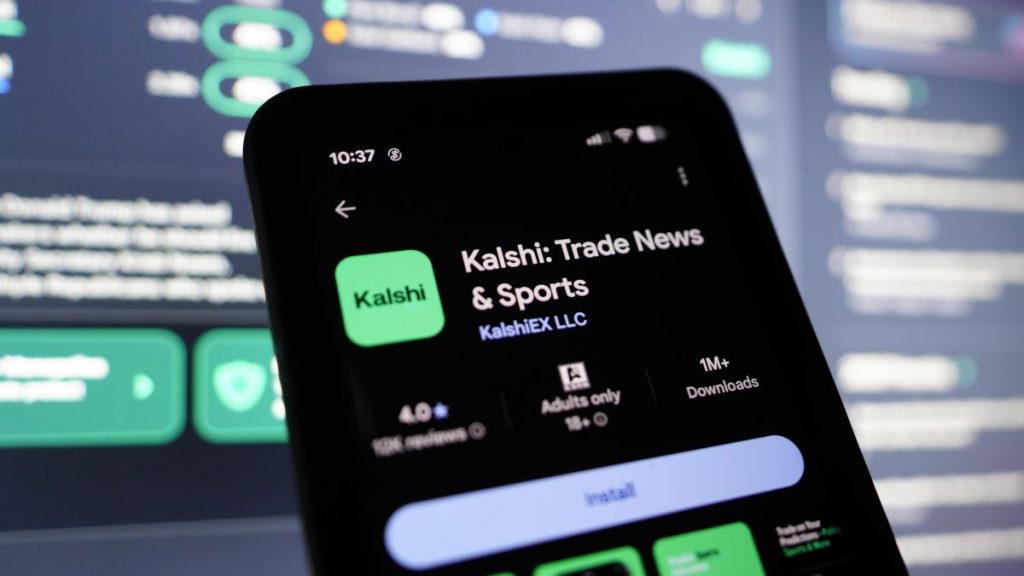
Kalshi has made several senior government relations hires in 2026, including:
- Former Biden administration liaison John Bivona as Head of Federal Government Relations
- Ex-Amazon policy guy Blake Bee as Director of State Relations
- Longtime Senate Republican Tony Hanagan as Head of Congressional Affairs
- Former Obama staffer Stephanie Cutter as a policy advisor
Is FanDuel partner CME Group having second thoughts on sports?
Established financial trading exchange CME Group was the first out of the gate to partner with a gaming operator on prediction markets when it teamed up with FanDuel last summer. But a Sportico report doing the rounds this week suggests that CEO Terry Duffy may be having belated misgivings about the proliferation of sports event contracts.
“We’ll try to keep the sports out of it because I’ve been pretty public about this,” Duffy said on an earnings call on Wednesday. “A lot of these prediction markets on sports are gambling, and I think that that is going to find its way to the Supreme Court, and that is not something that we want to be a part of participating in right now. I think a lot of these contracts are susceptible to manipulation when they list some of these small parlays and things of that nature, and those are not markets. Those are gambling.”
A CME Group spokesperson told Sportico that Duffy was referring to player prop- and parlay-style contracts that sportsbooks and prediction market apps offer, but which they said CME Group does not.
Duffy’s replacement-in-waiting and current CME Group President Lynne Fitzpatrick said on the earnings call that the company wants to be “very careful” to make sure that the kind of sports contracts it offers meet all the requirements of the Commodity Futures Trading Commission (CFTC). The CFTC’s guidance for proposed rulemaking around prediction markets, issued in June, suggested that while the commission thinks sports contracts are fine on the whole, certain markets including “singular action, event, or occurrence contracts” would likely be contrary to public interest because they pose an enhanced risk of manipulation.
With that note, we segue into …
Polymarket wants to let users trade on people being arrested
Understandably, the gaming industry tends to frame the question of what you should and should not be allowed to trade via event contracts in the context of similarities to and impacts on state-regulated gaming. Meanwhile, the wider mainstream discussion focuses on insider trading, politics, and real-world integrity concerns.
How do we feel about the idea of being able to trade on whether or not an individual person will be arrested?
Polymarket registered with the CFTC on Tuesday to self-certify several different swap contracts, including:
- “Individual Arrest Contract”
- “Disease Case Count Contract”
- “Pandemic Disease Contract”
Some social media users pointed out that this is not brand new. Kalshi, for instance, has offered some arrest contracts for a while.
AGA looks to intervene in CFTC vs. New York
Earlier in July, the AGA filed a motion to intervene in the CFTC’s federal lawsuit against the state of Wisconsin, asking to join the state’s Attorney General Joshua Kaul as a defendant. Now, it has made a similar move in New York, as reported by attorney Daniel Wallach.
The CFTC sued New York Gov. Kathy Hochul, Attorney General Letitia James, and New York State Gaming Commission (NYSGC) leaders in late April, days after the Empire State sued Coinbase and Gemini in a bid to stop the companies from offering trading on sports, elections, and certain other contracts. In a responding statement, Hochul and James accused the federal government of “prioritizing big corporations over consumers”.
The latest battle line in New York was drawn in the separate case between the state and Kalshi this month when a federal judge denied the prediction market platform’s motion for a preliminary injunction. Kalshi, which sued New York last year after receiving a cease-and-desist order from the NYSGC, quickly appealed the ruling.