The Wisconsin Elections Commission (WEC) this week took a stand against election trading, prompting pushback from two of the largest prediction markets in the country.
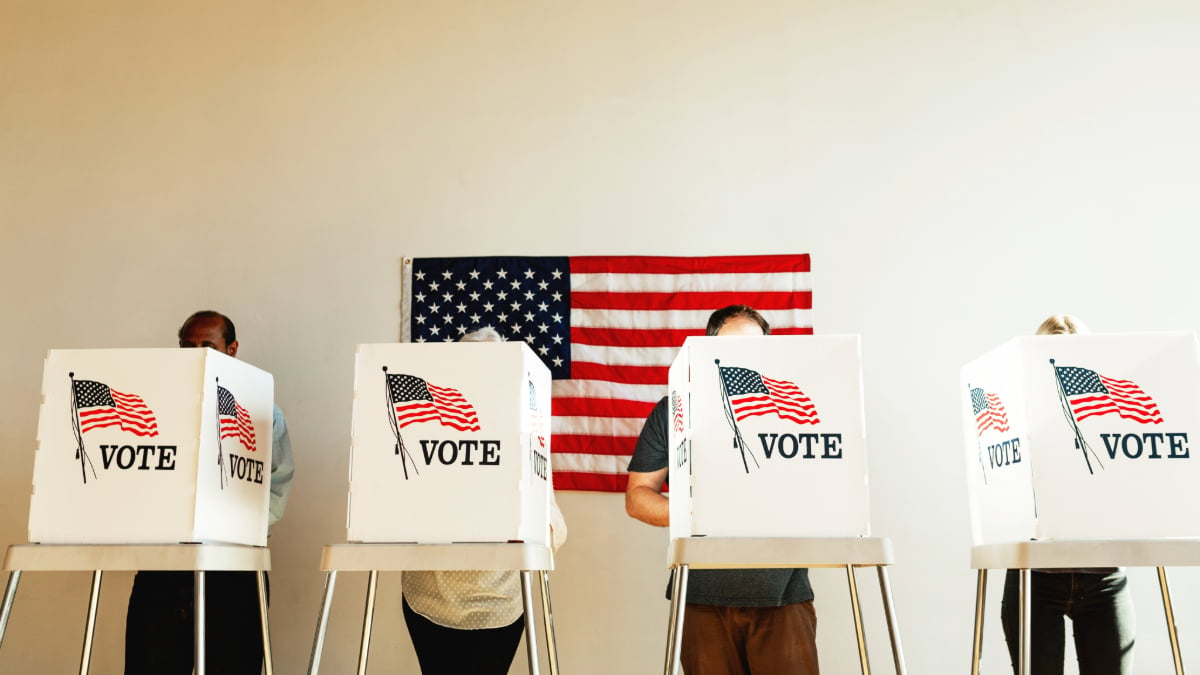
On Tuesday, the WEC issued a public notice warning registered voters that “election gambling” with prediction markets could put their state voting rights in jeopardy. The WEC is warning residents that “voter qualification administrative challenges” may arise if Wisconsin voters bet on an election and later attempt to vote in that same election.
“We want voters to understand that they cannot legally make a bet on an election and cast a ballot in that same election,” said WEC Administrator Meagan Wolfe. “We are not able to police someone placing a bet on these platforms, but it’s important for voters to understand the consequences if they bet on an election outcome.”
The commission points to two Wisconsin statutes that pertain to voter qualifications and the inability for Wisconsin residents to gamble on the outcome of any election in the state.
- Wisconsin Statute § 6.03(2): The law disqualifies state residents from voting “in any election in which the person has made or become interested, directly or indirectly, in any bet or wager depending upon the result of the election.”
- Wisconsin Statute § 12.13(1)(a): The statute aims to combat election fraud by making the act of intentionally voting in an election without being qualified to do so a Class I felony.
According to data provided by the Pew Research Center, Wisconsin is one of 23 states that imposes laws that prevent any type of betting or wagering on state or federal elections.
Kalshi, Polymarket advocate for election markets
The WEC is aiming to set a standard for election trading in Wisconsin as Polymarket and Kalshi oppose the notion that election trading is considered placing a “bet” or “wager.”
The predictions operators are taking that stand after staff counsel for the WEC published a memo on July 9 regarding election betting and prediction markets.
The memo points to the Commodity Futures Trading Commission’s (CFTC) federal authority over registered prediction markets and event contract trading under the purview of the Commodity Exchange Act (CEA). However, the WEC’s staff counsel points to Wisconsin’s definition of a bet as its basis for prohibiting any type of election betting.
Wisconsin defines a bet as “a bargain in which the parties agree that, dependent upon chance even though accompanied by some skill, one stands to win or lose something of value specified in the agreement.” The definition of a bet under Wisconsin law sets the foundation for the commission’s opposition to election trading.
“Commission staff believe the prohibition against ‘any bet or wager depending upon the result of the election’ § 6.03(2) includes making trades on election-related prediction markets. [A]ny bet or wager” is all-encompassing language that suggests prediction markets would be included in this prohibition, preventing an elector from voting who has placed a bid on an election-related prediction market,” reads the staff counsel’s memo.
Kalshi immediately pushed back against the notion that it offers election betting, claiming it provides a financial exchange platform that allows its users to trade rather than gamble.
“Kalshi has hundreds of thousands of users in Wisconsin,” a Kalshi spokesperson told Wisconsin Public Radio on Wednesday. “Implying they can’t vote because they use Kalshi is not only dishonest, it is voter suppression! If even a handful of our users in Wisconsin see this and get scared away from voting, that could EASILY swing an election.”
Meanwhile, Polymarket is considering legal action to prevent Wisconsin from blocking its customers in the state from accessing its portfolio of election markets.
SBC Americas reached out to Kalshi and Polymarket for further comment on election trading in Wisconsin and will update this story if responses are received.
Wisconsin governor signs PM executive order
Prediction market concerns are not a new phenomenon in Wisconsin. Gov. Tony Evers signed an executive order in May that addresses insider trading concerns. joining Illinois Gov. JB Pritzker and California Gov. Gavin Newsom as governors to address insider trading tied to prediction markets.
The orders restrict state employees from trading event contracts on prediction markets.
The executive order prevents Wisconsin executive branch employees from “disclosing or using any nonpublic information obtained due to their public service to personally profit from, avoid loss from, or assist another person or entity, including spouses and family members, in profiting or avoiding loss from participating in prediction markets.”
The executive order mentions the previous alleged insider trading issue tied to Polymarket that involved U.S. Army soldier Gannon Ken Van Dyke.
The serviceman was arrested in April for allegedly using classified information to pocket more than $400,000 by trading with Polymarket. Van Dyke allegedly used insider information tied to the political status of Venezuelan President Nicolás Maduro.
Last week, insider trading concerns were also raised after Kalshi personnel discovered that President Donald Trump’s teleprompter operator won roughly $100,000 trading with the platform. The operator traded markets tied to what Trump’s speeches would include.