
KEY TAKEAWAYS
- Nine Democratic senators asked the CFTC to withdraw its interpretation that bars prediction markets from geofencing states and tribal lands.
- The letter also tells the agency to preserve all related records since January 2025, including personal emails.
- A former CFTC trial attorney called the preservation request a likely first step toward a formal investigation once Democrats take control of Congress in January.
Nine Democratic senators sent the Commodity Futures Trading Commission (CFTC) a demand Monday to reverse its rule on prediction market geofencing, but the letter’s final paragraph might carry more weight than the demand itself.
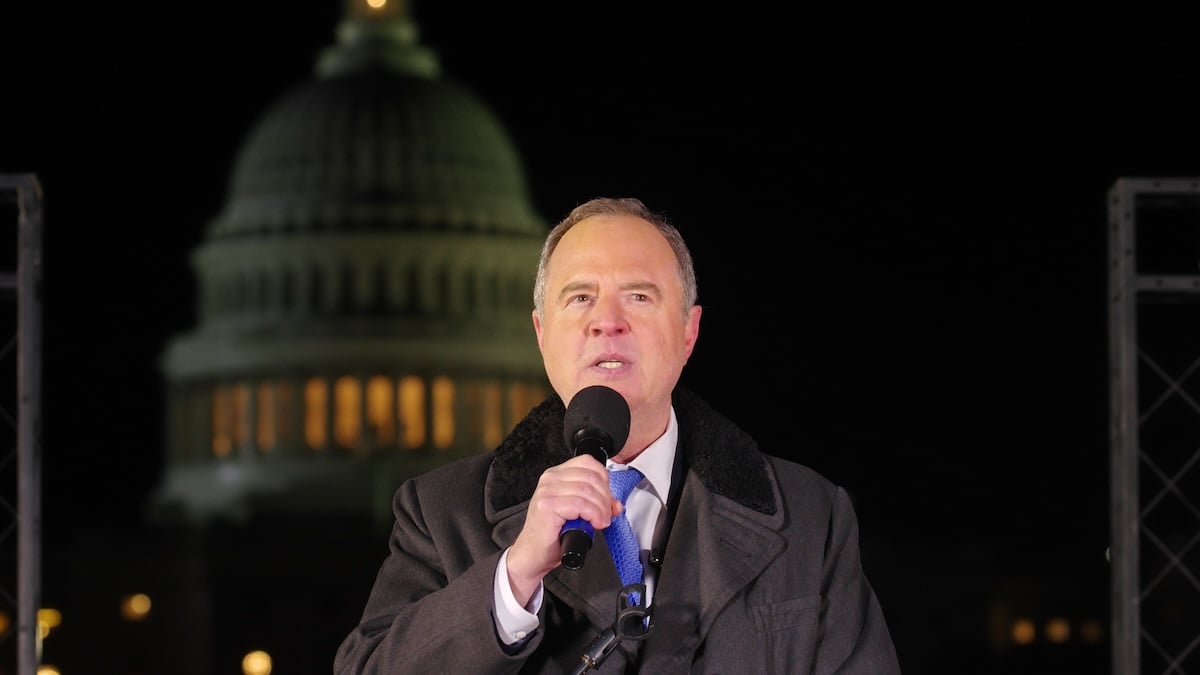
The senators told CFTC Chairman Michael Selig to preserve all records and communications tied to prediction markets going back to Jan. 1, 2025. The request covers personal email, mobile devices, and encrypted or disappearing messaging apps. It also extends to anyone “representing or purporting to be acting on” the agency’s behalf, according to the letter released by California Sen. Adam Schiff‘s office.
Notably, Kalshi first offered sports contracts in advance of the Super Bowl in January 2025.
“A letter from senators is not a subpoena, and it has no legal force on its own. But it puts the agency on notice,” said Braden Perry, a former senior trial attorney at the CFTC and co-founding partner of Kennyhertz Perry LLC. “If records go missing later, no one at the CFTC can say they did not know to keep them.
“This language reads like a first step toward something bigger.”
Schiff, a member of the Senate Agriculture Committee, led the letter. The Agriculture Committee oversees the CFTC. Every senator from California, Michigan, Nevada and Washington signed it:
- Alex Padilla (D-CA)
- Elissa Slotkin (D-MI)
- Gary Peters (D-MI)
- Catherine Cortez Masto (D-NV)
- Jacky Rosen (D-NV)
- Maria Cantwell (D-WA)
- Patty Murray (D-WA)
Senate Agriculture Committee Ranking Member Amy Klobuchar (D-MN) also signed. The senators asked Selig to respond within a week, including written confirmation that the agency is preserving the records.
Preservation hold reads like a warning shot
The preservation language covers calendar entries, meeting notes, voicemail, text messages and social media. It also tells the agency to suspend any auto-delete functions.
Perry said the list of channels is no coincidence.
“Personal email, encrypted apps, and disappearing messages are the same channels the CFTC fined Wall Street banks hundreds of millions of dollars for using,” Perry said. “Now the agency is being asked to meet the standard it enforced. That is not an accident.”
From December 2021 through August 2023, the CFTC imposed more than $1bn in penalties on 18 financial institutions whose employees used unapproved channels such as personal texts and WhatsApp. At the time, the agency said registrants that fail at recordkeeping “do so at their own peril.”
Perry said the letter’s scope points to bigger questions about how the policy took shape.
“The January 2025 start date and the reach to outside people acting for the agency tell me the senators want to know who shaped this policy and when,” he said.
Democrats retook both chambers of Congress in the midterms and take control in January 2027. Multiple gaming industry lawyers recently told SBC Americas that stronger scrutiny toward prediction markets is coming with the power change on Capitol Hill.
“[Democrats] on the House and Senate side have indicated that one of the top priorities is to investigate areas where they believe the administration has overstepped its bounds, and this is one of those areas with the CFTC,” said Stephen Piepgrass, a partner at Troutman Pepper Locke. “Particularly in light of the battle with the states, where they seem to believe there may be ties to the industry that are close, and they want to explore that. Those are the indications in this letter.”
Senators say geofencing ban defies court orders
Piepgrass said lawmakers cannot just go on a “fishing expedition” to see what they might turn up, so an investigation needs a legal hook. That hook is the CFTC’s Nov. 5 rule interpretation that requires exchanges to provide impartial access.
The interpretation says “geographic access restrictions are inconsistent with the CEA and Commission rules and regulations.” The agency told designated contract markets they must drop geofence restrictions within 30 days or explain to the agency’s Division of Market Oversight why they cannot.
After the agency released the rule, Schiff took to social media, calling the guidance “the CFTC’s most egregious attempt yet to undermine state law, the Tribes, and now, the courts.”
In Monday’s letter, the senators called it a “unilateral decision” that “directly conflicts with active court orders.” Courts ordered platforms to stop offering certain contracts in:
- Michigan
- Nevada
- Washington
- The land of two California tribes
“The Commission now appears to be encouraging prediction markets to offer prohibited contracts in contempt of these court orders during active litigation,” the senators wrote.
Senators call out CFTC timing
The CFTC issued the interpretation hours after U.S. District Judge Jacqueline Scott Corley enjoined Kalshi from offering sports contracts on the lands of Blue Lake Rancheria and Chicken Ranch Rancheria of Me-Wuk Indians.
“This interpretation raises concerns that the Commission may be coordinating with platforms currently engaged in litigation and encouraging them to violate state and tribal gaming laws,” the senators wrote.
The senators want the CFTC to withdraw the interpretation or freeze it until the litigation reaches a conclusion. They asked the agency to confirm that three kinds of geographic restrictions do not violate the rule:
- Restrictions imposed by court order
- Restrictions adopted to comply with the Indian Gaming Regulatory Act or tribal-state compacts
- Restrictions that an exchange adopts voluntarily
CFTC keeps widening its fight with states
The geofencing interpretation is the latest in a string of CFTC actions against state enforcement.
In July, the agency ordered Kalshi to fulfill open sports trades in Michigan despite a state court order. Former CFTC counsels later told a House panel that the step was “extraordinary.” In August, the CFTC issued a similar emergency order in New York.
The agency now uses the impartial access rule in court. Last week, the CFTC and Justice Department sued Arkansas to block Attorney General Tim Griffin’s case against Kalshi. A day later, they sued Louisiana, arguing that a state court order requiring operators to geofence the state violates the rule. Louisiana is the 12th state the CFTC sued.
Perry said the fight reflects a long expansion of the agency’s reach.
“Before 2010, the CFTC was a small agency that oversaw futures. Dodd-Frank gave it the swaps market, and Congress wrote the swap definition so broadly that it can cover almost any contract tied to a future event,” Perry said. “The agency has used that language to widen its jurisdictional reach ever since. First it was swaps. Then it called Bitcoin a commodity and moved into crypto. Now it says the same words give it sole authority over sports and event contracts, and that state gambling laws do not apply.
“Congress never voted to put crypto or sports betting under the CFTC. The statute has barely changed. But the agency’s reach certainly has.”