
Missouri Attorney General Catherine Hanaway predicted the prediction markets she targeted last month would take her to court, and now two have.
Novig and Crypto.com filed separate federal lawsuits last week asking judges to bar Missouri officials from enforcing state sports wagering laws against their Missouri prediction markets. The filings arrived as the 30-day deadlines in Hanaway’s cease-and-desist letters expired.
Novig sued through its exchange operator, Ludlow Exchange LLC, in the Eastern District of Missouri. North American Derivatives Exchange, the exchange behind Crypto.com’s prediction markets, filed in the Western District.
The other prediction market operators served by Missouri, who did not yet file suit, include:
- Kalshi
- Polymarket
- Robinhood
- Underdog
Novig seeks to freeze Missouri prediction markets status quo
Novig’s complaint named Hanaway and Missouri Gaming Commission (MGC) officials Michael Lear and Jan Zimmerman. It seeks a declaration that Missouri’s gambling laws are preempted as applied to its exchange, plus asking for preliminary and permanent injunctions.
The company argued its event contracts are swaps under the Commodity Exchange Act and fall within the Commodity Futures Trading Commission’s (CFTC) exclusive jurisdiction. Novig also cited the CFTC’s Oct. 9 proposal to define event contracts tied to sports, politics, culture and weather as swaps.
The complaint contends Missouri’s licensing path does not fit an exchange. A license would require Novig to geofence participants in Missouri and pay the state’s 10% tax, fragmenting the national liquidity needed to match buyers and sellers.
“A licensing regime calibrated to the economics of the house does not readily accommodate a market with no house,” the complaint states.
Novig also entered with a stronger age limit position than other Missouri prediction markets. Hanaway’s office said five of the six recipients let users under 21 onto their platforms or lacked adequate safeguards. Novig was the exception, and its rulebook requires traders to be 21.
The company asked the court to preserve the status quo while the Eighth Circuit Court of Appeals, which covers Missouri, hears Kalshi’s appeal of a loss in Iowa on the same question.
Crypto.com says no license is available
Crypto.com made the same jurisdiction argument and said Hanaway “incorrectly addressed” her letter to Foris DAX, Inc., rather than the exchange.
The suit also argued licensure is not an option. Missouri’s constitution allows only two untethered mobile sports betting licenses, and both are taken. If that door is closed, the exchange said Hanaway’s choice between a license and an exit amounts to a ban. There are six available online sports betting licenses in Missouri through the state’s professional sports teams and casinos.
Crypto.com and Robinhood already asked the U.S. Supreme Court to weigh in on the broader nationwide jurisdiction dispute on sports event contracts.
How Missouri battle got here
Hanaway sent the letters in September, arguing the sports event contracts on Missouri prediction markets amount to unlicensed sports betting under the framework voters approved in 2024. She signaled early that litigation was likely.
“Chances are they may sue us once they get this cease-and-desist letter,” Hanaway told KFVS 12.
The pressure reached beyond the six recipients. PrizePicks, a licensed daily fantasy operator that did not receive a letter, suspended Team Picks, its sports prediction markets product, in the state earlier this month.
Kalshi went to the media. Head of Research Nicole Kagan told St. Louis Public Radio that the platform runs a peer-to-peer exchange and doesn’t profit when customers lose. Spectrum News reported that Hanaway’s office described “ongoing discussions” with Kalshi.
Eighth Circuit takes center stage
The Eighth Circuit has not yet ruled on the issue, which makes Kalshi’s Iowa appeal the key near-term catalyst for both Missouri cases.
U.S. District Judge Stephen Locher denied Kalshi a preliminary injunction in September, finding the company unlikely to succeed on preemption. Kalshi’s opening brief is due Nov. 6, and Novig’s complaint says briefing concludes Dec. 6. That ruling will bind federal courts in Missouri and six other states.
Elsewhere, the appeals courts remain split. The Third Circuit sided with Kalshi in New Jersey. The Ninth Circuit ruled against Kalshi in Nevada, and the Sixth Circuit sided with Ohio and Tennessee.
Ohio‘s regulator then sent cease-and-desist letters to 10 companies.
In Utah, the Tenth Circuit denied Kalshi an injunction pending appeal after a district judge ruled for the state.
Missouri joins Supreme Court push
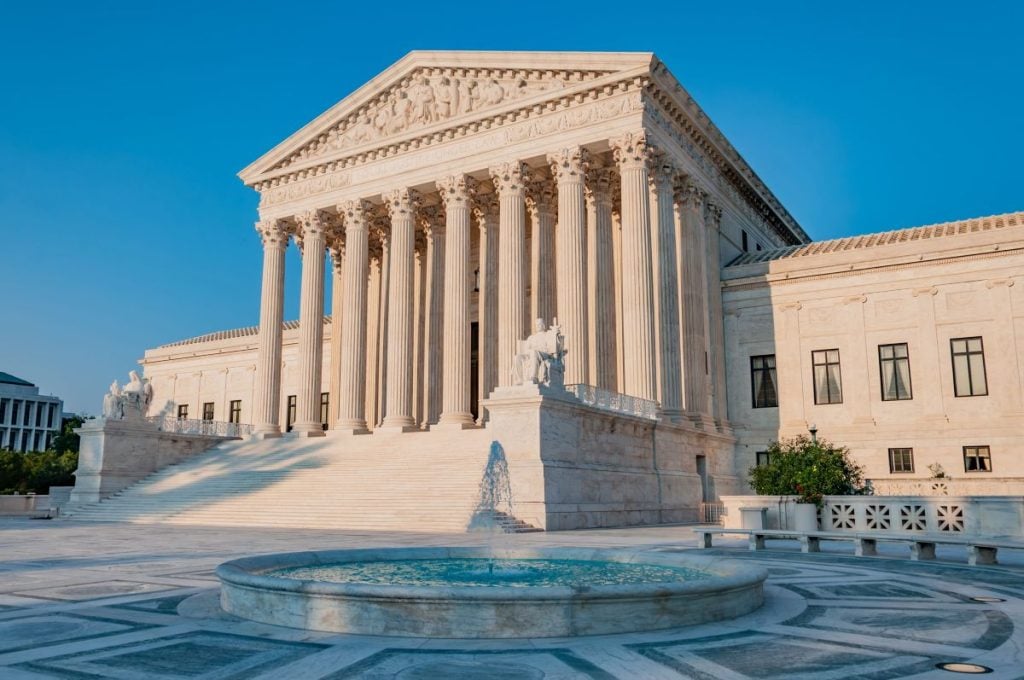
New Jersey asked the Supreme Court to resolve the split, and Kalshi’s response is due Nov. 9.
The NFL, the American Gaming Association, 145 tribes, and 39 states, plus the District of Columbia, filed briefs urging the court to take the case.
Missouri now stands with those states. Hanaway’s office signed the Ohio-led brief earlier this month, after sitting out a 44-state letter to the CFTC in July.