
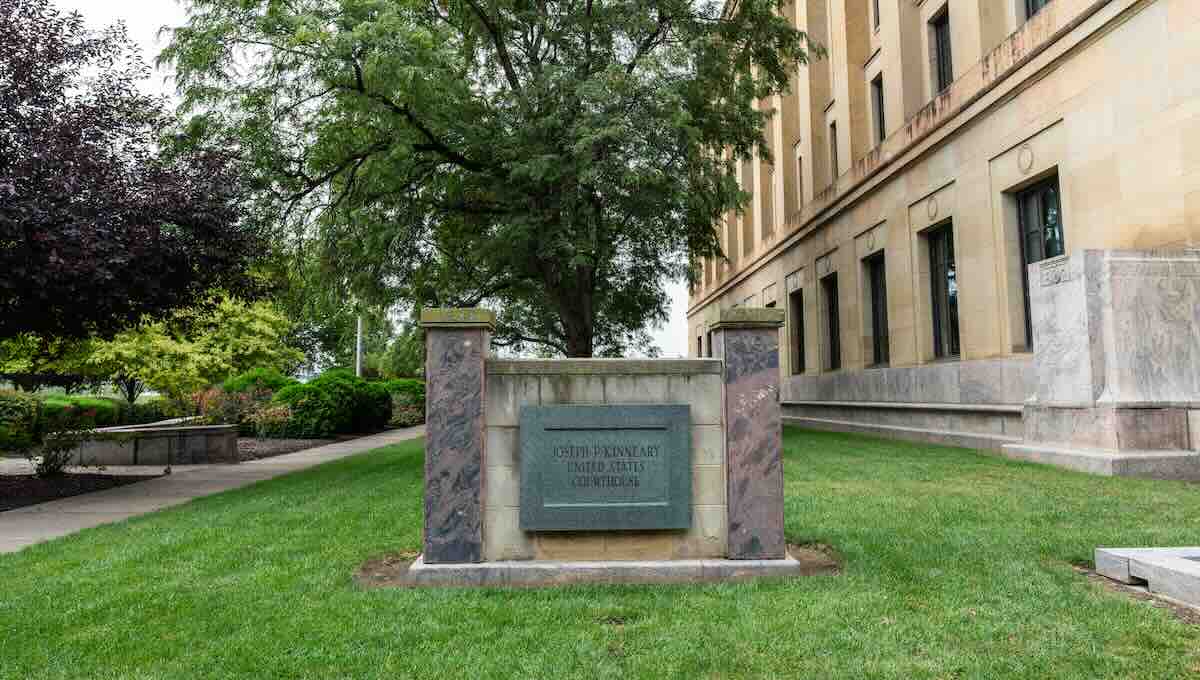
The Sixth Circuit Court of Appeals handed Kalshi another major appellate loss on Friday, ruling that the company’s sports event contracts are not swaps under federal commodities law and do not prevent Ohio and Tennessee from enforcing their sports betting laws.
In a unanimous opinion combining Kalshi’s cases against Ohio and Tennessee regulators, the court affirmed the Southern District of Ohio’s denial of Kalshi’s preliminary injunction request and vacated a Middle District of Tennessee order that had blocked Tennessee enforcement.
The decision is the second federal appellate ruling to side with state gaming regulators over Kalshi’s federal preemption argument. The Ninth Circuit reached a similar conclusion in August in Kalshi’s case against Nevada. Meanwhile, the Third Circuit took the opposite view in a New Jersey case.
Legal observers suggest the split is becoming more difficult for the U.S. Supreme Court to ignore amid multiple requests for SCOTUS to take up the case.
Court rejects Kalshi swap argument
Kalshi argues its sports event contracts are swaps traded on a Commodity Futures Trading Commission-regulated designated contract market. Under that argument, the Commodity Exchange Act (CEA) gives the CFTC exclusive jurisdiction and preempts states from applying their sports betting laws to the contracts.
The Sixth Circuit rejected the argument on two independent grounds, concluding that Kalshi did not establish that sports event contracts meet the CEA’s definition of a swap. A qualifying event must be “associated with a potential financial, economic, or commercial consequence,” the court wrote. The panel held that the connection must be intrinsic, not merely an indirect or downstream economic effect on leagues, broadcasters, advertisers, sponsors, teams or local businesses.
“Kalshi’s sports event contracts have only downstream economic consequences, assuming they have the potential to cause economic consequences at all,” Judge Julia Smith Gibbons wrote for the panel. “Thus, they are not ‘associated’ with potential financial, economic, or commercial consequences.”
The court distinguished sports markets from products linked to interest rates, currency values or debt defaults, where the financial risk and hedging purpose are more direct. It pointed to contracts based on sporting outcomes such as corner kicks, broadcaster mentions, player statistics, and same-game parlays as examples that do not carry financial or commercial consequences.
The panel also said Kalshi’s interpretation would sweep far beyond the company’s exchange. If sports bets were swaps under the CEA, the court said, ordinary bets at a casino or sportsbook could be treated as off-exchange swaps, activity the CEA generally prohibits.
Ohio, Tennessee cases progress?
The ruling resolves two different procedural outcomes in the states’ favor.
Last year, the Ohio Casino Control Commission (OCCC) sent Kalshi a cease-and-desist letter alleging that the company was offering unlicensed sports gaming, including to people under 21. The OCCC also pursued a separate $5m fine against Kalshi over the alleged unlawful offering of sports bets in Ohio.
Kalshi sued the state and sought a preliminary injunction against enforcement. The Southern District of Ohio denied that request.
In Tennessee, the Sports Wagering Council sent Kalshi a cease-and-desist letter in early 2026. A federal district court initially granted Kalshi preliminary relief, finding that its sports contracts were swaps and that the CEA preempted Tennessee’s regulation.
Supreme Court pressure grows
The Sixth Circuit’s decision deepens an already direct conflict with the Third Circuit.
In April, the Third Circuit held that Kalshi was likely to succeed in its argument that its sports event contracts are swaps under the CEA and that New Jersey’s gambling laws are preempted. The Third Circuit’s decision prevented New Jersey from enforcing its sports betting rules against the exchange.
The Ninth Circuit then sided with Nevada, creating the initial split.
New Jersey has already petitioned the Supreme Court to review the Third Circuit decision. Crypto.com and Robinhood have separately urged the Court to take up the broader federal-state question involving sports event contracts.
An appeal remains active in the Fourth Circuit, but the Sixth Circuit’s decision gives those petitions a more developed appellate conflict as two circuits now support state enforcement, while one has sided with the federal regulation theory.