
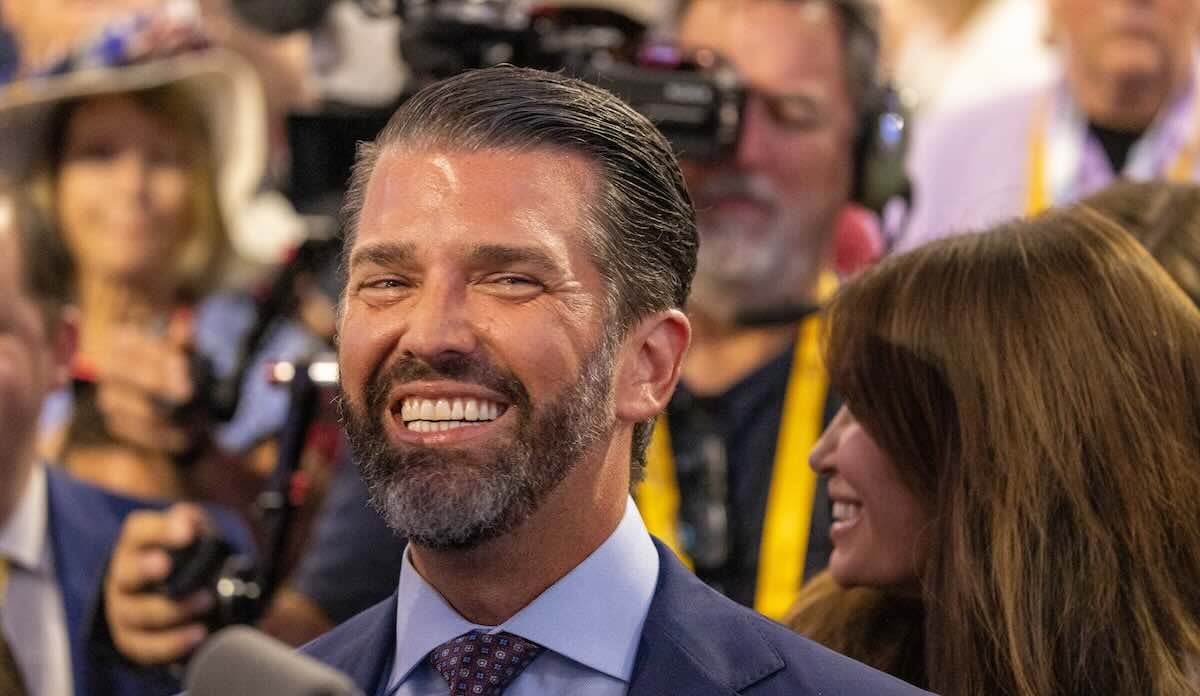
Sen. John Curtis (R-Utah) has asked the Senate Judiciary Committee to investigate whether presidential family relationships have been used for private financial benefit or preferential access, specifically citing Donald Trump Jr.’s ties to prediction markets Kalshi and Polymarket.
In a Sept. 21 letter to Judiciary Committee Chair Chuck Grassley (R-Iowa) and Ranking Member Dick Durbin (D-Illinois), Curtis urged the committee to subpoena Trump Jr. and Hunter Biden over past business dealings, relationships with foreign individuals and entities, gifts and other benefits. Senators John Cornyn (R-Texas) and Thom Tillis (R-North Carolina), key lawmakers on the committee, said they support the initiative.
Curtis framed the request as a bipartisan test of whether Congress will apply the same oversight standards to the families of Republican and Democratic presidents.
What happens for Kalshi, Polymarket now?
For the nascent industry, the letter introduces a new political wrinkle as prediction markets seek to preserve a federal regulatory model against increasingly aggressive state-level enforcement.
“This pattern extends to [Donald Trump Jr.’s] significant financial and advisory ties to prediction market platforms that depend on favorable federal regulatory decisions being considered by the Commodity Futures Trading Commission,” Curtis wrote.
He said the connections raise questions about “whether such relationships can create actual or perceived expectations of favorable treatment,” and asked the committee to establish the facts and assess whether current ethics, disclosure or anti-corruption laws are sufficient.
Trump Jr.’s prediction market roles
Trump Jr. is involved with both Kalshi and Polymarket, the two largest prediction markets operating in the US.
At Kalshi, Trump Jr. holds a paid advisory role and received equity at the time he joined. At Polymarket, he serves as an advisor and is a partner at 1789 Capital, which committed $300m to a recent Polymarket funding round, making the firm one of the platform’s largest equity holders.
Those positions have become more consequential as prediction markets expand further into sports event contracts, elections, economic data and other products traditionally associated with gambling or wagering. Kalshi and other platforms argue that event contracts listed on federally regulated exchanges are derivatives subject to CFTC oversight, not gambling products governed by state law.
Trump Jr. spokesman Andrew Surabian has said the Trump Jr. does not trade on prediction markets, does not communicate with the federal government on behalf of Kalshi or Polymarket, and offers only marketing advice to the companies. Surabian has also argued that Trump Jr. is a private citizen and should not be expected to abandon outside business activity because his father is president.
Truth Social’s prediction market plans
The Trump family’s prediction market connections have also extended beyond Trump Jr.
Trump Media & Technology Group announced plans last year for Truth Predict, a cryptocurrency-based prediction market product for Truth Social. The company said the service would let users trade contracts tied to elections, sports, economic data, commodities, and other events through a planned relationship with Crypto.com.
The proposed platform has not emerged as the broad standalone prediction market offering originally described. Trump Media instead pursued a marketing arrangement connected to Crypto.com.
Utah’s own prediction market fight
Curtis’s letter also comes from a state taking a hard line against sports event contracts. Earlier this year, Gov. Spencer Cox took to social media to announce his intentions to go after prediction markets and the CFTC. Kalshi sued the state shortly after.
Utah broadly prohibits gambling, and state officials have argued that Kalshi’s sports markets are illegal wagering products under Utah law. Kalshi has argued that its contracts are federally regulated under the Commodity Exchange Act and that the CFTC’s authority preempts Utah from enforcing state gambling restrictions.
Earlier this month, the Tenth Circuit Court of Appeals denied Kalshi’s emergency motion for an injunction pending appeal, allowing Utah to enforce its gambling laws while the company’s appeal proceeds.
Prediction market legal situation beyond Utah
The Tenth Circuit’s decision is just one piece of an unsettled prediction markets legal landscape.
The Third Circuit has sided with Kalshi’s federal preemption position in its dispute with New Jersey. Meanwhile, the Ninth Circuit has reached the opposite conclusion in cases involving Nevada and California tribal lands, finding that sports event contracts are likely gambling products rather than federally protected swaps, or that separate federal gaming law can apply even where an exchange invokes CFTC oversight.
New Jersey has asked the U.S. Supreme Court to resolve the split among the circuits. Robinhood and Crypto.com have similar petitions.