
Kalshi dominates both trading volume and legal filings among U.S. prediction markets, but Robinhood and Crypto.com could decide the industry’s future after asking the Supreme Court this week to rule whether sports event contracts are legal.
Robinhood and Crypto.com confirmed Friday to SBC Americas that their companies separately filed petitions with SCOTUS requesting it take up their Ninth Circuit Court of Appeals losses against Nevada.
“The Supreme Court now has the opportunity to provide clarity on the regulation of prediction markets, which we believe rightly sits with the CFTC,” a Robinhood spokesperson wrote. “It’s our position that the Court should review these cases collectively as we seek to ensure every eligible customer has access to these markets as a tool to aggregate dispersed information, hedge risk, and speculate on their beliefs about future events.”
In Crypto.com’s filing, it asks the Supreme Court to determine “whether the [Commodity Exchange Act] preempts state regulation of sports-event contracts traded on a [Designated Contract Market].” That question closely tracks what New Jersey asked SCOTUS justices to decide from Kalshi’s win at the Third Circuit, heightening the possibility that the high court could consider the cases together.
“Today’s petition to the Supreme Court is an important step toward obtaining clarity on who gets to regulate federally registered prediction markets. We have faith in the judicial process and are confident the Court will find that these important financial instruments are subject to exclusive CFTC oversight,” a Crypto.com spokesperson told SBC Americas.
“We have always prioritized compliance with our regulatory obligations, and are proud that our regulator, the CFTC, supports the industry’s effort to obtain clarity through the judicial process. We welcome the Court’s review.”
How Crypto.com is attacking sports betting ruling
As with many other prediction markets cases involving sports, the intended definition of simple words like ‘swap’, ‘event’ and ‘occurrence’ form the crux of debate.
That holds true for Crypto.com’s argument as well, as the company lays out the differing view of swaps between the Third and Ninth Circuits.
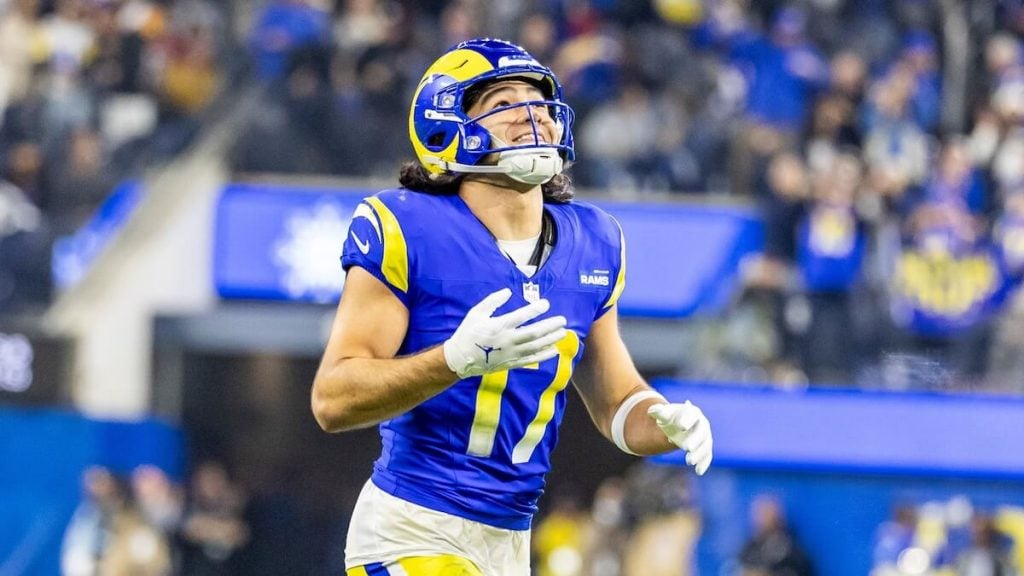
“Sports-event contracts are swaps because their payout depends on the occurrence of a sporting outcome (the ‘event or continency’ — e.g., did the Rams make the playoffs?) that is associated with potential economic consequences (i.e., the billions of dollars of economic activity that surround sports entertainment),” the filing reads in part.
Crypto.com takes it a step further
Crypto.com stretches out the idea of “economic activity” to cover even potential rioting in response to the outcome of sporting events.
“Trading on sports-event contracts allows stakeholders to hedge against the financial risk associated with a particular outcome of a sports event. For example, vendors and merchandisers often must decide how to distribute products and services for a sports event that many Americans might watch or attend. Those decisions involve financial risk, because supply and demand could turn on whether the game occurs and on how it unfolds.
“In addition, a municipality might enjoy increased tourism revenue if it hosts the championship game. But hosting an event also exposes the municipality to risks from fan unrest, and addressing safety concerns can be expensive.”
And so if they’re swaps …
Central to Crypto.com’s case is its contention that because Congress included the oft-referenced special rule that includes gaming as a category the Commodity Futures Trading Commission (CFTC) can ban, legislators meant for swaps to include gaming such as sports event contracts. Its filing leans heavily on not only the Third Circuit’s definition of swaps but also on what it sees as clear Congressional intent.
“That explicit reference to ‘gaming’ confirms that Congress contemplated the very interaction between swaps and gambling that the Ninth Circuit claims it couldn’t have imagined,” the filing reads.
The CFTC’s proposed revamp of event contract rules could either clarify or complicate view on the special rule, depending on which side of the debate one falls.
Kalshi also continues sports betting fight
While Crypto.com and Robinhood petition for Supreme Court intervention, Kalshi pushed a long-shot bid for an en banc rehearing of its appeal at the Ninth Circuit.
Federal appeals courts rarely grant such requests, but the ask at least temporarily delays widespread enforcement of state-level gambling laws against Kalshi and others.
A theory that the en banc request and cert petitions took place in concert gained momentum on social media after Robinhood filed on Thursday.