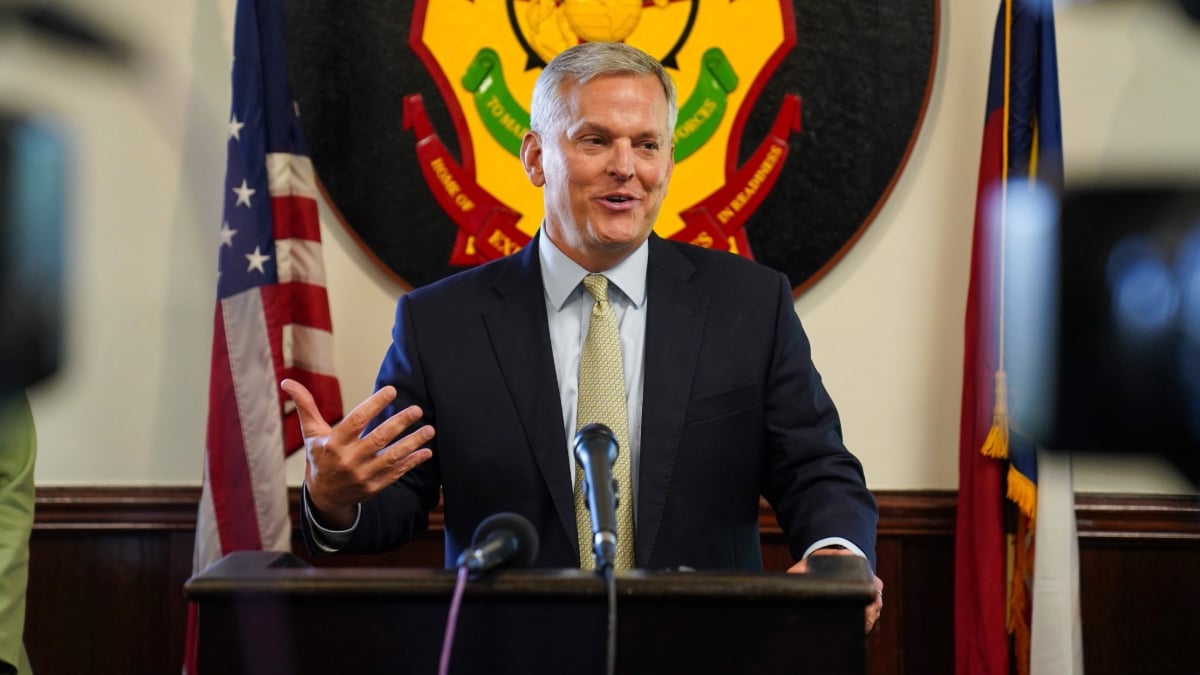
Gov. Josh Stein signed the North Carolina budget on Tuesday, officially raising the state’s online sports betting tax rate and confirming that the state intends to tax prediction market platforms, even though it will not regulate them.
The budget bill, Senate Bill 257, includes various gambling-related provisions in the Tar Heel State, including hiking the current tax rate for online sports betting from 18% of gross wagering revenue to 23%. It also makes changes to how that tax revenue is distributed.
The idea of increasing North Carolina’s tax rate was first raised in April 2025 after the state Senate submitted a budget proposal that suggested doubling the tax to 36%, which would have placed North Carolina among the top five highest flat sports betting tax rates in America.
That level of increase failed to garner support, but a smaller rise to between 20% and 25% was supported by state lawmakers last month. Legislators in the state eventually agreed to increase the rate to 23%.
NC intends to tax prediction markets, but not license them
Stein’s signature also means North Carolina follows Kentucky and Illinois by enacting legislation with the intention of taxing prediction markets on their in-state business.
The budget adds a 6% tax rate on prediction markets’ net trading fee revenue, which a fiscal memo projects will generate $2m in tax revenue in 2027.
However, it will not implement “any license, registration, or other regulatory requirements or obligations of any kind on prediction markets,” a completely different approach to how it treats sportsbooks, which are required to obtain licenses and adhere to the state’s regulatory requirements.

North Carolina’s stance on event contracts is unique
North Carolina’s new state budget essentially seems to provide prediction market platforms with the opportunity to solidify a footprint in the state if they agree to adhere to the state’s new tax obligation, which is significantly lower than the rate it charges sportsbooks on their revenue.
The stance toward prediction markets in North Carolina is also a different tone from officials and legislators outside of the state, with many arguing that the delivery of sports event contracts equates to online sports wagering with a need for licensing and regulation.
SB 257’s tax changes for sports betting are effective immediately. Meanwhile, the prediction markets tax is set to go into effect on Jan. 1, 2027.
However, the mechanics of how North Carolina will implement the measure are unclear. Based on what happened in Kentucky and Illinois after those states passed prediction market tax bills, Stein and fellow state officials may face lawsuits from prediction market platforms and/or the Commodity Futures Trading Commission (CFTC) in response to the tax plan.
Two new NC universities to benefit from sports betting
Meanwhile, the signed budget also amends rules for the colleges and universities that receive tax revenue from sports betting.
Institutions that are part of the UNC System already receive an annual payment from tax revenue, and the budget also includes a provision that allows the schools to receive 20% of the remaining tax revenue after the state completes its allocation requirements.
Now, two new institutions will be eligible to receive tax proceeds through the allocation process: the University of North Carolina (UNC Chapel Hill) and North Carolina State University. The two institutions are the largest universities in North Carolina in terms of enrollment, with NC State educating 37,300 students. Meanwhile, UNC Chapel Hill has 32,200 students.
The tax revenue schools can receive annually is initially capped at $2.9m per institution, but the new budget allocates additional funding for certain schools.
Tax revenue in North Carolina generated from sports betting is also allocated toward youth sports programs, gambling addiction treatment programs, and the state’s general fund. The new budget also caps the tax revenue the state’s Major Events, Games, and Attractions Fund can receive at $30m annually. A May 2026 Consensus Revenue Forecast estimated the fund would receive approximately $45.3 million in FY 2026-27.