Caesars Entertainment will soon add online casino gaming to its online sports betting operations in Maine, thanks to an extension of its partnership with three of the state’s federally recognized tribes.
On Wednesday, Caesars announced plans to expand its partnership with three Wabanaki Tribes, which already share exclusive rights to online sports betting, to include online casino gaming when Maine opens its regulated iGaming market later this year:
- The Houlton Band of Maliseet Indians
- The Mi’kmaq Nation
- The Penobscot Nation
Caesars said that it and the tribes will team up to offer employment and development opportunities for each nation, while also providing support for tribal programs and initiatives. The support includes an undisclosed financial investment from Caesars.
The deal will broaden Caesars’ reach in Maine; it currently offers sports betting in the Pine Tree State alongside DraftKings as the state’s only authorized tribal-tethered operators. DraftKings is partnered with a fourth Wabanaki nation, the Passamaquoddy Tribe, for online sports wagering.
Caesars to continue triple-pronged approach to iGaming
Caesars made history in Maine in September 2024, becoming the first operator to accept retail sports wagers through a partnership with Maine-based First Tracks Investments LLC.
Now, it plans to launch three online casino brands in Maine:
- Caesars Palace Online Casino
- Horseshoe Online Casino
- Caesars Sportsbook & Casino
Caesars already has triple-platform operations in several other states, and also plans to launch all three brands in Alberta when the Canadian province opens for business next month.
“As we look ahead to the launch of online casino gaming in Maine, we’re proud to expand our partnership with the Houlton Band of Maliseet Indians, the Mi’kmaq Nation and the Penobscot Nation,” said Caesars Digital President Eric Hession. “Together, we’ve built a strong and responsible sports wagering experience, and this next phase reinforces our commitment to our tribal partners and to delivering a differentiated, localized digital gaming experience for Mainers.”
What will Maine’s online casino market look like?
Maine is set to open at an unconfirmed time later this year as America’s newest online casino market after Gov. Janet Mills decided in January not to veto an approved online casino bill, Legislative Document 1164.
The measure provides the Wabanaki Tribes with the exclusive right to provide online casino gaming in Maine, while also allowing the tribes to partner with vendors to offer the vertical, in a manner similar to the state’s existing sports betting market.
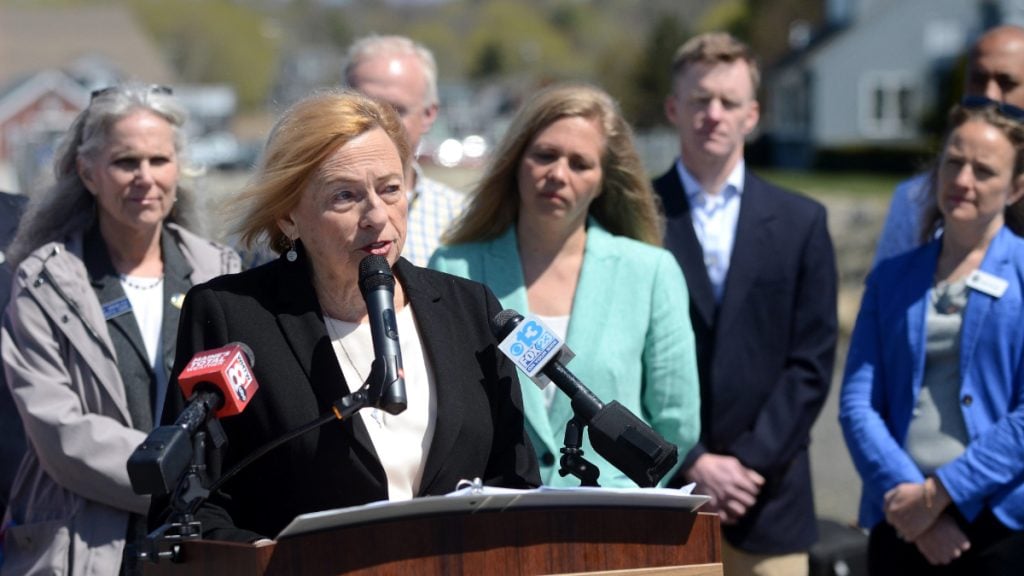
Online casino gaming in Maine will be taxed at an 18% rate, a rate increased in the Senate from the original 16% proposal. Legislators estimated that legal iGaming will generate over $3.5m in additional tax revenue by FY2027
Once online casino gaming is live, Maine will be the eighth state to offer the vertical. LD 1164 is set to become law 90 days after the state’s House session ended in late April, meaning that the state could launch its market as soon as the end of July.
PENN, Churchill Downs don’t like Maine’s tribal model
However, Maine’s plans for its online casino market met with pushback from operators and are subject to a court challenge.
In January, Churchill Downs and its Oxford Casino Hotel filed a lawsuit against the Maine Gambling Control Unit (MGCU) and the regulator’s executive director. In the suit, the Kentucky-based gaming giant claims Maine’s new gambling law has “blessed a race-based monopoly” and argues that the state’s iGaming model violates equal protection laws and goes against constitutional restrictions on economic protectionism.
Churchill Downs wants the court to block the implementation of the law and the opening of the market.
PENN Entertainment is also taking issue with Maine’s tribal model for online casinos. During a Q4 2025 earnings call, PENN CEO Jay Snowden criticized Maine’s plans for online casino gaming, taking issue with the Wabanaki Tribes having the exclusive right to provide regulated iGaming in the state.
PENN owns and operates Hollywood Casino Hotel & Raceway in Bangor.
“We’ve been operating as a casino entity there [Maine] for two decades,” said Snowden during the earnings call. “We’ve invested hundreds of millions of dollars. We’re as involved in the community as you’re gonna find any business leader, and the governor in Maine decides to hand a monopoly to a third party that’s never invested a dollar in the industry.”
The MGCU also opposed Maine’s iGaming model, believing it facilitates a monopoly.
Could potential outsiders enter Maine?
DraftKings has yet to disclose its plans for the launch of online casinos in Maine. Meanwhile, Rush Street Interactive (RSI) executives said in January that they want to bring BetRivers to Maine, noting the company’s history of good tribal gaming relations.
“That’s a market that would fit really, really well for us and one where we could see a lot of success potentially partnering with a tribe,” said RSI President Kyle Sauers in January. “We’ve been very successful there in other markets.
“Michigan and West Virginia are examples where we’ve had really solid success with iCasino with a very differentiated product and being a great partner for tribes where we haven’t lobbied against them, like some others have in certain markets.”