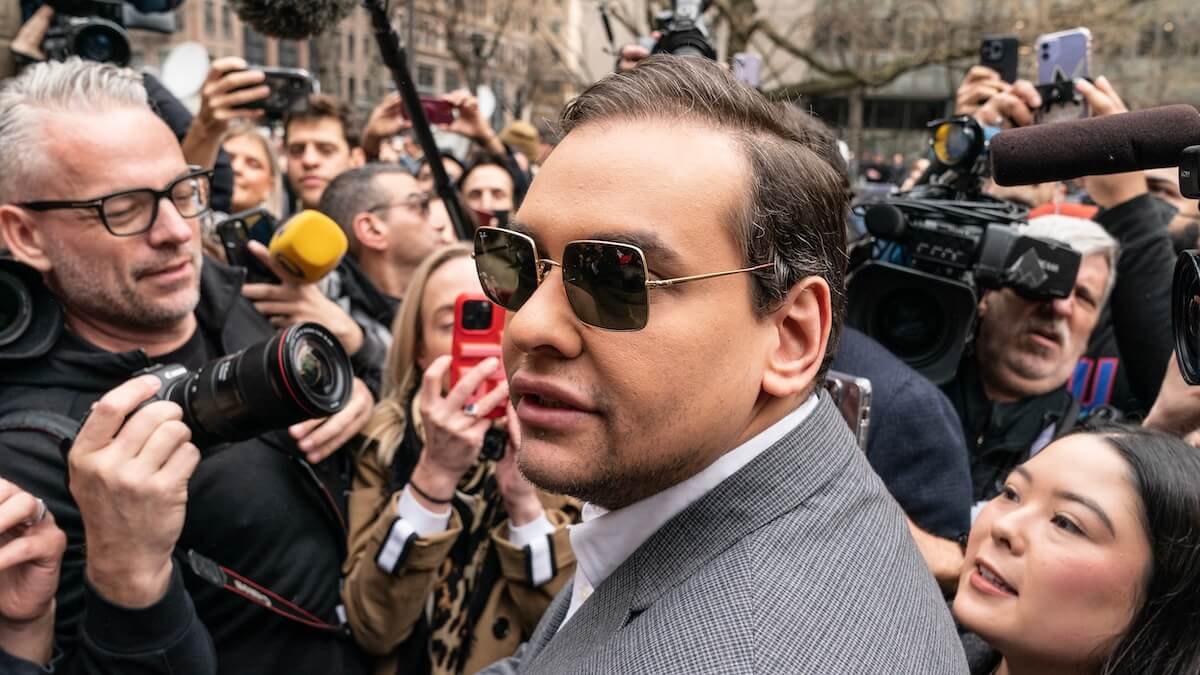
Former Congressman George Santos agreed to a fine of more than $35,000 to settle allegations that he illegally profited from gaming a Kalshi market on his attendance at the State of the Union this year, the Commodity Futures Trading Commission (CFTC) announced Friday.
While Santos did not admit to any wrongdoing, he accepted both a fine of roughly twice his ill-gotten profits and a three-year trading ban from the CFTC to avoid further legal action. A federal investigation determined that Santos used a series of social media posts to manipulate the price of contracts on whether he would attend the presidential address to Congress before cashing out his positions on the same Kalshi market.
Joe Murray, an attorney for Santos, issued a lengthy statement Friday, reading in part, “… Mr. Santos has settled without admitting any of the Commission’s allegations, findings, or conclusions. He chose a prompt, practical resolution rather than protracted, costly litigation, and that choice should not be mistaken for an admission of any wrongdoing, because it is not one.”
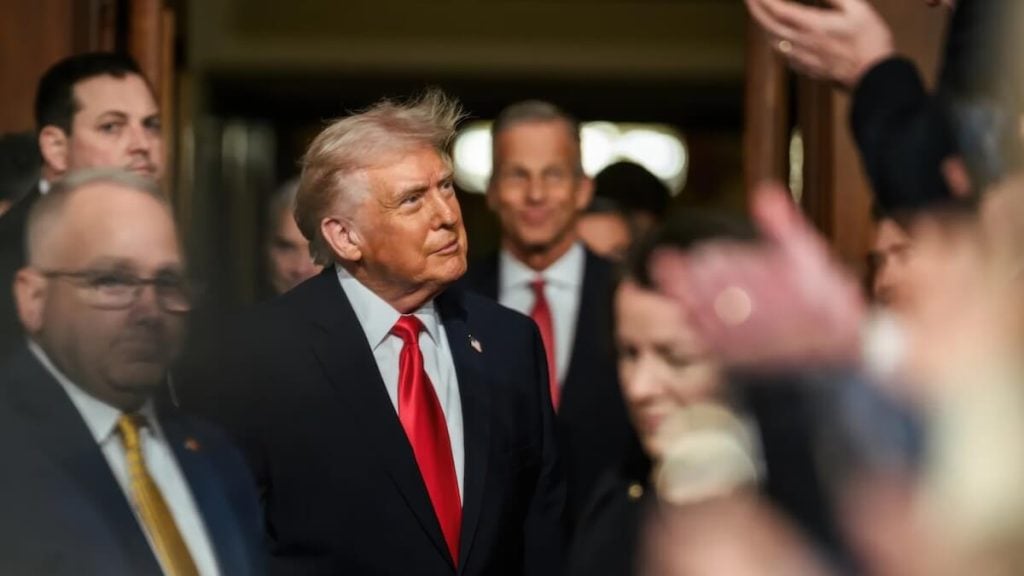
CFTC investigation: George Santos gamed system
According to federal investigators, Santos first created a Kalshi account on Feb. 11, roughly three weeks after the operator posted a market speculating on Santos’s attendance at the State of the Union. In the next 10 days, he funded the account with $7,000 and traded exclusively on the market involving him.
During that period, Santos used nearly the entirety of those funds to purchase ‘Yes’ contracts on his SOTU attendance. Investigators said that “(o)n February 22, 2026, at approximately 2:31 a.m. EST, Santos posted to the social media platform X asking if he should ‘wear a muted or serious suit to the SOTU [State of the Union] or a bedazzled one?’ Several hours later, the price of the Yes position for Santos’s attendance rose from $0.15 to $0.70 per contract. Santos’s Yes position increased in value.
“Later that day, Santos then exited his Yes position, selling all 30,874 contracts and profiting $3,448.43. Santos withdrew $10,146.07 from his Kalshi account. Santos transferred the money from his Kalshi account to a Venmo account he created just four days prior, registered to the same phone number associated with his Kalshi account.”
First you tell me yes, then you say no
Over the next three days, Santos tweeted a series of messages alternating between detailing travel problems that would prevent his attendance and directly telling one person he actually would attend. At the time of the latter messages, Santos’s airline and train tickets had been canceled by the operators.
However, shortly after posting a video in which he said, “I am going to be there for the State of the Union in the gallery guys,” Santos began building an $8,650 position on the ‘No’ side that he cashed out for a $14,390 profit the day after he did not attend the address.
“Santos acted willfully or, at the very least, recklessly. Santos traded in an event contract where he could influence the outcome of the underlying event and knowingly made misleading public statements and omissions about his activities in relation to the underlying event to influence the contract price for the benefit of his trading position,” the CFTC order alleges.
Santos, who served less than a year in the U.S. House of Representatives before being expelled in 2023, is a convicted felon who received a commutation of his 87-month prison sentence on wire fraud and aggravated identity theft charges from President Donald Trump last year after serving just three months.