
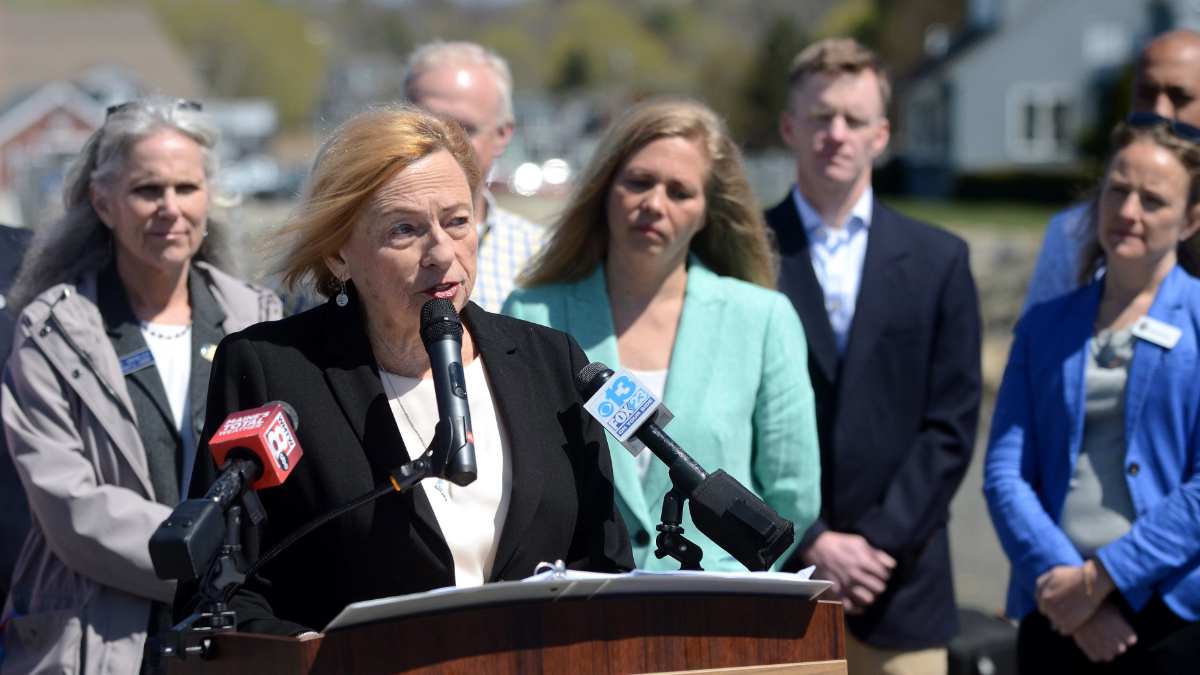
Maine Gov. Janet Mills will not veto a bill that provides state tribes with the exclusive right to offer online casinos, making Maine the latest state to embrace the vertical.
Legislative Document 1164 is set to become law, providing the Wabanaki Tribes with the exclusive right to provide regulated online casino gaming in Maine. The Pine Tree State allows bills to become law if they are not vetoed within three days of reaching Mills’ desk.
The pathway to success for LD 1164
LD 1164 was approved in both chambers and reached Mills’ desk in July before she held the bill to close out the session, buying her time to not act on the bill until now.
LD 1164 passed in the House but hit a slight bump in the road in the Senate after a deadlock vote, leading to an amendment. The amendment raised the bill’s proposed tax rate from 16% to 18%. It was passed again by the House and later approved by the Senate with the amendment.
“I considered this bill carefully, and while I have concerns about the impacts of gambling on public health, I believe that this new form of gambling should be regulated, and I am confident that Maine’s Gambling Control Unit will develop responsible rules and standards to hold providers of this new form of gambling accountable while ensuring that Maine’s tribes benefit from its operations,” said Mills in a statement. “It has always been my strong desire to work with Tribal leaders to improve the lives and livelihoods of the Wabanaki Nations, and it is my hope that this new revenue will do just that.”
The bill was one of 61 measures held by Mills for consideration this month, with the governor allowing 52 of the bills to become law without her signature. LD 1164 is set to become law 90 days after the state House session ends. The session concludes on April 17.
According to a fiscal note, LD 1164 is projected to generate more than $3.5 million in additional tax revenue for Maine by FY2027.
“We applaud Governor Mills for working with the Wabanaki Tribes on this issue, and we appreciate her understanding of the unique status of the Tribes in Maine in this area,” said Penobscot Nation Chief Kirk Francis. “These revenues will fund essential governmental services for our people like health, education, housing, law enforcement, social services, environmental management, pay for improvements in tribal infrastructure, fund cultural and youth programs, and promote tribal self-sufficiency and economic development.”
LD 1164 is set to make Maine the eighth U.S. state to authorize online casinos and sets the foundation for the state’s latest gaming expansion after Mills approved Legislative Document 585 in 2022, providing four federally recognized tribes in Maine with exclusive rights to offer online sports betting. Under LD 1164, the tribes with exclusive rights to sports betting are allowed to partner with vendors to offer online casino-style gaming.
The four tribes are currently partnered with Caesars and DraftKings for sports betting.
Mills previously opposed online casinos
Last year, Mills’ office voiced opposition to expanding gambling in Maine during testimonies that also revealed a lack of support for iGaming by the Maine Gambling Control Board. Last month, the board sent a letter to Mills requesting a veto of LD 1164. The regulator considered the exclusive right for tribes to offer online casino gaming a monopoly. Retail casino owners Churchill Downs and PENN Entertainment also opposed LD 1164, as they would be excluded from iGaming as tribes hold the exclusive right to offer the vertical.
FanDuel also voiced concerns about potentially having no opportunity to establish a presence in Maine with Caesars and DraftKings being the state’s only sportsbooks. The operator also voiced monopoly concerns and not providing consumers with options.
NAAiG pushing for people’s veto
In the wake of Mills’ announcement, the National Association Against iGaming (NAAiG) released a statement criticizing the decision to allow the bill to become law.
“This decision represents a clear break from the Governor’s previously stated position and disregards overwhelming public opposition, expert warnings from her own regulators, and a proven gaming framework that has delivered meaningful benefits to Maine communities and tribal nations for more than a decade,” the group argued.
The group also suggested the decision was politically motivated.
“The timing of this decision cannot be ignored. The Governor’s reversal coincides with a U.S. Senate campaign and a competitive primary challenge. While only the Governor can explain her change of heart, it is difficult to view this decision as anything other than a political calculation rather than a policy driven by evidence or public interest.”
Finally, the group vowed to pursue a People’s Veto to overturn the legislation via ballot referendum.
Maine allows a People’s Veto, allowing citizens to vote to repeal a measure that has passed in both chambers. A petition for People’s Veto must be filed within 90 days after the state legislature adjourns, with the law not going into effect until after a vote is held. The last time a People’s Veto repealed a piece of legislation in Maine was in 2019.