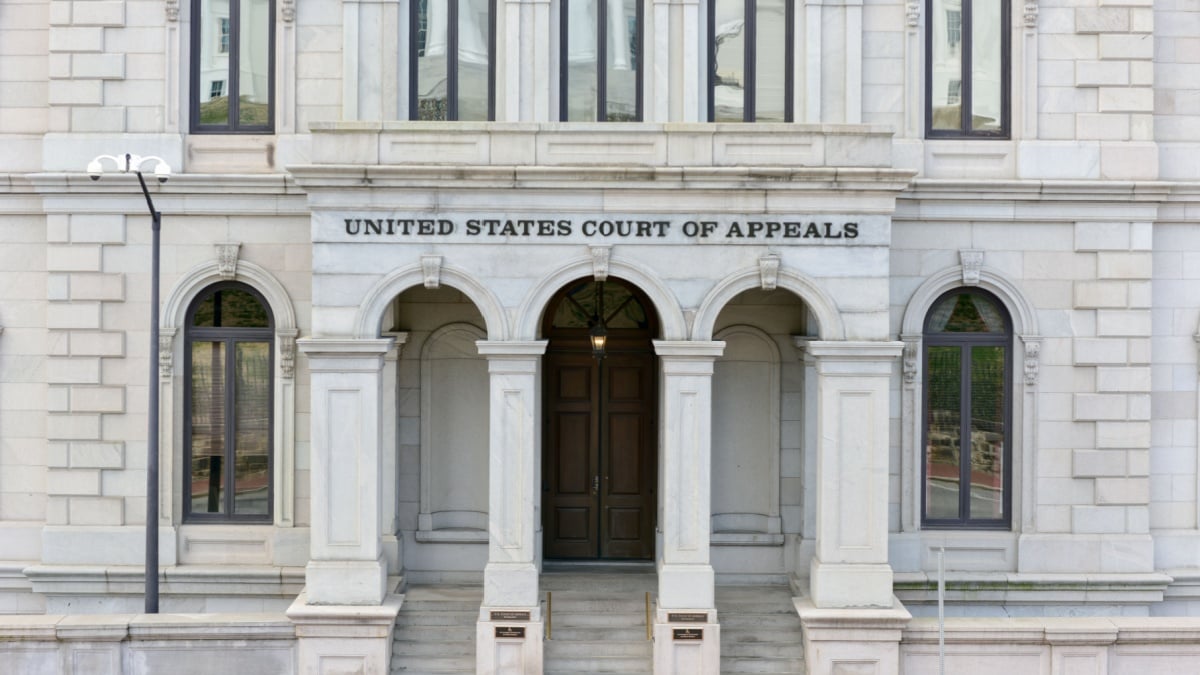
Kalshi received some favorable legal news on Monday with a federal appellate court ruling that the prediction market can offer sports event contracts in New Jersey.
According to court documents filed in the U.S. Court of Appeals for the Third Circuit, Kalshi’s sports event contracts fall under the purview of the Commodity Futures Trading Commission (CFTC) and the Commodity Exchange Act (CEA), allowing the prediction market to temporarily offer its products in New Jersey without a sports betting license.
The appellate court ruled in a 2-1 vote that New Jersey’s gaming regulator does not have the authority to prohibit Kalshi from offering sports event contracts in the state, as the CEA grants “the CFTC exclusive jurisdiction over ‘swaps. . . traded or executed on a [DCM]’”.
The ruling marks the first time a federal appellate court has taken this approach when dealing with legal disputes concerning the delivery of sports event contracts.
“Kalshi has met its burden for preliminary injunctive relief,” wrote Third Circuit Judge David J. Porter in the ruling. “New Jersey frames the issue broadly (regulating all sports gambling) rather than narrowly (regulating trading on federally designated contract markets)”.
The decision comes after the New Jersey Division of Gaming Enforcement (DGE) sent cease-and-desist orders to Kalshi and Robinhood. The DGE accused the prediction markets of offering “unauthorized sports wagering” in the Garden State. The DGE claimed Kalshi violated the New Jersey Sports Wagering Act and also took issue with the company offering sports event contracts on collegiate sporting events in New Jersey. The DGE outlaws sports betting operators from offering markets on in-state college games.
Kalshi responded to the DGE’s C&D order by suing the regulator, with a pair of district court judges granting Kalshi’s request for a temporary injunction. As a result, the DGE appealed, leading to the two Third Circuit judges to side with Kalshi regarding the CFTC’s authority.
Third Circuit judge equates event contracts to gambling
The dissenting opinion in the Third Circuit cited the similarities between sports event contracts and betting markets offered by online sports betting operators. Judge Jane Roth pointed to examples of NFL betting and trading markets to argue their similarities.
“These offerings are virtually indistinguishable from the betting products available on online sportsbooks, such as DraftKings and FanDuel,” says Roth.
“While online sportsbooks are regulated by states such as New Jersey, Kalshi asserts that it is outside the bounds of state regulation because it does not offer gambling products”.
The DGE has the opportunity to submit an appeal of the ruling to the U.S. Supreme Court. The DGE can also request an en banc hearing. The hearing would allow all 14 active judges in the Third Circuit to hear Kalshi and the DGE’s legal dispute over event contracts.
Kalshi’s legal battles outside of New Jersey
Last week, Washington Attorney General Nick Brown filed a suit against Kalshi, alleging that the company’s operations violate state gambling and consumer protection laws.
Brown is requesting that the court prevent Kalshi from offering sports event contracts in Washington and impose civil penalties against the prediction market. State regulators have also filed lawsuits against Kalshi in Massachusetts, Nevada, Arizona and Michigan.
In Arizona, Kalshi preemptively sued the Arizona Department of Gaming. The state’s AG responded by filing a criminal complaint in state court against Kalshi. The criminal complaint was the first time criminal charges were levied against Kalshi as its other legal proceedings outside of Arizona are all civil complaints.
Kalshi awaits an important decision in Nevada after a District Court judge granted the Nevada Gaming Control Board’s request for a temporary restraining order against Kalshi.
The order temporarily prevents Kalshi from offering sports event contracts. The order, granted on March 20, initially banned Kalshi for 14 days before an extension last week. The extension will last until a hearing on the board’s request for a preliminary injunction.
A hearing is planned as the CFTC also takes the sports event contract issue to court.
Last week, the agency filed three separate lawsuits in federal courts against Arizona, Connecticut and Illinois. The CFTC initiated the legal proceedings to challenge the state’s “aggressive and overzealous” attempts to assert authority over prediction markets.