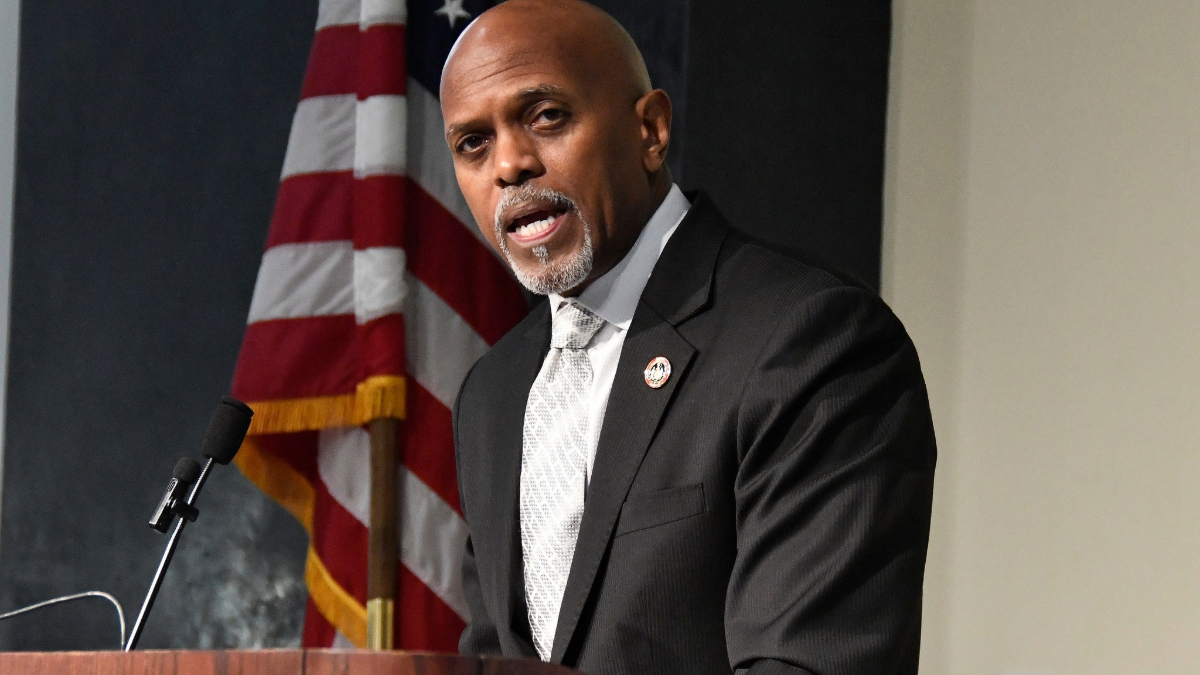
Maryland Sen. Ron Watson wants to bring online casinos to the Old Line State, and the lawmaker is making his case by pointing to legislative progress in a neighboring state.
Watson introduced Senate Bill 885 in February as a legislative attempt to authorize online casino and online bingo gaming in Maryland. SB 885 will allow the Maryland Lottery and Gaming Control Commission to award iGaming and online bingo licenses.
The licenses can be awarded to video lottery operators or a “sports wagering licensee who is both a sports wagering facility licensee and a mobile sports wagering licensee”.
Watson has filed an online casino bill for a second consecutive legislative session to generate additional tax revenue for Maryland. He projects that iGaming will generate $1.6bn in tax revenue over a five-year period as the state faces an estimated $2.3bn shortfall next fiscal year. The shortfall is estimated to reach approximately $3bn in 2029.
“This committee is well aware of all of this,” said Watson during a Senate Budget and Taxation Committee hearing on Wednesday. “The question is, are we ready to act?”
Watson points to Virginia for a key legislative push
Watson used Virginia as an example of how Maryland can advance a bill that aims to authorize online casinos and bingo, following failed attempts in previous legislative sessions.
“So, what has changed from the last time I introduced this bill?” asked Watson rhetorically. “One word: Virginia.”
In Virginia, lawmakers are considering two measures that aim to authorize online casinos. The two bills, House Bill 161 and Senate Bill 118, have both advanced in their respective original chambers after being introduced earlier this year.
“Now that Virginia has come along and their iGaming legislation has passed both chambers. The question is, why not Maryland?” continued Watson.
The two measures have progressed in Virginia’s legislative chambers, but have undergone changes. One change includes a two-session reenactment requirement. HB 161 included the requirement as a revision, while SB 118 was substituted to align it with the House bill.
Watson noted that Virginia is conducting research on the iCasino vertical’s potential in the state over a three-year period, as well as analyzing cannibalization concerns for retail casinos.
“Online casinos attract different consumers compared to land-based casinos,” said Watson.
The lawmaker is also advocating for online casinos in Maryland as Virginia’s gaming market is diversifying with a new retail casino, which could pull casino-goers from Maryland.
“This is the only bill introduced this session to generate a new revenue stream,” said Watson.
The senator has garnered support for SB 885 outside the legislative chambers, with online gaming trade association iDevelopment & Economic Association backing the bill.
Watson wants to combat unregulated gambling
In addition to more tax revenue, SB 885 also improves channelization, moving players away from the illegal gambling market and towards operators that both provide consumer protections and contribute to state tax revenues.
“What this bill does is simply modernize the delivery of games that already exist,” added Watson. “The same as we did with sports betting a few years ago.”
Watson noted the amount of tax revenue Maryland is failing to collect as a result of the influx of unlicensed gambling operators accepting customers throughout the Old Line State.
“Not $1 of the projected $200m spent illegally comes back into our state to support our schools, police, and infrastructure or our addiction services,” said Watson.
SB 885 creates a framework to regulate online casinos and bingo as unlicensed platforms continue to operate in Maryland despite regulatory and legal pushback.
“So, the question is not whether or not iGaming exists, because it does,” continued Watson. “The question is whether or not we’ll regulate it responsibly, or will we keep pretending that prohibition is working when it clearly is not?”
Maryland’s potential online casino market
Watson’s SB 885 proposes a $1m licensing fee for iGaming licensees, but with a caveat. If a licensee only offers live dealer games, a licensing fee is set at only $500,000.
Under SB 885, online bingo licenses are also $500,000. All online casino and bingo licenses have a five-year term, with renewals paid using 1% of average annual proceeds.
Watson’s measure also includes responsible gaming standards, requiring licensed operators to provide clear and concise messaging to 1-800-GAMBLER. SB 885 also prohibits credit card deposits for gaming transactions for online casinos and bingo.
The measure also includes an anti-tampering provision, with a penalty of up to $1m. Watson’s piece of legislation will continue to be discussed by Senate members.