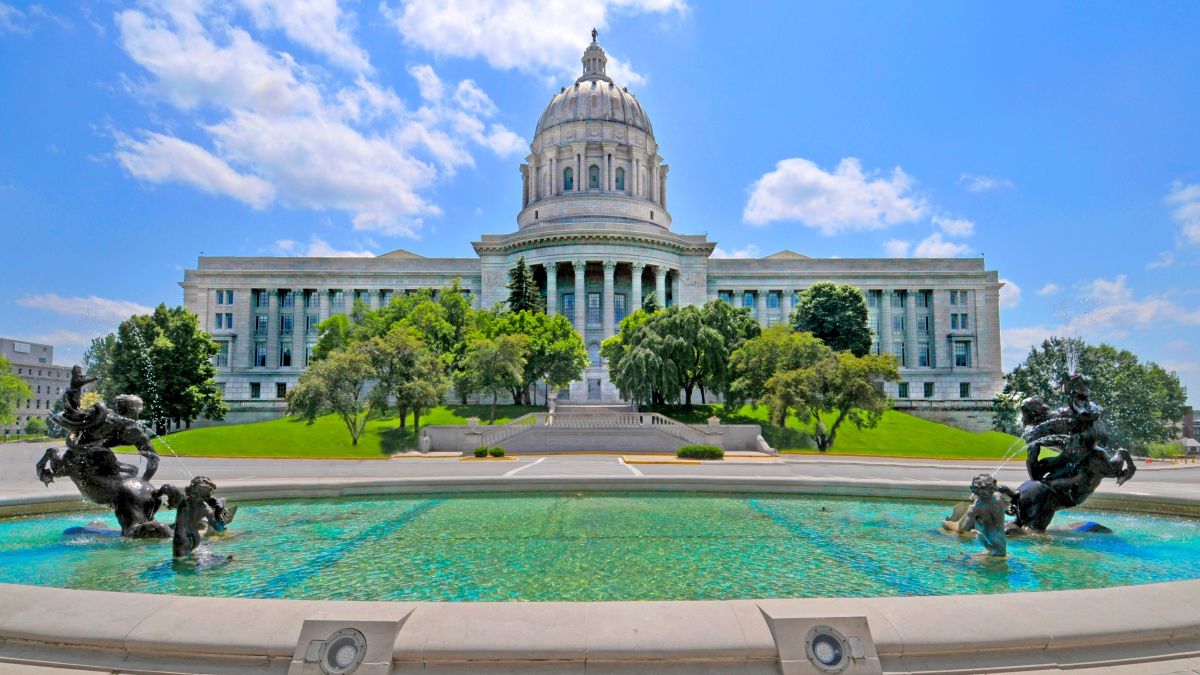
When Missouri opened its sports betting market on Dec. 1, 2025, it did so with a 10% tax rate on operators’ net winnings. After just three months of business, a legislator wants to start charging sportsbooks considerably more.
Rep. Jeff Knight’s HB 3533 proposes introducing a 24% tax on adjusted gross receipts from sports betting, in addition to the existing 10% rate. Knight filed his bill on Feb. 27 and it has been read twice in the House, but has yet to be assigned to a committee for deeper discussion as of the time of writing.
A key difference between Knight’s proposed tax and the existing tax, other than the digits, is that the new 24% rate would be charged on revenue before accounting for free bets or promotional credits handed out by operators.
Missouri’s promo credit conundrum
Knight’s legislation surfaced after the first two Missouri Gaming Commission (MGC) revenue reports for the sports betting market showed that the state has barely made any tax revenue from sports betting so far.
While Missouri gamblers wagered a total of $928m in December and January combined, Missouri received less than $700,000 in tax revenue across the first two months of legal sports betting in the state. As noted by local media, that equates to less than 0.5% of the total amount won by online and retail sportsbooks so far.
The main reason for that is that the constitutional amendment passed in 2024 to legalize sports wagering in Missouri allows licensed operators to write off “the cost of free play or promotional credits” from their taxable revenue. Sportsbook can also punt any net losses forward to future months.
These measures are by no means unique to Missouri, but essentially rule out the chance of the state making any significant tax revenue in the early days.
All told, Missouri’s eight licensed sportsbooks gave customers nearly $160m worth of free bets during the market’s first two months.
Take DraftKings and FanDuel, for example. The two behemoths accounted for almost three-quarters of the $928m in total handle in Missouri in the first two months of the market, taking $339.7m and $338.4m, respectively. It’s worth noting that those handle numbers were inflated by the free bets, which create a magnifying effect on the dollar amounts wagered as many bettors recycle their winnings into future bets.
DraftKings and FanDuel have reaped $54.4m and $65.6m in respective winnings from that handle (combining for 77% of the aggregate total revenue among all eight operators). But both companies are yet to pay a single cent of betting tax in Missouri after handing out a vast amount of promotional credits, particularly in the launch month of December, when both giants made a net loss and then carried it forward to January.
New tax would hit pre-deduction revenue
The MGC’s chair acknowledged that Missouri’s sports betting law would present a quandary in terms of the state’s takings.
“We knew that that language was going to be a challenge for revenue,” Jan Zimmerman told local media last month. “But it wasn’t unexpected.”
The new tax rate proposed in Knight’s bill would skirt the promo bets issue. The legislation defines the adjusted gross receipts that would be taxed at 24% as an operator’s revenue after paying out winnings to customers but before any promotional costs are deducted.
“No other deductions shall be allowed including, but not limited to, deductions for actual costs paid by a licensee for anything of value provided to and redeemed by customers as an incentive for sports wagering; voided or cancelled wagers; the costs of free play or promotional credits provided to and redeemed by the applicable licensee’s customers; any sums paid as a result of any federal tax, including federal excise tax; or uncollectible sports wagering receivables,” reads the bill.
The state’s tax revenue under the existing 10% rate will begin to tick up as operators relent on the promo spending, which dropped significantly from December to January. But at least one state legislator seems to think Missouri is being too generous.
SBC Americas reached out to Rep. Knight and the MGC but had not heard back at the time of writing.