
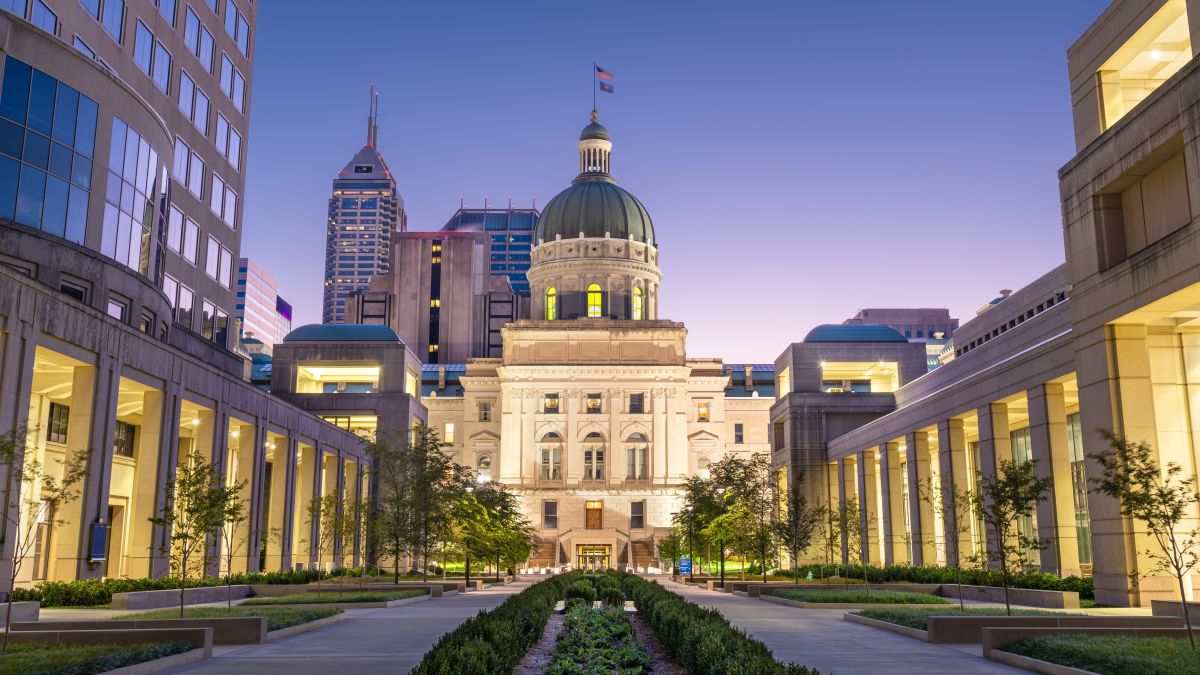
The question of whether to ban online sweepstakes gaming or regulate it was a primary topic at the first gaming-related legislative hearing of 2026 in Indiana.
Discussing HB 1052 at a House Public Policy Committee hearing on Jan. 6, a bill that, in its original form, would ban dual-currency sweepstakes gaming platforms, Indiana Gaming Commission (IGC) representatives said that the agency believes that online sweepstakes casinos are not currently breaking any state laws.
“It’s nuanced, but we don’t think so, which is why we need this legislation,” said IGC General Counsel Natalie Huffman. “Other states think their gambling laws are written in a way that is able to be used against these online casinos. But I don’t think that the way that our gambling laws are written, we can move forward with sending a cease-and-desist letter in good faith, based on current law…The multi-currency model is what allows it to operate outside of our current regulatory scheme.”
Regulator wants a ban, but is regulation better?
After Huffman and IGC Legislative Liaison Nate Friend told the committee that the commission believes it is in the public interest to ban sweeps, Rep. Jim Lucas suggested that Indiana should try to regulate them before jumping to an outright ban.
“I don’t think it’s right that an industry found a way to work within the boundaries of the law, and just because we don’t have our ducks in a row to legislate these industries and regulate them, we should punish them by outright banning them,” Lucas argued. “It’s incumbent upon us to find a way to make this work, because I don’t think we should be in the business of picking winners and losers.”
The idea of regulating sweeps was the focus of one of eight proposed amendments to the wide-ranging HB 1052. Rep. Steve Bartels’ change would abandon the suggested ban and instead look to license and regulate operators, contrasting with Chair Ethan Manning’s proposed amendment to tighten definitions of sweeps and clarify punishments for running them.
“I think we’re saying that as long as you follow the law of our sweepstakes statutes, you’re in compliance,” Bartels told the room. “We’re going to ban them without trying to regulate them first? The first time we’re here, we’re going to ban this? They’re not violating any laws, but maybe we need to regulate them.”
The IGC personnel and Manning pushed back against that idea.
“In light of the fact that this body has not regulated iGaming for our already regulated casinos, I think this would be out of order to regulate this type of conduct when we’ve not legalized iGaming for our already regulated casinos,” said Huffman.
What power does Indiana actually have?
Huffman noted that six states have legislatively banned sweeps so far. She added that another two believe their existing regulations prevent the vertical, and said that nine are working on a ban this year, including Indiana. More have sent cease-and-desist orders or attempted other enforcement action against sweepstakes casinos.
But Manning, one of the sponsors of the bill, questioned what exactly state authorities can actually do, particularly given the IGC’s stance that they are not breaking any state laws.
“I think if the gaming commission believed they had authority without us taking action legislatively, you would have already sent cease-and-desist letters or somehow banned sweepstakes casinos in the absence of legislative action?”
Manning remained firmly in the camp that a blanket ban is needed.
“They’re not breaking any current laws,” he acknowledged. “But if we don’t pass the prohibition, then we’re effectively saying we’re okay with the sweepstakes casinos continuing to operate as they are today, even though this legislature has been unable to pass iGaming and make that policy statement.”
Are legal online casinos the answer?
Speaking of legalizing online casinos, which this committee approved last year in a legislative effort that subsequently stalled, a third proposed gaming-related amendment from Rep. Kyle Miller called for the state to authorize the vertical as a way of addressing sweeps.
“If we’re looking for a legal framework for these companies, iGaming is it,” Miller opined. “Clearly, [sweeps] have cleverly found a way that doesn’t quite fit the definition of iGaming. And my contention is they’re able to do this because we’ve not passed a legal framework for iGaming.” He noted that the legalization language in his amendment is the same as the language passed by the House last year, and urged his fellow representatives to move forward with that idea.
Miller argued that banning something doesn’t necessarily take it out of the market, as Huffman adamantly contended it would. While he wants a sweeps ban, Manning suggested that if Indiana did legalize mobile casinos, as he advocated for, sweepstakes gaming would naturally die off as a result of a comparative lack of interest.
“This body has already agreed we think we want iGaming,” noted Bartels, whose own amendment wouldn’t legalize online casinos despite regulating sweeps. “So, would [sweeps] fit in that model? If we believe that, then we should regulate them now and give them time to fit into the iGaming model. I just think it’s good public policy.”
Tuesday’s hearing and the wide range of measures proposed in amendments illustrated how split lawmakers are on how to treat sweeps. There was no vote on the bill at the meeting. Indiana’s short 2025 legislative session ends in mid-March.