

The state of Illinois made more than $56 million in sports betting tax revenue in October, thanks largely to FanDuel and DraftKings, which are approaching the highest tax brackets for online sportsbook operators.
Illinois Gaming Board (IGB) data shows that the state’s 10 licensed sportsbooks fielded an all-time monthly record handle of $1.6 billion in sports bets during the month, up 11% from October 2024, which yielded $135.0 million in adjusted gross revenue.
However, in the second month of the state’s per-bet tax being in effect, the volume of wagers fell by more than six million year over year, equating to a drop of almost 16%. Those numbers continued a pattern that began in September. On the whole, Illinois residents are placing fewer wagers but collectively staking more money than this time last year.
FanDuel and DraftKings move up a bracket
Illinois formerly taxed online sportsbooks at 15% of AGR but the progressive tax rate it implemented in mid-2024 now begins at 20% and tops out at 40%.
The two biggest sportsbooks in Illinois, FanDuel and DraftKings have both eclipsed $150 million in revenue already for the fiscal year that began on July 1, meaning they are each now paying a 35% AGR rate. When they break the $200 million revenue barrier, that will rise to 40% for the remainder of the fiscal year. Other than Fanatics Sportsbook, which has moved up into the 25% bracket, all other Illinois sportsbooks are paying 20%.
Overall, Illinois reaped $41.5 million in AGR tax in October.
Sportsbooks count the cost
Meanwhile, FanDuel and DraftKings are also paying the higher flat per-wager rate of 50 cents on each bet as a result of exceeding 20 million digital sports wagers since July 1, which they hit in September.
The Illinois government charges online sportsbooks at 25 cents per wager up to that threshold. The surcharge on all 10 operators raised an additional $14.7 million in tax in October, $12.4 million (84.5%) of which came from FanDuel and DraftKings.
Illinois wager tax — October 2025
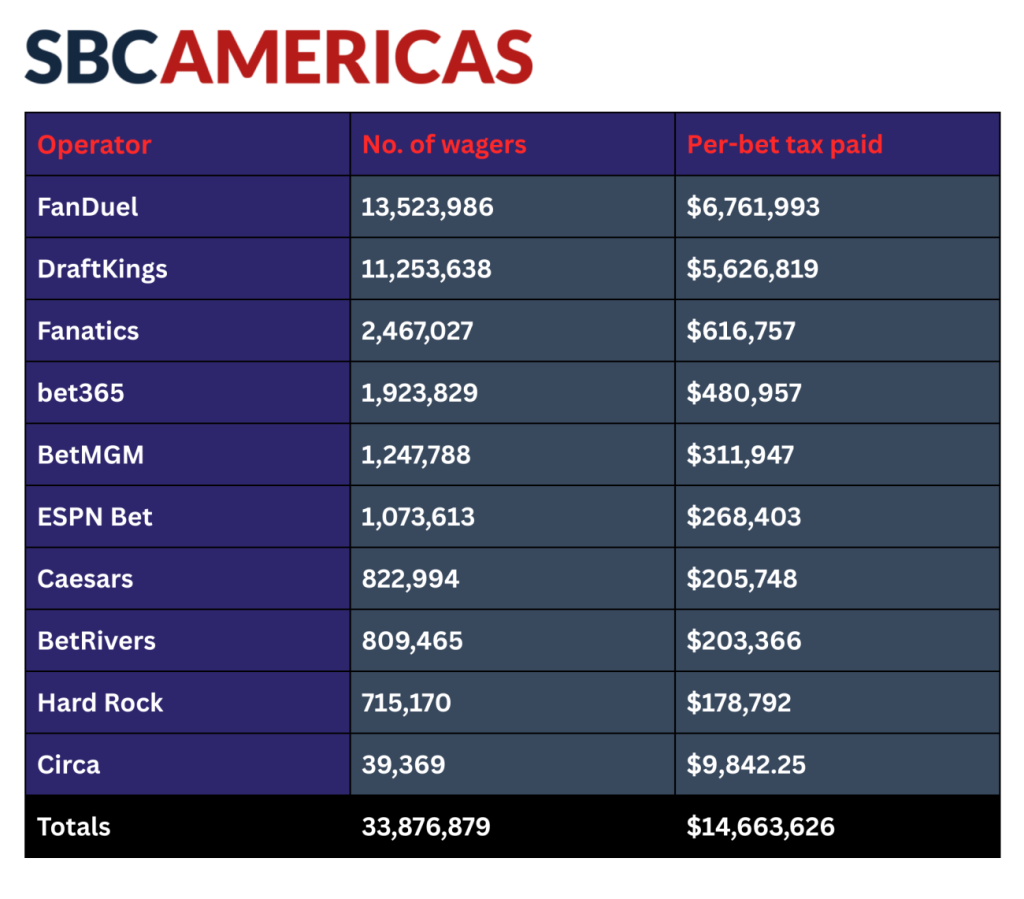
All told, the combination of the AGR tax and the per-wager charge meant Illinois’ total statewide tax receipts in October were more than $56.1 million.
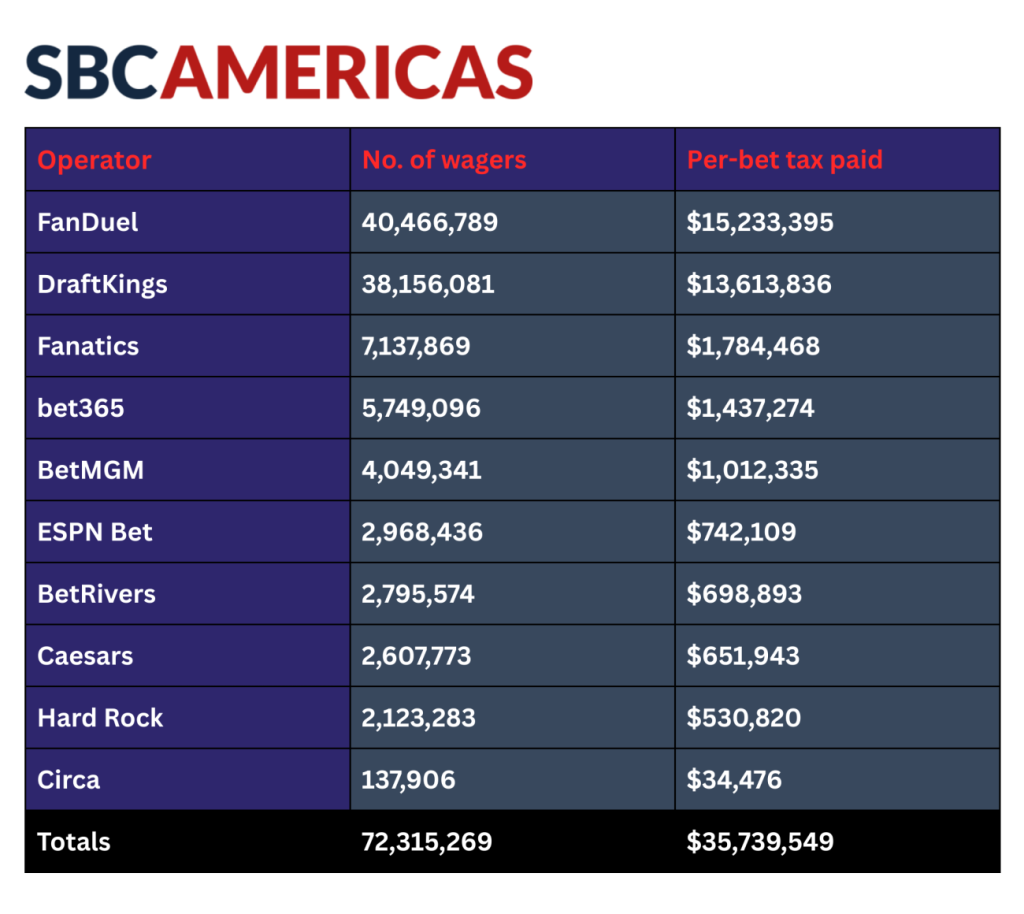
Meanwhile, in the four months of reporting since the per-wager tax was introduced on July 1, it has generated $35.3 million for Illinois’ coffers. FanDuel and DraftKings combine for nearly $29 million of that.
The IGB’s reported AGR numbers for each month now include the surcharges that five of the 10 sportsbooks are charging their Illinois users as a direct response to the per-wager fee. FanDuel and DraftKings both began requiring Illinois customers to pay up to 50 cents per bet on Sept. 1, and Fanatics, bet365 and Caesars also announced they would retaliate with surcharges. The other five sportsbooks instead opted for implementing or raising their minimum bet amounts in the state, which may also be playing a part in the number of wagers decreasing while the total value of wagers increases.
Illinois wager tax — all-time since July 1, 2025
More headwinds in the Windy City?
As well as Illinois’ statewide AGR tax and per-wager tax, Cook County charges sportsbooks 2% on all wagers placed in that region of the state. The county’s revenue for October was more than $68 million, which raised close to $1.4 million for the county.
Cook County contains Chicago, which may soon heap another burden on Illinois sportsbooks. The proposed city budget includes Mayor Brandon Johnson’s idea to add a 10.25% tax on revenue that online sportsbooks make from bets placed within the city’s limits. Based on Johnson’s office’s estimate that 40% of all Cook County betting revenue derives from Chicago, the Windy City would have taken more than $2.8 million in tax revenue in October.
Johnson’s city tax idea has received strong pushback in several forms. A bill filed in the Illinois House aimed at preventing the measure has more than 25 sponsors and bipartisan support, and the five members of the Sports Betting Alliance wrote to Johnson last week to warn that the vague licensing terms of the existing budget language could result in its membership having no choice but to stop offering online wagers to residents of the city on Jan. 1.