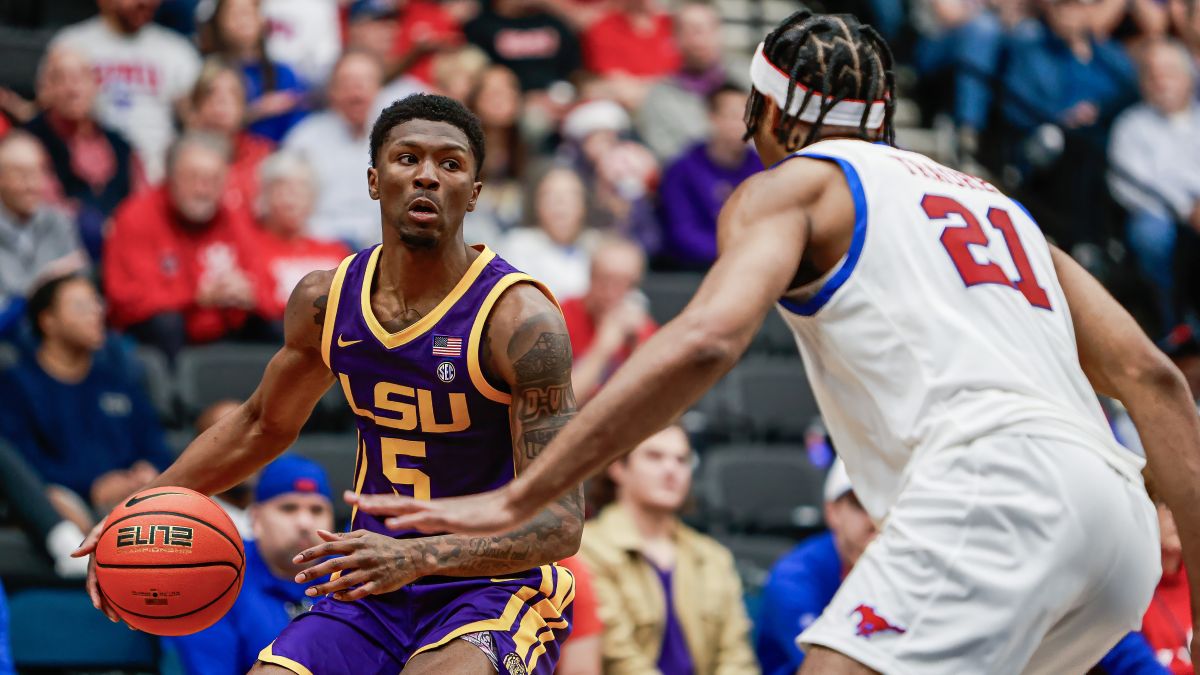
As reports rise of student-athletes receiving more abuse related to sports betting and incidents continue to emerge of players themselves being integrated in betting scandals, would a ban on college player props be an effective solution?
That was a question that panelists at the National Council of Legislators from Gaming States (NCLGS) Winter Meeting in Puerto Rico last week, as individuals in charge of college athletics programs and integrity monitoring firms discussed the challenges facing schools and the NCAA right now.
Athlete abuse on the rise
Various surveys have suggested that collegiate athletes are increasingly in the firing line from sports bettors, and NCAA President Charlie Baker has cited concerns about welfare and sporting integrity as reasons why states should ban college player prop bets.
IC360 Managing Director of ProhiBet Matt Heap noted that since May 2024, IC360 has received more than 17,000 responses to survey questions addressed to student-athletes, coaches and other staff. He said 4.3% of respondents reported being asked to give inside information on a sporting event and 4.1% have felt threatened, harassed or pressured by someone who bet on their game.
He also noted that a recent NCAA survey found that 36% of Division I men’s basketball players reported social media abuse related to sports betting within the last year.
“Over the last year, those statistics have dramatically started to climb,” added Heap. “It’s become super pervasive. Everyone thinks that they have access to the athletes and that they’re entitled to say what they want. It creates a pretty toxic environment.”
Banning props a limited solution
In the wake of calls from Baker and others, several states have taken action, including full bans on college player props in Ohio, Maryland, Vermont and Louisiana.
The movement to curb prop betting is not limited to college sports. The commissioners of both the NBA and MLB publicly questioned the need for player prop bets amid their respective leagues’ own integrity troubles, and MLB got its partner sportsbooks to agree to cap the wagers on in-play pitch bets after the Cleveland Guardians scandal.
But the question remains of just how effective limiting prop bets is in its own right.
“My opinion is that it’s not just props betting that causes that harassment,” noted Louisiana State University Executive Associate Athletics Director for Compliance Steve Lautz. “It could be an over/under, a spread, it could be fantasy leagues. People are betting in a number of different ways other than prop bets. And it all does contribute to harassment of our student athletes.”
Panelists also brought up the challenges posed by the rise of prediction markets.
“Not allowing prop betting is one issue, but I don’t think that’s going to single-handedly solve the problem,” noted Heap, whose IC360 recently launched a ProhiTrade tool dedicated to integrity monitoring for sports contracts. “There are other types of platforms in this ecosystem now. There’s prediction markets, there’s fantasy, different things they can play at 18 years old. Some of these platforms have props stuff on there and they fall under a whole different set of regulations, if any at all.”
Education and reporting tools vital
The panelists suggested that what may be just as useful, if not more so, is equipping institutions and athletes with the tools and resources to combat the issues themselves.
Louisiana Senate Judiciary Committee Attorney Alan Miller noted that his state requires schools to provide financial literacy courses for students. “I’m not sure other states do that and I think that’s something that Louisiana can be proud of.” Miller also urged state legislators to review existing criminal laws as they relate to cyber stalking and bullying.
“When an individual is harassed because someone says they have lost money because they bet on them, it’s a real challenge to provide help for our student athletes,” admitted Lautz. “The threats are real. They may be financial or ‘I’m going to hurt you or your parents, your girlfriend,’ whatever. So there’s a lot of investment in mental health resources and making sure that our student-athletes know they’re not alone and that this is not okay.”
University of Notre Dame Senior Associate Athletics Director for Compliance Heidi Uebelhor called for more insight from the NCAA on what to do when instances of athlete abuse are identified.
“It would be nice if there were a mechanism for reporting harassment and threats,” she said. “The NCAA has attempted to ask our student-athletes if they can monitor their social media accounts during March Madness, but if you’re a student athlete, do you want the NCAA combing through social media accounts?
“Right now, I don’t know what to do with any information on possible betting-related threats and harassment. I also don’t understand the penalties out there. So what if we do report it, then what? We need a mechanism for what’s going to happen next.”