For the gaming industry, it’s been virtually impossible to stop talking about prediction markets in 2025 as various financial exchanges extended into sports contracts and several gaming operators step into the vertical for the first time.
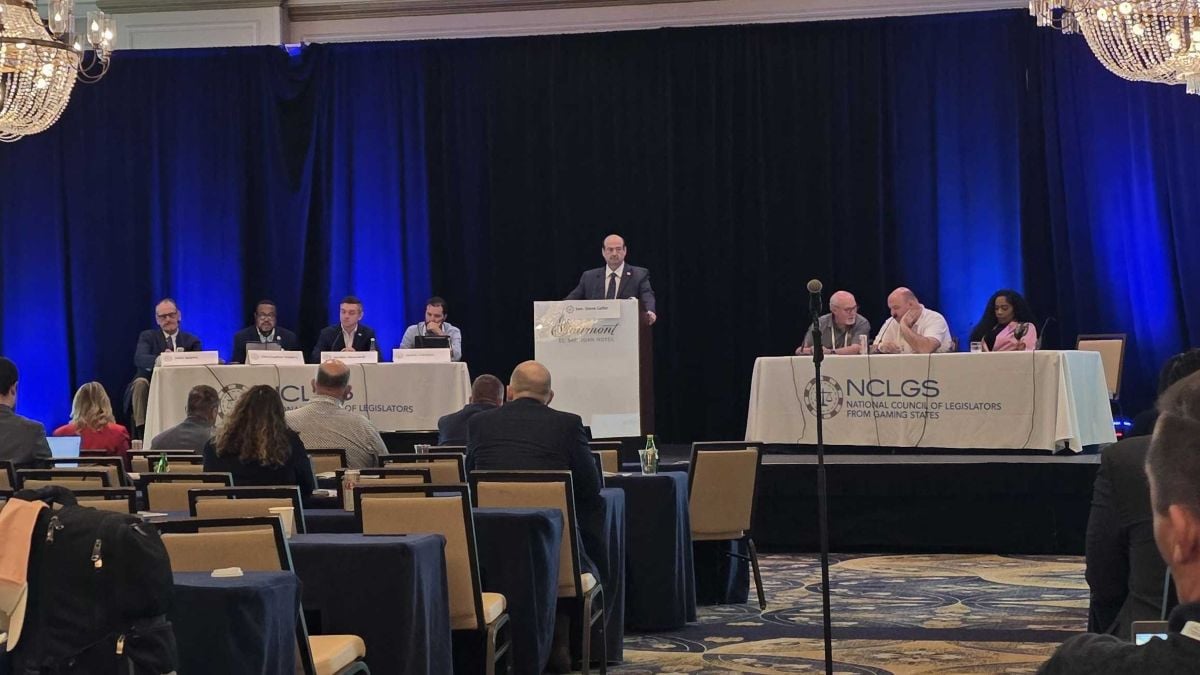
That was the case at the National Council of Legislators from Gaming States (NCLGS) Winter Meeting in Puerto Rico too. While other prominent topics like sweepstakes casinos got some play, prediction markets were mentioned on several panels as legislators, regulators, tribes, lawyers and other stakeholders offered their opinions.
Tribes will continue to fight back
Speaking on a tribal gaming-focused panel, leaders including Oklahoma Indian Gaming Association (OIGA) Chair Matt Morgan and Yuhaaviatam of San Manuel Nation Chief Intergovernmental Affairs Office Daniel Little spoke at length about the threat tribes feel that prediction markets’ sports contracts pose to their gaming operations and revenues.
“For us, it’s not a federal vs. state issue,” Morgan told the room, pointing to tribes’ exclusive rights to offer gambling on their lands under the federal Indian Gaming Regulatory Act (IGRA).
“This is a threat to our revenues and our communities,” added Little. “Anytime tribes have had something valuable, someone has been there trying to take it.”
Threatening, but also exciting?
Michigan’s Soaring Eagle Casino and Resort CEO Joe Nayquonabe took a somewhat different approach on the same panel.
While he also acknowledged the threat posed by prediction markets to tribes and commercial betting, he described the expansion of sports contracts as “the most exciting thing” in gaming right now. In particular, he suggested that prediction market platforms’ sports derivatives offerings could be more intuitive and appealing for many consumers than sports betting.
“With a Minnesota hat on, I’d fight it every step of the way,” said the Minnesota native. “But I think there’s room for us all to learn a lot.”
States must make first move, says Wallach
On a panel addressing illegal and illicit gambling, gaming attorney Daniel Wallach opined that tribes may be the most decisive party in the legal battle, describing their entry into litigation as “the turning point in states now leading more of these legal battles.”
“The connected piece between all these litigations in Massachusetts, Maryland, Nevada is the involvement of Native American tribal gaming attorneys, which have basically bolstered legal arguments advanced by state attorneys general,” he added. “They bring well-funded resources, they can engage outside counsel. The involvement of the tribes has been a catalyst for turning the tide.”
Addressing the legislators and regulators in the room, Wallach urged states to go on the offensive by suing prediction markets first alleging illegal gaming.
“States are making a mistake by using cease-and-desist letters to give companies like Kalshi advance warning,” Wallach offered. “I would recommend don’t sit on the sidelines, engage counsel, sue first. They’re Goliath, you’re David. But you’ve got the ultimate slingshot; you’ve got the law on your side, because it cannot possibly be that when Congress passed the Dodd-Frank amendments to give the CFTC exclusive jurisdiction over swaps, that it was Congress’s design to allow for sports gambling on derivatives markets.”
Regulators will continue the fight
Speaking on the panel with Wallach, FanDuel Director of Government Affairs Jay Atkins contended that labeling prediction markets as outright illegal is erroenous.
“Prediction markets are, in fact, not illegal at all,” said Atkins, whose company is about to start offering prediction markets in states where sports betting is not legal. “They are regulated by the CFTC. The question the courts are wrestling with is whether sports contracts are proper derivative contracts or gaming regulated by the states.”
Ohio First Assistant Attorney General Jonathan Blanton cautioned that oversimplification of the issue is dangerous, but stressed that he believes that the idea that sports contracts should be excluded from the definition of regulated gambling “runs contrary to the law.” Blanton vowed to continue the legal fight as long as necessary.
“We’re currently engaged in litigation and we’re gonna fight it out,” he said. “This is a state regulatory issue for certain portions of prediction markets. Maybe not all of it, but there’s a slice that belongs to the state, and we’re going to fight for it.”
Former U.S. Attorney Greg Brower added that he believes the issue will likely end up in the Supreme Court. “It is, needless to say, the biggest thing involved in gaming right now, a fascinating legal issue.”
Are federal prediction markets bills needed?
On the final panel of the week, a roundtable with legislators and regulators, prediction markets didn’t get much discussion time beyond Arizona government official Chris Kotterman’s explanation of why the state has moved to revoke Underdog’s fantasy gaming license over its partnership with Crypto.com.
But John Sparks, the former Oklahoma senator who is now chair of the Cherokee Nation Gaming Commission, suggested that if there is no federal legislative intervention, things may reach a point at which the gaming industry has to get on board.
“Ultimately, if litigation doesn’t roll it back, then we’re going to have to see if Congress is going to do something,” he ventured. Other panelists interjected to voice their belief that Congressional intervention is highly unlikely.
“If Congress doesn’t do something,” Sparks continued, “I would suggest that if the market wants to push the consumers in that direction, traditional gaming will have no choice but to move in that direction as well. It’s gravity.”