
KEY TAKEAWAYS
- Democratic Ohio Sen. Bill DeMora filed bills to license and regulate sports prediction markets as sports gambling and to ban election event contracts.
- DeMora told SBC Americas he hopes the unanimous Sixth Circuit ruling in favor of the state will force the issue within the legislature.
- Ohio’s gambling regulator already turned up the heat on prediction market operators after the 3-0 appeals court verdict.
An Ohio Senator wants the state to capitalize on the recent Sixth Circuit court ruling by passing legislation to classify sports prediction markets as sports gambling, as well as to ban election trading via event contracts.
Sen. Bill DeMora (D-Columbus) introduced Senate Bill 430 in April, which would amend state law to specify that the definition of “sports gaming” includes the use of a prediction market to trade on sporting outcomes. It would require prediction market platforms to obtain licenses from the Ohio Casino Control Commission (OCCC) in order to do business in the state.
On Oct. 13, DeMora also filed SB 479, which would add “election gambling” to the list of prohibited gambling activities and make it an offense “to knowingly use a prediction market” to trade on event contracts based on contingency related to a political election. Ohio’s gambling rules already do not allow betting on political elections on state-licensed sportsbooks.
“I will be bringing most of the bills I have introduced on several different subject matters back in 2027,” DeMora told SBC Americas. “They’re good government, they help the state budget and everything else. Hopefully, my colleagues will educate themselves about gambling matters, and we can move forward.”
Ohio’s General Assembly reconvenes for a lame-duck session later this month, but legislation will have to be re-introduced from scratch at the start of the new two-year cycle in January 2027.
Ohio senator emboldened by Sixth Circuit decision
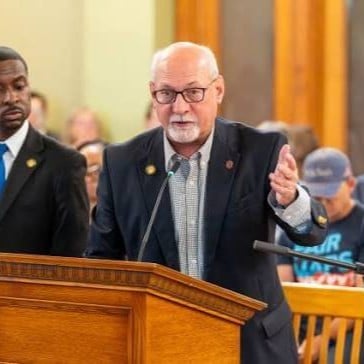
DeMora said the September ruling by the U.S. Court of Appeals for the Sixth Circuit “found that prediction markets, such as Kalshi and Polymarket, can be regulated by the state’s sports betting laws.”
The appeals court issued a 3-0 verdict on Sept. 25, in a review combining respective cases in Ohio and Tennessee, which determined that Kalshi sports event contracts are not swaps under federal commodities law and that neither state is prevented from enforcing its sports betting laws against the products.
That decision affirmed the Southern District of Ohio’s rejection of Kalshi’s request for a preliminary injunction and vacated a Middle District of Tennessee order that blocked Tennessee enforcement.
DeMora’s SB 430 was referred to the Select Committee on Gaming in May but did not make further progress. He told SBC Americas that he hopes the Sixth Circuit decision gives both that bill and his proposed election trading ban more impetus in the state legislature.
“The Sixth Circuit ruled that states can regulate predictive markets like sports gambling, which they are,” the senator said. “It’s time. Even our Republican governor said that these things are sports gambling. I agree with him. We need to regulate them and start taxing them like we’re doing with sports betting.”
Prediction markets not a partisan issue?
DeMora is the sole sponsor of SB 430, while the election betting bill SB 479 has three additional co-sponsors, all of whom are also Democratic senators. However, he stressed that the way that prediction markets have proliferated in Ohio and across the country means that it is not a partisan issue.
“It’s an issue of states having the ability to regulate industries in their own state,” he added. “Our Ohio Casino Control Commission is doing what it can, and the governor is doing what he can, but the legislature needs to do what it can. It needs to pass a law.”
DeMora added that he has been trying to convince his colleagues in the legislature that the state government lost “hundreds of millions of dollars just in the last two-year budget cycle because we are not regulating these things.”
Ohio will begin 2027 with a new governor after current Republican Gov. Mike DeWine’s term ends at the end of 2026. The state Senate Gaming Committee also needs to appoint a new chair after Sen. Nathan Manning, whom DeMora described as the only other senator who “knows anything about gambling”, was appointed to the state’s Ninth District Court of Appeals in August.
“At some point, my colleagues are going to need to get educated enough,” DeMora added. “I talked to some of my colleagues, and they just don’t get [prediction markets]. They don’t understand it, and it’s not something they do themselves, so they’re less likely to pay attention to it.”
Ohio regulator amped pressure after Sixth Circuit ruling
As DeMora referenced, Ohio’s gaming regulator stepped up its efforts in the wake of the Sixth Circuit decision.
The Ohio Casino Control Commission (OCCC) already announced its intention to fine Kalshi $5m earlier in 2026. Last month, it sent cease-and-desist letters to 10 other prediction market sites, demanding that the companies shut down their sports event contracts in Ohio.
“The Sixth Circuit’s ruling makes clear that sports event contracts are subject to Ohio’s gambling laws,” OCCC Interim Executive Director Andromeda Morrison said at that time.
Recipients’ responses have varied:
- Polymarket filed for an injunction in federal court last month, arguing that the state’s attempt to protect its online sports betting market by targeting prediction markets is discriminatory and unconstitutional.
- Robinhood disclosed in its quarterly filing on Oct. 28 that it agreed with the OCCC to stop offering new sports event contracts in Ohio by Monday, Nov. 2, in exchange for a guarantee that the commission will not enforce state gaming laws against the company while appeals are pending.
Amid reports that most recipients of the letters were defying the orders and keeping sports online, DeWine said the state would file lawsuits against companies that did not comply.
DeMora told SBC Americas he is confident that Ohio will continue to win in court against prediction markets operators. But while the U.S. waits for the Supreme Court to take up New Jersey’s petition and ultimately rule on the legality of sports event contracts, he urged state legislators not to sit on their hands and to tackle prediction markets head-on.