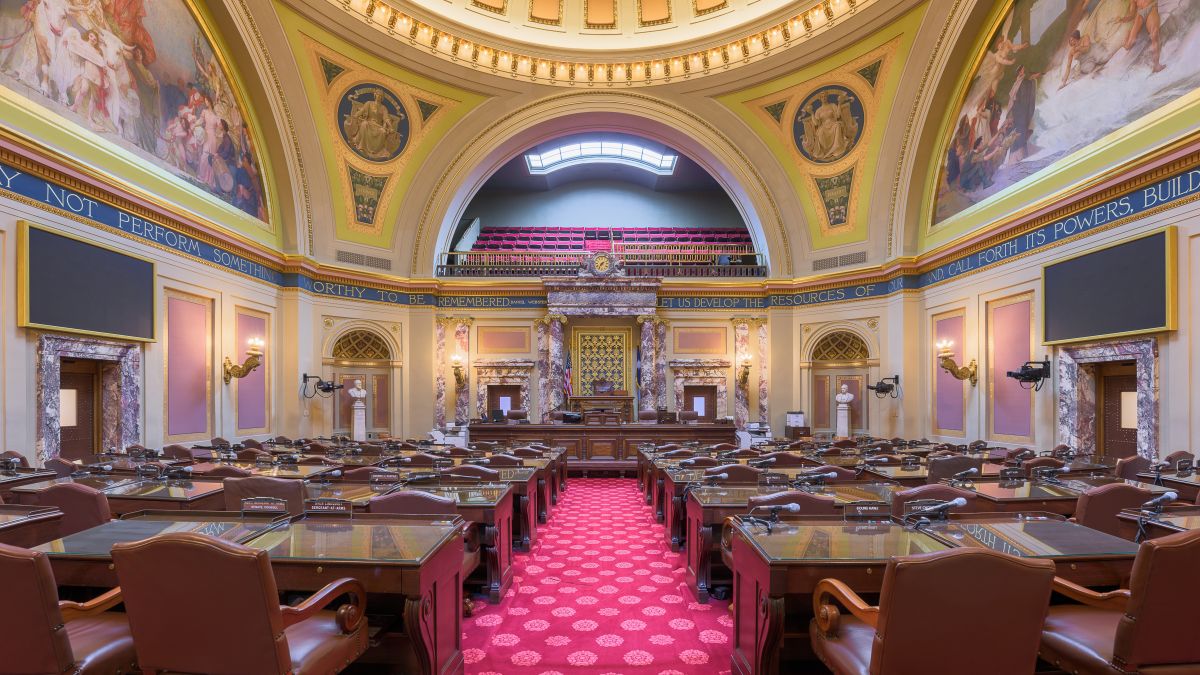
The Minnesota Senate voted Thursday to ban prediction market platforms from operating in the state.
Senators approved Sen. John Marty’s Senate File 4511 on April 30 by a 56-10 vote, sending it over to the state House of Representatives. The bill sets out definitions for the term “prediction market” and stipulates that offering or advertising any product that falls under that umbrella would be banned. Violators would be guilty of a felony crime.
If the bill were to make it through the House and become law, it would be effective Aug. 1 of this year. Local state media reported that the House inserted the text of the bill into a broad public safety bill later on Thursday.
Minnesota targets wide range of prediction markets
The bill defines a prediction market as “a system that allows consumers to place a wager on the future outcome of a specified event that is not determined or affected by the performance of the parties to the contract.
The legislation would ban prediction market trading on:
- An athletic event or game of skill, or individual performances within such events or games
- Any game played with cards, dice, equipment, or any mechanical or electronic device or machine
- Matters related to war, state or national emergencies, natural or human-made disasters, mass shootings, acts of terrorism, public health crises, or deaths
- Any event or events happening to a person or group of people
- Federal, state, or local elections, or the actions of governments and their agencies and staff
- Legal actions like civil or criminal lawsuits, settlements, pleas, or convictions
- Short-term weather events or conditions
- Popular culture events such as award shows
- Whether a person will make a particular statement, otherwise known as “mention markets”
Marty stressed that the bill, which only has other Democrats attached as co-sponsors, has “strong bipartisan” support.
Prediction market ban attempts elsewhere
The Minnesota Senate is not the first state legislative chamber to pass such a bill.
Hawaii’s House passed a prediction markets prohibition in mid-March. Meanwhile, Iowa’s Senate became the first U.S. legislative chamber to pass a bill to regulate and tax prediction market platforms at the state level at the end of March.
“Unless we act quickly, prediction markets will create a massive increase in gambling addiction, and will undermine lawful, regulated gambling in Minnesota,” said Marty in a press release. “Prediction markets are nothing more than gambling, but they have found loopholes to circumvent our laws and allow sports betting on their platforms.
“I’m concerned that the rapid increase in access to prediction markets will create a spike in gambling addiction and financial loss, hurting Minnesota families. In addition, it will dramatically cut into the revenue of Minnesota’s regulated gambling, including charitable gambling, casinos, and racetracks.”
Co-sponsor Klein banned by Kalshi
Marty’s bill has four other co-sponsors attached, all Democrats.
One of them is Sen. Matt Klein, one of three Congressional candidates that Kalshi announced in late April it banned from the platform. Klein and two others were found to have bet on their own respective political races on the platform. He was fined $539.85 and banned for five years from using Kalshi.
Klein posted on X on April 22 to say that he placed the $50 bet that he would win the primary because “I was curious about how it worked.”
“I was informed in March of 2026 that this was a violation of the platform rules,” Klein added. “In compliance with their request, I paid a penalty and agreed to be suspended from the platform. That was the only wager I have ever made on a predictions market. This was a mistake, and I apologize.”
Minnesota Senate also passes sweepstakes ban
Meanwhile, the Minnesota Senate also passed another gaming-related bill co-sponsored by Marty and Klein on Thursday.
Senators voted 62-3 to pass SF 4474, which would ban dual-currency online sweepstakes gaming platforms in the state. That bill would make it a felony to offer or promote sweeps, or to supply services like games, payment processing or geolocation tools to sweeps operators.