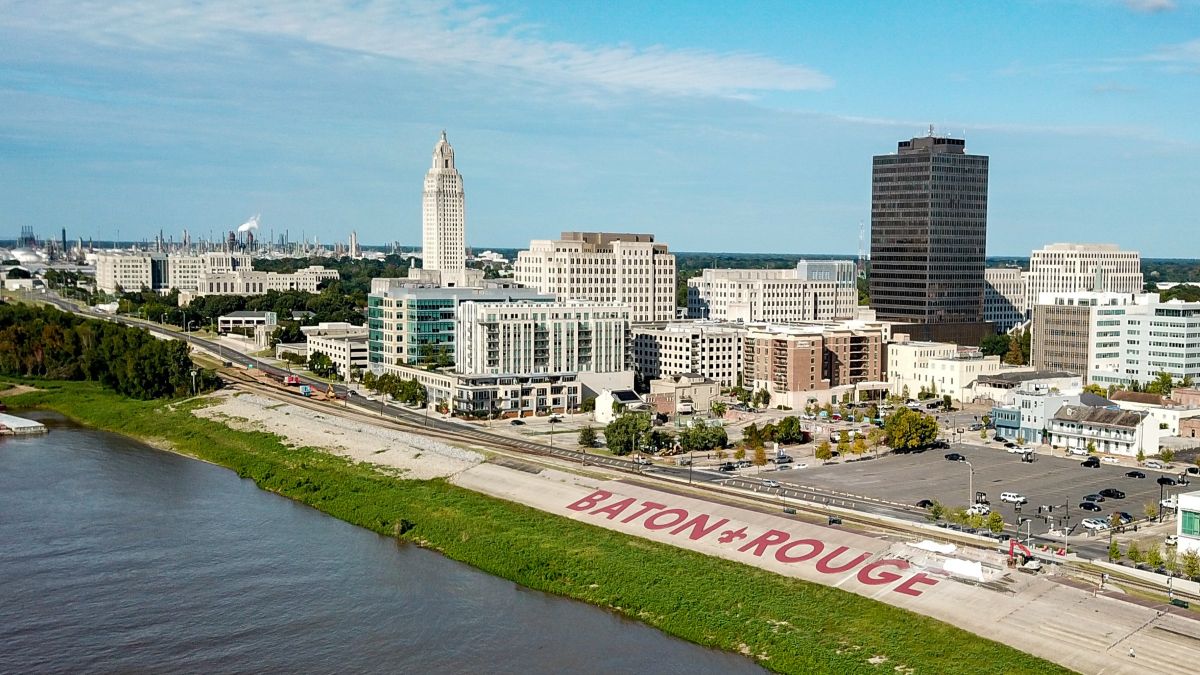
Louisiana’s 2026 legislative session begins on March 9, and legislators are already lining up a queue of gambling bills to discuss once the state Senate and House convene in Baton Rouge.
From banning prop bets and in-play micro markets to banning sweepstakes and legalizing iLottery, here are some things on the docket.
Time to prohibit props?
Senate Bill 354, which was pre-filed by Sen. Katrina Jackson-Andrews and has been provisionally referred to the Committee on Judiciary B, would change Louisiana’s sports betting statutes to remove the term “proposition bets” from the list of authorized wagers. It defines a prop as “a side wager” on a part of a sport or athletic event that does not concern the final outcome of the event.
While the list of authorized sports wagering markets includes “in-game wagering” and “in-play bets” SB 354 would also establish a brand-new definition for a “sports micro-bet,” meaning a prop bet that is placed while a sports event is in progress and which concerns the outcome of a play or action occurring in that event.
Although specific examples are not given, those micro-bets would ostensibly include whether the next pitch of a baseball game is a ball or a strike or whether the next play of a football game will result in a touchdown. As the proposed definition of a micro-bet does not specifically denote that it refers to the next play of the game, it could also be taken to include bets on things such as how many points a basketball player will score, if the bet is placed live during the game.
The bill would explicitly ban licensed sportsbooks from accepting any prop bet or micro-bet as defined. If the bill were to make it through both chambers and be signed into law, it would take effect Aug. 1, 2026.
Numerous other states have zeroed in on college props in particular in recent years, but Louisiana follows the approach also proposed recently in Colorado of implementing a blanket ban on all prop wagers.
Time (again) to clean up sweeps?
Meanwhile, a year after Louisiana Gov. Jeff Landry opted to veto a State Capitol-approved ban on online sweepstakes casinos, lawmakers are back to try again to get the vertical outlawed.
Rep. Laurie Schlegel’s House Bill 883 would update the state’s definition of illegal online gambling to include online games that simulate gambling and use a “dual-currency system of payment” that allows players to exchange in-game currency for a chance to win any prize, cash, or cash equivalents.
The bill targets not only sweeps operators but also collaborating entities like platform providers and payment processors. It would empower Louisiana Attorney General Liz Murrill’s office to issue cease-and-desist orders and seek temporary restraining orders or injunctions against violators.
Louisiana has a history with sweeps legislation and with C&Ds. When Landry vetoed last year’s bill after it passed both chambers, he said his rationale was that state authorities already had the power to tackle bad actors. Almost immediately after the governor’s veto, Murrill’s office issued a legal opinion that sweepstakes casinos were illegal and the AG and the Louisiana Gaming Control Board (LGCB) announced they had sent more than 40 C&Ds to such operators.
There is already a bill on the docket in the state that addresses sweeps. HB 53 would make operating an online sweepstakes casino a racketeering offense under state law, punishable by a prison sentence of between five and 50 years and a fine of up to $1 million.
Time to ban bettors who harass athletes?
HB 53 would also make bribing athletes and other sports participants a racketeering offense, amid the betting scandals that continue to rock U.S. college and pro sports. Another new bill also seeks to address how sports and betting intersect, by banning bettors who are found to have harassed athletes.
Sen. Mike Reese’s SB 325 would expand Louisiana’s list of excluded gamblers to include people who “before, during, or after a sporting event, threaten violence or harm against any person who is involved in the sporting event, where the threat is related to sports gaming.” It would also ban anyone whose presence in a retail sportsbook or whose participation in mobile sports betting is deemed a threat to the interests of the state or to the effective regulation of sports betting.
Harassment of athletes has become a hot-button issue for some states, particularly as it relates to college sports. NCAA President Charlie Baker has repeatedly cited protecting student-athletes from abuse as a key motivation for wanting to ban college player props, and multiple pro sports stars have also gone public about incidents of being harassed by angry bettors.
Other states such as New York have active bills to try to ban bettors who abuse athletes, and BetMGM recently vowed to take a no-tolerance policy and suspend such users across all of its markets.
Time to legalize iLottery?
Meanwhile, a pair of companion bills (HB 643 and SB 119) push the issue of legalizing online lottery sales in Louisiana, excluding them from the state’s definition of illegal gambling.
State regulators would be required to ensure that robust and effective age-verification and geolocation systems are in place.
The Louisiana Lottery Corporation reported that its revenue fell to a three-year low last year, with sequential declines in both 2024 and 2025. Per local media, Louisiana Lottery President and Chief Executive Officer Rose Hudson suggested late last year that iLottery may be worth exploring if a way can be found to ensure that brick-and-mortar retailers’ revenue is not threatened.
Louisiana’s session will be open for a little under three months, from March 9 until June 1, with a crossover chamber-to-chamber deadline of May 29.