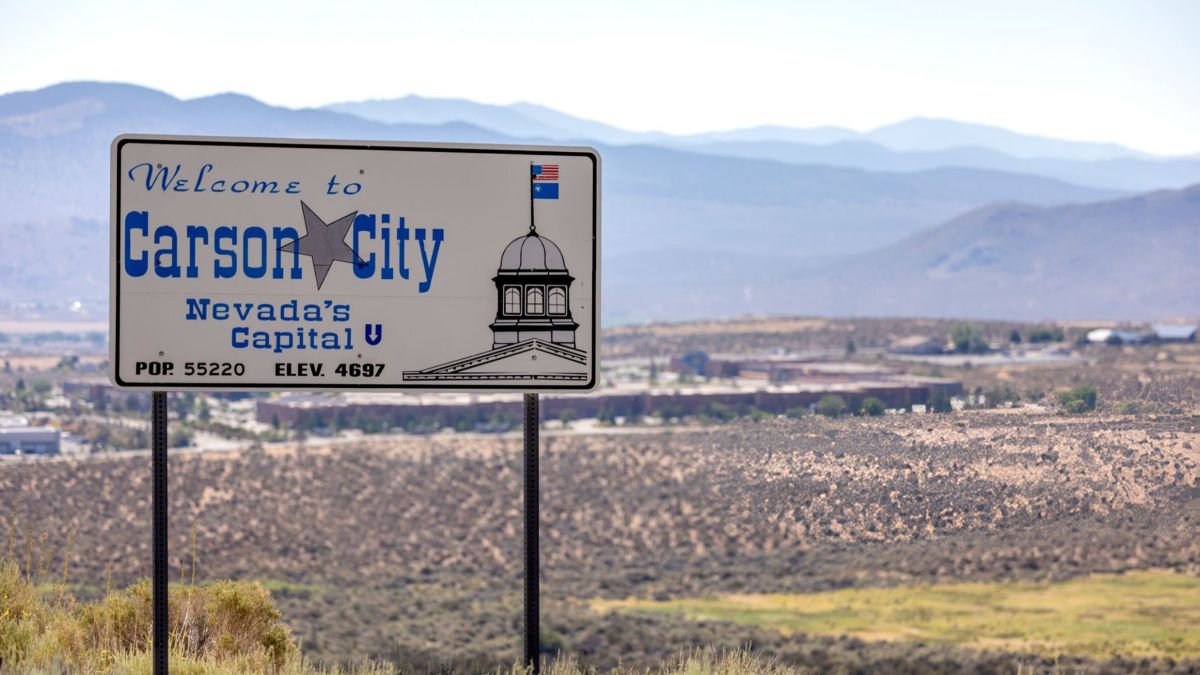
The Nevada Gaming Control Board (NGCB) has gone on the offensive against Polymarket, filing a civil enforcement action in Carson City District Court against the prediction market platform’s technology company Blockratize Inc.
The NGCB announced on Jan. 16 that it asked the court for a declaration and injunction to stop Polymarket from offering what it called “unlicensed wagering in violation of Nevada law.” The board reiterated its stance that sports event contracts and certain other event contracts constitute wagering activity under state law and are therefore illegal without a sports wagering license.
While other prediction market platforms offering sports contracts, such as Kalshi and Crypto.com, are already engaged in litigation in Nevada and other states, this is the first such action involving Polymarket.
Nevada regulators follow Massachusetts offensive
In almost every other case in any state where litigation is ongoing between a gaming regulator and a prediction markets operator, the company (most commonly Kalshi) sued after being issued a cease-and-desist order.
At the National Council of Legislators from Gaming States (NCLGS) Winter Meeting in Puerto Rico in December, gaming attorney Daniel Wallach urged states to take the fight to prediction markets by suing first. “States are making a mistake by using cease-and-desist letters to give companies like Kalshi advance warning,” he opined.
Nevada is only the second state to make such a first move against a prediction market in court, after Massachusetts, where Attorney General Andrea Joy Campbell filed against Kalshi in September.
In that instance, Judge Richard Stearns quickly rejected Kalshi’s attempt to relocate the suit to federal court, determining that because Massachusetts filed first with a narrow focus on whether Kalshi’s sports contracts violate state gaming laws, state court was the right venue. Stearns noted that Kalshi’s argument was that the Commodity Exchange Act (CEA) precludes state regulation of wagering on designed contract markets, not that it preempts state authority to regulate sports gambling on the whole.
The judge called that “a plain vanilla federal preemption defense, not a claim of complete preemption.”
State of play in Nevada
In federal court, Nevada has been a key battleground for sports prediction markets since the regulator first issued a C&D to Kalshi in March 2025.
Judge Andrew Gordon granted Kalshi a TRO in April but denied Crypto.com the same treatment in October against the NGCB after determining that Crypto.com’s sports contracts do not qualify as swaps under the Commodity Exchange Act. Crypto.com subsequently stopped offering sports contracts in Nevada.
In November, Gordon dissolved Kalshi’s TRO, citing the Crypto.com case and a Maryland judge’s decision to deny Kalshi an injunction as new law that needs to be taken into account. Kalshi appealed to the Ninth Circuit and secured a partial stay earlier this month. Meanwhile, Gordon also denied Robinhood’s request for a temporary injunction and the futures commission merchant reached an agreement with the NGCB to pull sports contracts in Nevada.
Polymarket looks to go full speed ahead in US
Polymarket officially returned to the U.S. market in December after nearly four years away, opening event contract trading nationwide for waitlisted users. The company said it shut down American trading in 2022 after settling with the Commodity Futures Trading Commission (CFTC).
It facilitated its return by acquiring CFTC-regulated derivatives exchange and clearinghouse QCEX in July 2025 and said in September that the CFTC had cleared it to offer “legal sports betting” in all 50 states. As it ramps up towards a full U.S. re-launch, Polymarket has signed a flurry of deals with new partners that range from the NHL to fantasy sports and event contracts operator PrizePicks to Dow Jones and the Wall Street Journal.
Nevada’s lawsuit may be the first court action against Polymarket, but it came shortly after the platform received its first state cease-and-desist order last month. The Tennessee Sports Wagering Council (SWC) sent C&Ds to Polymarket, Kalshi and Crypto.com on Jan. 9. As in Nevada and other states, Kalshi counter-sued and was granted a temporary restraining order (TRO) on Jan. 12.