
Louisiana’s gaming regulator is the latest to warn its licensed sportsbooks that offering prediction markets on sports breaks state law and may impact their gaming licenses.
In a letter, dated Dec. 5 and signed by Louisiana Gaming Control Board (LGCB) Chairman Christopher Hebert, the board noted that licensees and associated entities may be exploring offering or otherwise facilitating access to event-based contracts including on athletic events.
“It is the board’s position that such activities constitute sports wagering under Louisiana law,” wrote Hebert. “Any event-style ‘contract,’ ‘swap,’ ‘market’ or other ‘financial instrument’ that allows individuals to stake value on the outcome of a sporting event, other than by a Board licensed or permitted sports wagering operator, constitutes illegal gambling.”
Louisiana’s regulator points to Louisiana’s laws
Hebert added that the LGCB has exclusive jurisdiction under Louisiana Gaming Control Law, the Louisiana Criminal Code and other state legislation to regulate all gaming activity in the state.
He wrote that not only do contracts “related to sports wagers” fit the definitions of gambling under state laws, but a statute also specifies that “exchange wagering” is a type of sports wagering. The letter cited contracts based on the full or partial outcome of any sporting or athletic event as an example.
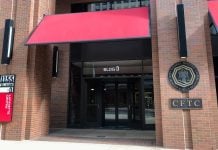
Hebert added that the board’s position is that such sport contracts are illegal gambling even if they are listed on an exchange regulated by the Commodity Futures Trading Commission (CFTC), examples of which would include Kalshi and Crypto.com. If the entity offering sports event contracts was licensed for sports wagering in Louisiana and met all requirements as a licensee, that would be a different matter.
While Kalshi continues to contend in court that CFTC regulations allow it to offer sports event contracts above the jurisdiction of state laws, Hebert argued that CFTC regulations and the Commodity Exchange Act prohibit event contracts related to gaming or illegal activity.
“As it is the Board’s position that these contracts are both gaming and illegal, the Board sees no defense to offering such activity pursuant to a CFTC license,” he noted.
Letter specific to Lousiana activities
So far, three Louisiana-licensed sportsbooks have either begun offering sports event contracts in some states or confirmed plans to do so soon: DraftKings, FanDuel and Fanatics.
Some state regulators, like Illinois, have gone so far as to caution operators to consider their actions in other states, suggesting that operating a prediction market with sports in any states that considers it illegal sports betting could compromise their licenses in that state.
The Lousiana letter does not go that far and only focuses on the action of licensees within the state.
Will attempted enforcement follow?
Louisiana’s gaming regulator has shown a willingness to try to chase operators out of the state if it deems them to be offering illegal gaming. Earlier this year, the LGCB sent more than 40 cease-and-desist letters to online gaming platforms, mostly sweepstakes sites, after Gov. Jeff Landry vetoed approved legislation banning sweepstakes casinos.
Shortly after Landry’s decision and the LGCB’s glut of C&Ds, Louisiana Attorney General Liz Murrill issued a formal legal opinion in which she stated that her office believed online sweepstakes casinos offering dual-currency casino-style games were in violation of state law and could face enforcement actions.
The LGCB has not yet sent a C&D to a prediction markets company, according to the list it keeps on its website, nor has the AG’s office broached the topic of sports event contracts.