
California’s gaming market is drawing nationwide attention with emerging verticals sparking regulatory and legal concerns while also providing players in a market with no regulated sports betting market with access to new forms of “gaming.” A coalition of tribes in the state have continued to stand up and defend their turf as the only group sanctioned by the state to allow certain times of gaming in California.
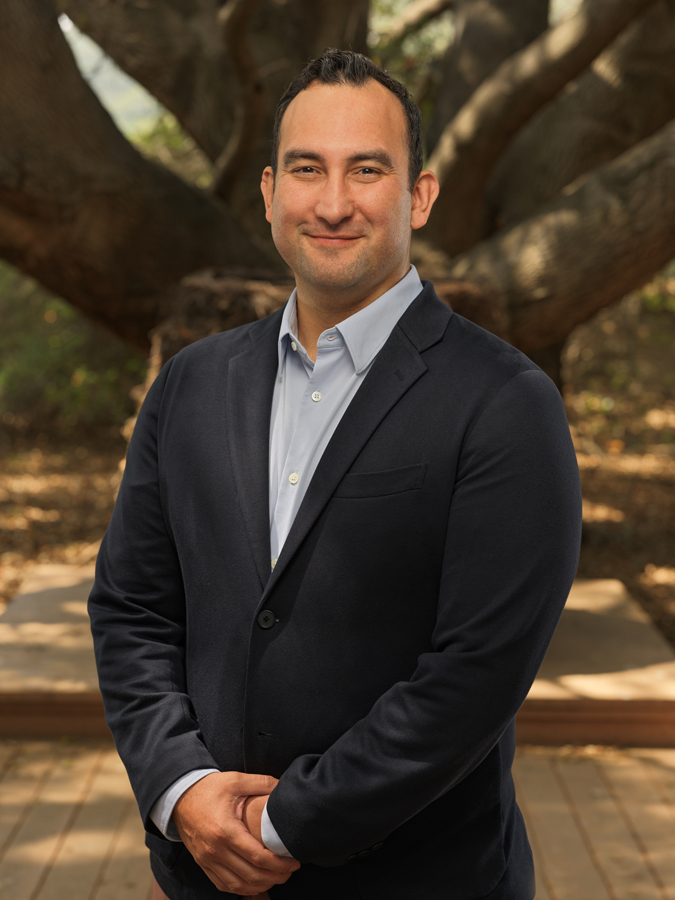
Pechanga Resort Casino President Sean Vasquez holds a key position as leader in the tribal gaming community, providing a voice and resource for California tribes and stakeholders in gaming. Vasquez, who will be attending SBC Summit in Lisbon from Sept. 16-18, spoke with SBC Americas about how tribes are dealing with changes in gaming.
The Pechanga executive also detailed how tribes balance competition and collaboration.
California tribes can get lumped under the phrase “the tribes” sometimes. For those who may not be familiar with the dynamics of California, could you offer your take on the nuances of tribal nations and what categories they can fall into?
The narrative of “the tribes” can be somewhat lazy, as if the 109 federally recognized tribes in California constitute a monolith. I’ll say, a lot like tech companies are similar, tribal interests are similar. You’ve got your market leaders, i.e., “Mag Seven,” if you will: Pechanga, San Manuel, Graton, Thunder Valley, Chumash, Yocha Dehe and Morongo, with billion-dollar operations. Then you’ve got tribes with 200 slots in more rural areas.
The real story? It’s about economic sovereignty meets sophisticated capital deployment. Moreover, I think the real nuance is in gaming compacts, geographic advantages and political sophistication. Some tribes are passive, while others are more active, because I believe we all have a different perspective on how to secure the best financial future and interests of our tribal stakeholders.
How do tribes with competitive gaming products balance camaraderie and competition? Do groups like California Nations Indian Gaming Association (CNIGA) help keep people connected?
This is fascinating from an operational perspective. And, I have to stress that I am not part of the political or legislative process of our tribe. But, from my business perspective, while some tribal gaming operators have market share overlap, i.e., competing for the same customers on Saturday night, it’s not weird or awkward to be standing shoulder-to-shoulder with them in Sacramento on Monday morning, fighting commercial gaming. Because there’s a ton of shared interests and reason to be cooperative.
Further, organizations like CNIGA and Tribal Alliance of Sovereign Indian Nations (TASIN) form a mutual defense against external threats while maintaining sovereignty. In a way, these organizations function a lot like NATO, in that we’ve all figured out that a rising tide lifts all boats. For instance, when Pechanga wins on a regulatory issue, every tribe benefits. That’s not camaraderie, that’s strategic alliance building.
California has turned into a battleground on emerging markets like DFS, sweeps, and prediction markets. Why do you think these are all growing in popularity?
Well, the genie’s out of the bottle. I’d say COVID accelerated digital adoption by a decade. You’ve got VCs pumping billions into anything that smells like gambling but isn’t technically gambling. DFS, sweeps, prediction markets, they’re all arbitraging regulatory gaps. And, I think these operators are betting that by the time regulation catches up, they’ll be too big to fail. Classic Silicon Valley playbook. But here’s where tribes have leverage, because unlike them, we’re not just operators; we’re sovereigns. That’s a different conversation with state and federal officials.
In the past, Victor Rocha of Pechanga.net and tribal entities have expressed frustration that their concerns were falling on deaf ears in California. Any insights on what changed?
Money talks. And recently, we’ve seen a lot of interest from outside operators trying to proliferate a series of digital business models, explaining how they’re different. But they all fall in the same vein. Whether it’s DFS, sweeps, event contracts, or iCasino, all of this is fundamentally gambling. And the state, along with its voters, entrusted us, the tribes, as the stewards of gaming. And we’ve demonstrated ourselves to be faithful in that regard, as tribal gaming generates $9 billion annually, and we’re one of the largest employers in California. Simply put, we’re Californians too, and we don’t want money or opportunity to leave the state.
Last year, Pechanga inked a deal with The Venetian that extended rewards benefits across the two companies. Increasingly, it seems like tribal groups are getting more involved in Las Vegas, be it through partnerships or properties. Why do you think Vegas is such an essential place for California tribes?
Well, I can’t speak to the motivation of other tribes, specifically San Manuel or Seminole, however, in terms of our deal with The Venetian, we saw an opportunity to work with one of the most sophisticated operators and polished brands in the world. For us, the partnership offers more than customer acquisition. It’s shared knowledge, market insights and talent pipelines. When Apollo Global acquired the brand and its assets, it became a no-brainer to work with them.
And in terms of a more fundamental “customer acquisition” reason, you think of it like this: we want to treat our high-value players to Vegas comps. And like us, The Venetian highly values their loyalty players, so they want to make our comps available to them. Our partnership is the bridge. And while having a Vegas partnership offers legitimacy in some respects, the higher value for Pechanga is being paired with institutional investors who are smart, talented and seek operational excellence.
Finally, what story about Pechanga do you wish the press would pay more attention to? Is there something the group is doing that deserves more attention?
I think what annoys me most, being a tribal member who was raised on the reservation, is that nobody talks about Pechanga as what it really is: “one of the most successful examples of economic self-determination in American history.” We went from poverty to prosperity in two generations. We’re not just running a casino; we’re funding education, healthcare and infrastructure for our people. Tribes aren’t asking for a seat at the table. We built our own damn table. We’re not just competing with commercial gaming; in many metrics, we’re exceeding it. So, whether it’s sports betting, futures trading, iGaming, sweeps or whatever comes nextm Pechanga’s digital assets and products’ future is inevitable, not aspirational; we’re not trying to play catch-up, in many aspects, we’re setting the pace.