
The group of California tribes suing Kalshi in California Northern District Court have more requests for the judge.
In addition to suing Kalshi and Robinhood for offering what they claim is illegal sports betting in the state, the tribes are also seeking an injunction to muzzle some of Kalshi’s efforts in the meantime.
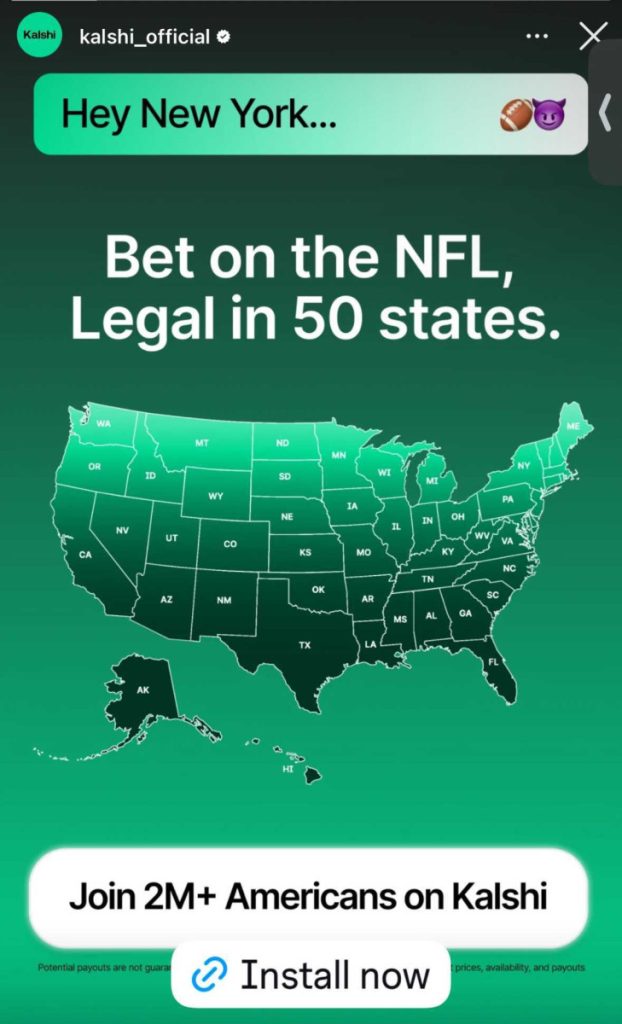
The injunction seeks two things. Firstly, the tribes want the court to order Kalshi to stop offering sports-related event contracts on tribal lands. Secondly, it wants the court to prohibit Kalshi from advertising its product as “legal in all 50 states” on a national level.
Injunction wants Kalshi sports contracts off tribal lands
As the tribes argued in the initial complaint, the injunction claims that Kalshi’s sports contracts qualify as class III gaming and are in violation of the Indian Gaming Regulatory Act (IGRA) if offered on tribal lands.
The injunction seeks to stop Kalshi from offering contracts related to sports. The request asks the court to prohibit event contracts involving these two questions and any related iterations on these questions:
- “Will <team> win <title>?”
- “Will <team> win <event>?”
The other element of the injunction takes issue with Kalshi’s aggressive advertising campaign, which the tribes claim is in violation of the Lanham Act, a federal law that includes false advertising.
The Kalshi advertising campaign not only highlights the nationwide availability of the product but has repeatedly touted what it offers as sports betting.
Tribes say Kalshi is guilty of false advertising
The tribes argued that Kalshi’s marketing push is deliberately confusing and misleading. They also contend it is unequivocally false advertising to present its offering as sports betting that is legal and available across the country.
“These statements are not susceptible to more than one reasonable interpretation; the only reasonable interpretation is that Kalshi offers ‘sports betting’ and that sports betting is ‘legal in all 50 states.’ These statements are literally false,” the brief argued.
The filing also called out an advertisement that mentioned March Madness betting as something that high schoolers did, which the tribes noted would not be legal in any jurisdiction considering most high schoolers are under the age of 18.
In court, Kalshi has repeatedly argued that what it is offering is not something that should be covered by gaming regulators, as they are financial contracts covered by the Commodity Exchange Act (CEA) and the Commodity Futures Trading Commission (CFTC).
Counsel for Kalshi has also stated publicly that the fact that it has not been presenting those contracts in odds format differentiates them from sports betting as well.
However, in the marketing campaign, Kalshi is very clearly positioning itself as a venue to wager on sports, which remain some of the most popular types of contracts the company offers.
The group traded over $400 million in contracts during the first week of NFL action, the vast majority of which was on sports. That pales in comparison to the combined handle of regulated sportsbooks, although sports betting handle and trading volume are not the same metric.
The tribes are set to appear in court on Oct. 9 in regards to the injunction.