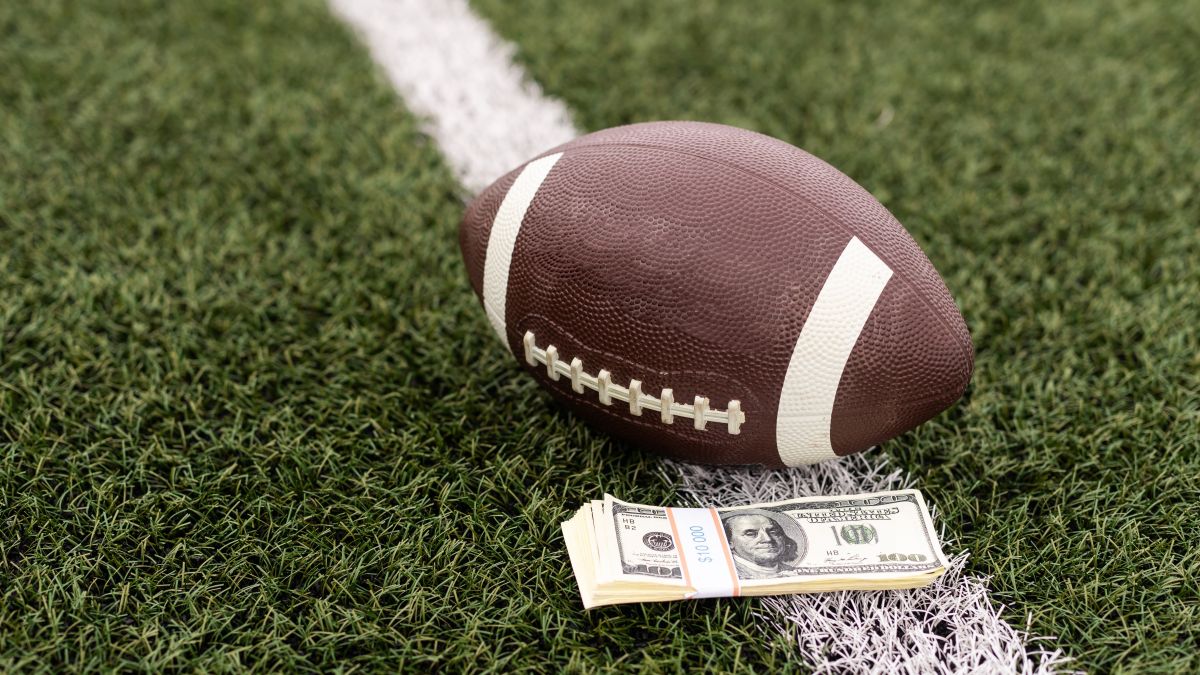
The first week of a new NFL season is big business for U.S. sportsbooks. These days, it’s also big business for some trading platforms and prediction market operators.
Led most prominently by Kalshi, which souped up its sports contracts offering in advance of the 2025 kickoff to include prop-style and parlay-style markets, the first round of NFL games produced some huge numbers for derivatives marketplaces.
Kalshi CEO Tarek Mansour posted on social media on Monday, Sept. 8 to state that his company had handled $441 million in trading activity since the Dallas Cowboys and the Philadelphia Eagles hit the field for the season opener on Sept. 4. That’s before Week 1 concludes on Monday night with the Minnesota Vikings against the Chicago Bears.
Reputedly, it took nearly $200 million on Sunday alone, and the vast majority of that dollar amount was on sports.
“NFL week 1 is equal to a U.S. election,” he wrote on X. “Probably nothing.”
This time last year, Kalshi was turning heads for the markets it was offering on the 2024 U.S. presidential election and other political events. Fast-forward 12 months and it has built out a sports-side product that is effectively a sportsbook in all but name.
As well as listing a variety of NFL futures and single-game yes/no outcomes, as well as for a range of other sports, it added self-described and self-certified prop markets in advance of the football season kicking off, and its menu for NFL Week 1 also included multiple-outcome markets resembling the kind of parlays that are so popular on sports betting apps.
In a statement to SBC Americas a few days before the NFL season started, a Kalshi spokesperson said it was adding more markets to meet “surging demand for legal and regulated choices.”
Kalshi has not only been using terminology such as “bet” and “wager” in much of its NFL-related marketing in recent days, but it has also been including NFL and NFL Players Association imagery and likenesses, reportedly without any form of consent from the league or the players’ group.
Kalshi volume does not equal sportsbook handle
While Kalshi and other prediction markets will continue to lean on their topline volume dollar amounts as a mark of their activity, trading volume and the handle reported by sportsbooks are not the same.
Handle in sports betting is the total amount of money wagered on an event by customers, while trading volume includes every single buy/sell transaction, even if the money has already been accounted for. For example, if a Kalshi NFL contract with a potential winning payout of $1 was bought for 50 cents and subsequently sold higher at 60 cents, the “handle” in sports betting terms would be 50 cents, whereas the trading volume on Kalshi would be $2, as each trading action is assigned a dollar value.
In essence, trading volume is likely to be several times higher than the handle would be in sportsbook terms.
While Kalshi and platforms such as Kalshi partner Robinhood currently enjoy the benefit of being able to offer a sports betting equivalent even in states that have not legalized sports betting, for now, the range of markets that Kalshi offers on the NFL is fairly small, certainly in comparison to a typical online sportsbook.
That was referenced by DraftKings’ Jason Robins last week at the Bank of America Gaming & Lodging Conference, when he suggested that prediction markets’ advantage in sports lies in geographical breadth rather than in their actual product.
“If you think about it conceptually, it’s going to be very difficult to ever have as full-featured an offering in a prediction market setup as you could in an online sportsbook,” Robins suggested. “I just think it’s virtually impossible under that type of regulatory framework to ever have something that could be as rich and varied as what you see in an online sportsbook. It’s clearly, in my mind, going to be challenging for that product to compete. But I think where you don’t have anything else, it’s pretty good.”