
Oral arguments in the legal appeal of Kalshi’s preliminary injunction in New Jersey are on Sept. 8, but don’t expect the case to close once judges issue their response there.
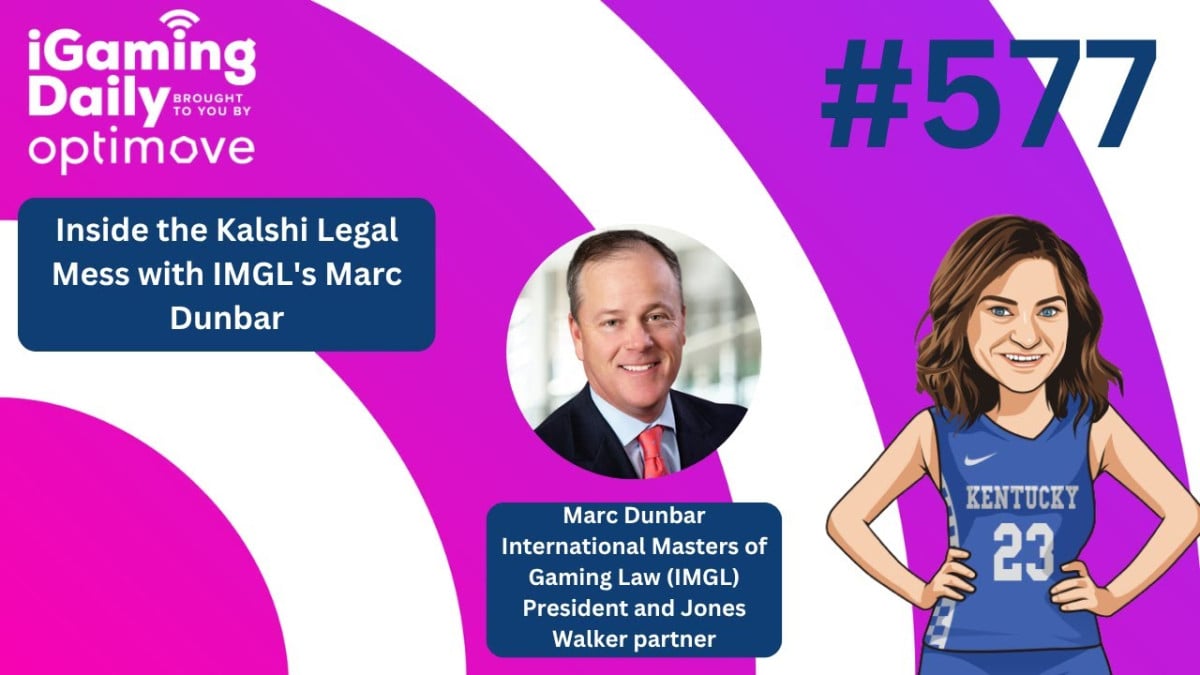
Speaking on a recent episode of iGaming Daily, Jones Walker partner and International Masters of Gaming Law (IMGL) President Marc Dunbar said he expects the debate to go all the way to the Supreme Court and that it will likely be two years before there is a real resolution across the several lawsuits addressing the issue.
Kalshi could be headed for SCOTUS…eventually
“The Supreme Court does not like to take cases that aren’t fully developed and have a good record,” he explained. “I could see it going up and being review-denied. I could see it going up and even having some guidance given on the injunction law if they feel like it was inappropriately applied.”
The rulings came quickly in Nevada and New Jersey, however, the Maryland court took months before denying Kalshi’s request for a preliminary injunction. Dunbar thinks this deliberate pace is goint to be par for the course going forward.
“Federal judges are political animals,” he explained. “They know what’s going on in other circuits, particularly cases with a huge profile. And I think they started to look at this and said, ‘Hold on just a second. We need to take a little bit more time and realize what’s going on in the marketplace.’ And I think that this is just a function of the noise level.”
As for what the judges will be looking at, the various arguments and amicus briefs brought up a wide range of arguments from the language of the special rule to the Indian Gaming Regulatory Act (IGRA) to field preemption to what defines a swap. All of these smaller arguments will be weighed, but Dunbar explained what judges will probably end up doing is just looking broadly at sports event contracts, seeing they are very similar to sports betting.
Dunbar believes judge look at sports contracts holistically
“The outcome is going to be based a lot more on what are the equities, what are sort of the common sense things that should apply to this industry and less so nuanced little wrinkles of field preemption or express preemption or conflict with IGRA, things like that.”
Dunbar called those wrinkles “table legs” that will prop up an argument that he thinks will ultimately conclude these contracts aren’t allowed. While judges in New Jersey and Nevada sided with Kalshi on the preliminary injunction request, which bodes well for Kalshi, there are plenty of instances where the final judgment does not coincide with an injunction ruling.
Maryland, on the other hand, denied the injunction request, creating a situation where Kalshi and Crypto.com may need to geofence the state out of sports event contracts offerings. Kalshi argued this runs afoul of what a designated contract market (DCM) agrees to with the Commodities Futures Trading Commission (CFTC) regarding an open market.
Dunbar noted there isn’t a lot of precedent on that front, but you could arguably go back in history to some of the case law that led to the establishment of the CFTC in the first place for some answers and some rulings that bode well for the gaming regulators in their cases.
Bucket shop laws will be a major part of argument
“If you go back to the turn of the 20th century, when futures trading started on commodities, whether it was cotton or wheat, there actually was an entire body of litigation and law that basically said, we will recognize that Chicago can trade commodities, but we’re not going to let it happen in Louisiana because Louisiana views that as gambling,” he said.
These laws, called bucket shop laws, specifically targeted brokerages that claimed to be trading legitimate stocks but were effectively just gambling. When the Third Circuit Court heard oral arguments in Kalshi’s challenge of the CFTC’s stance on election-related contracts, the panel of judges brought up bucket shop laws several times over. According to Dunbar, expect more of the same in these case.
“I think we’re going to hear a lot of legal history around bucket shops. I think that that’s going to matter a lot.”
To date, preemption has been the central tenet on the debate, namely whether or not CFTC regulations on event contracts preempt state gambling regulations.
Michigan and Churchill Downs battle could be relevant
A somewhat related case in Michigan has Churchill Downs challenging Michigan Gaming Control Board (MGCB) regulations around advance-deposit wagering (ADW) apps. Like Kalshi, Churchill Downs has been winning so far, as both a District and Circuit court ruled to maintain an injunction keeping its TwinSpires app online as the case proceeds.
In those rulings, both judges fairly easily concluded the Interstate Horseracing Act (IHA) preempts state racing regulations. Dunbar worked on the case that helped set up the legal pathway for widespread ADW apps across the country. While some say the case is tangential to Kalshi, he believes Kalshi will bring it up to try to argue its side.
“There are some grounds for their pathway, particularly if you look at the history of litigation that led to the Indian Gaming Regulatory Act (IGRA). But you have an overwhelming body of of of law that started, I believe ,with the Interstate Horse Racing Act and with the Indian Gaming Regulatory Act, and even in a weird way with the Unlawful Internet Gaming Enforcement Act and the WIRE Act out there. There’s so many hoops, and I think the Maryland judge realized that there are a number of nuanced issues out there that stand for this basic proposition,” he said.
“Interstate gambling is something that we are not going to go lightly into. And we have a federalist system of government and a state’s determination of what is and what is not gambling has been the way it always has been. And I just don’t see a body of judges stomping on that federalist framework, particularly when you get to the U.S. Supreme Court. You have what I would say is a 7-2 overwhelming majority in favor of a states’ rights system right now.”
Dunbar also pointed out that most of the Republican-appointed judges in the higher courts tend to take a view of statutory interpretation that is very similar to Supreme Court Justice Antonin Scalia. With that mindset, these judges will be preoccupied with the letter of the law and nothing implied or said by other people regarding its enactment.
Court will likely ignore comments from former lawmakers
That is why he says it is unlikely the Third Circuit Court will give much weight to the amicus brief filed by ten former members of Congress offering what they think they legalized when they passed the Dodd-Frank Act of 2010. That group includes former Sen. Blanche Lincoln, who now consults for Kalshi.
“Well, it’s led by somebody that had to disclose that they have a financial interest in the outcome. You begin with that,” he said with a laught.
“The vast, vast majority of courts just throw that out. They really don’t care about it after the fact opinion.”
As for the long timeline on the case, Dunbar noted this is something that benefits Kalshi, even if the company is racking up substantial legal fees in active cases across four states. What would motivate the company to keep all of them active as opposed to consolidate its efforts?
“Time in market,” you know,” Dunbar offered. “I mean, they’re making money, right? So the longer you’re in market, the better you are…if you can get a casino open and you can get that first coin drop, it’s very unlikely that you’re ever going to have government shut it down.”
While that is more a brick and mortar situation, Dunbar said the more Kalshi, and now others, enter the market, the less likely court invention could become.
However, with digressing points of view across the cases and a long road ahead to any actual trials, the odds Kalshi remains online in the long-term continue to be quite murky.