

Around half of American adults say they partake in at least one form of gambling, but confirmed participation in almost every category fell in recent years.
That’s the bottom-line conclusion of a new Gallup poll, which combines the results of telephone surveys and an online poll conducted in recent weeks.
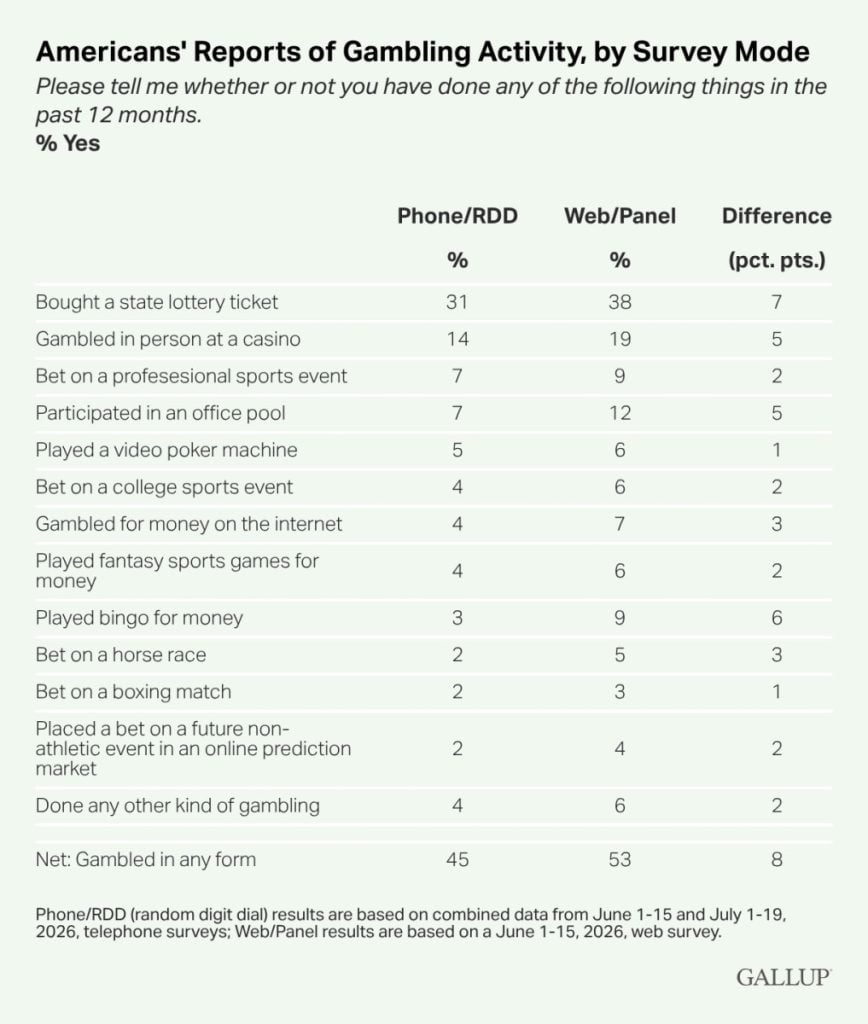
The phone survey concluded that 45% of respondents reported they had gambled in at least one form in the prior 12 months, down from 64% in 2016. The web survey’s 2026 participation rate was eight percentage points higher, at 53%, and the online poll produced higher rates of ‘yes’ responses across the board.
Are older gambling methods still most popular?
Gallup interviewed 2,201 American adults by telephone in June and July. The poll weighted responses for demographic factors, political identification, and phone usage. The company said the margin of sampling error was +/- 3 percentage points.
Meanwhile, Gallup also conducted an online survey in June that asked the same gambling questions of 2,043 adult Gallup Panel members, with the same margin of error.
The results showed that the largest drops in activity came in longer-established gambling methods, such as in-person gaming at casinos (down 12 percentage points) or buying lottery tickets (down 18 percentage points).
However, those were also the most popular ways of gambling in the 2026 surveys. For example, buying a state lottery ticket and gambling in person at a casino were by far the two most popular responses, at 31% and 14%, respectively, in the phone survey and 38% and 19% in the web poll.
In comparison, only 7% of the phone survey respondents said they bet on a professional sports event via any means (down from 10%), and only 4% said they gambled on the internet for money.
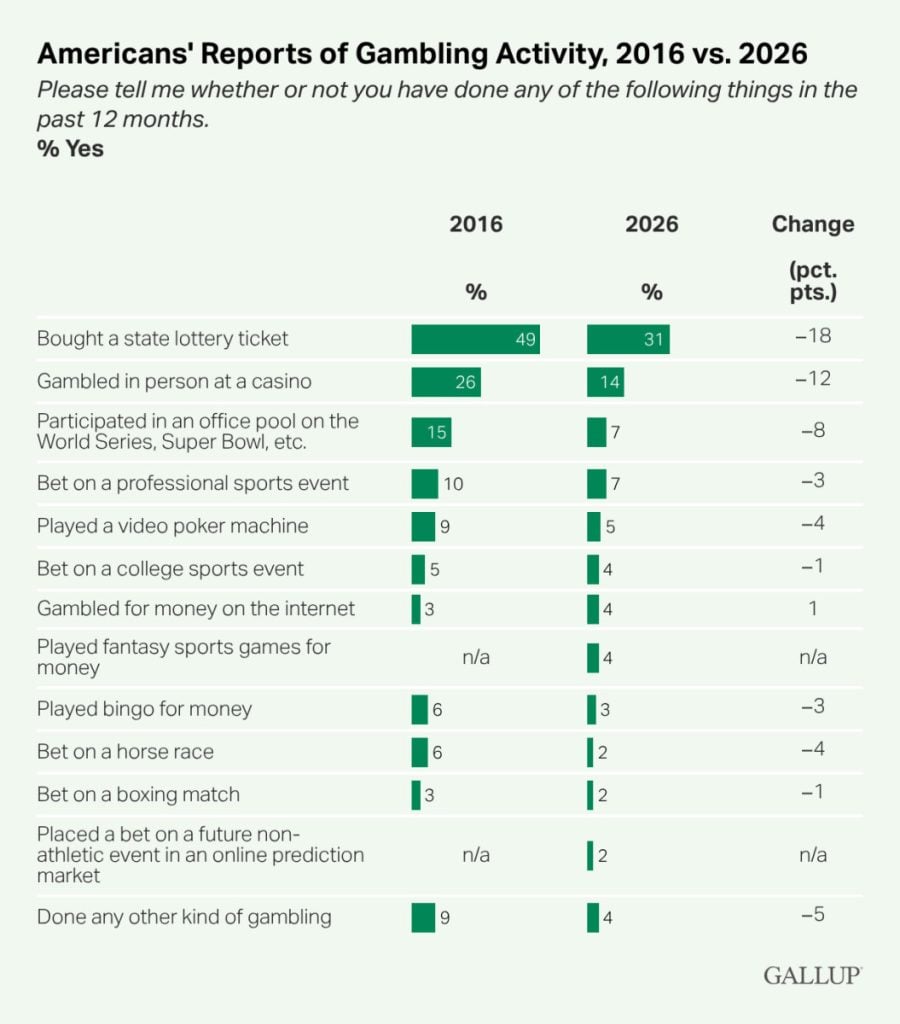
Gambling for money online was the only category that posted an increase since the last poll in 2016, up by one single percentage point. Back then, legal and regulated options for gambling online were more scarce than they are today, and the Professional and Amateur Sports Protection Act (PASPA) was still two years away from being repealed.
Gallup suggested that the rise of internet gambling may be a factor in the reported participation rate of in-person gambling like casino gambling and office pools over the last decade.
Are fewer people gambling, or are fewer admitting it?
Regarding the higher affirmative response rates for the online poll than the telephone survey, Gallup suggested that people may be more inclined to discuss their gambling activity via typed responses than by admitting it to a person on the other end of a phone call.
So are fewer people actually gambling, or are fewer people admitting it — or a bit of both? 2026 is a very different gambling landscape than 2016, not only in the types of gambling available to people, but also in the mainstream visibility of gambling.
Sports betting advertising is frequent and prominent via various media, sports betting scandals in both pro and college sports have become more frequently reported, and many state and federal lawmakers and organizations are raising concerns over addiction impacts and other harms.
Has the average American adult’s perception of gambling changed as a result? It is hard to make a definitive judgment.
“Whether that decline represents a sharp turn away from gambling, reluctance from survey respondents to indicate they gamble, or both, is unclear,” noted Gallup. “To the extent it indicates that Americans are less comfortable saying they gamble, it could be tied to lessening public acceptance of gambling or not wanting to appear to take risks with money when rising costs and affordability are major concerns.
In addition, the poll references other Gallup survey results published in June that found that the percentage of Americans who say that gambling is “morally acceptable” fell 10 percentage points from 67% in 2016 to a new low of 57% in 2026.
What about sports prediction markets?
Meanwhile, two new gambling methods were listed as options in the 2026 survey that were not included 10 years earlier: Betting on online prediction markets and playing fantasy sports games for money. Those scored 2% and 4% from respondents, respectively.
However, the prediction markets section was limited to wagering on “a future non-athletic event,” meaning that it does not account for the vast majority of trading volume on Kalshi and other sports-focused prediction market platforms. Data from Ticker Tracker suggests that Kalshi’s volume is currently around 80% sports and will likely be back to approximately 90% once the new NFL season begins, while sports already comprise roughly 98% of all volume on Polymarket’s U.S. platform.
The rise of sports event contracts, amid a glut of litigation with no definitive ruling on whether or not they should be legal products, has effectively taken online and mobile sports betting nationwide. In states where regulated sports betting is not legal, many Americans as young as 18 (the cutoff age for the Gallup survey) can now trade on sports on sites registered with the Commodity Futures Trading Commission (CFTC).
That was not listed as a separate category in the survey, although a respondent who only bets on sports on prediction markets rather than sportsbooks could feasibly have included that activity in other responses, such as “bet on a professional sports event”, “gambled for money online”, or “done any other kind of gambling.”