
When Illinois and Kentucky enacted new wide-ranging gambling legislation this summer, it was their respective prediction market tax ideas that stole the headlines.
But they also laid down new rules for daily fantasy sports (DFS) regulation that could pave the way for others to follow, including a common one that could lay to rest the primary debate about the DFS 2.0/DFS+ product.
A few years ago, industry debate of DFS 2.0 was all the rage as daily fantasy sports continued to shift toward the against-the-house style that caused controversy with state gaming regulators and industry peers. The priorities of regulators and legislators have shifted, but developments this year have suggested the way the wind might be blowing for DFS regulation.
Three states this year passed legislation that establishes a firmer regulatory regime for DFS and imposes new taxes on the vertical:
- Illinois budget bill SB 3019, effective July 1, laid down clearer definitions of fantasy games, stipulated a tax of 15% of adjusted DFS gross gaming revenue (GGR), and directed the Illinois Gaming Board (IGB) to establish licensing requirements and other regulatory obligations.
- Kentucky House Bill 904, which took effect July 15, changed state law to set up a licensed, regulated, and taxed market under the Kentucky Horse Racing and Gaming Corporation (KHRGC).
- Virginia House Bill 145, effective July 1, directed the Virginia Lottery to promulgate rules for a licensed and regulated market, including taxing the vertical at 10% of GGR, plus another 2.6% revenue-based fee.
Different folks, same broad strokes for DFS licensing
While the respective approaches have their differences, the broad-strokes effect is the same: Each piece of legislation intends to bring DFS out of a regulatory gray area and set out clear requirements for how fantasy operators do business.
The measures share several key items in common, including:
- DFS is explicitly defined as separate from other forms of gambling like sports betting
- Operators must pay fees to obtain a license to operate and must pay a GGR-based tax
- Platforms must only offer peer-to-peer fantasy contests rather than against-the-house games
PrizePicks CLO: This is the model to follow
Illinois, Kentucky, and Virginia are not the first three states to license, tax, and regulate DFS in its most modern form. But leading operator PrizePicks believes that the multi-state movement towards a broadly similar model has drawn a blueprint that other jurisdictions could follow.
“Illinois and Kentucky are two terrific examples,” PrizePicks Chief Legal Officer and Head of Public Policy Jason Barclay told SBC Americas. “We think Illinois and Kentucky immediately become models for the rest of the country. That’s for a few reasons.
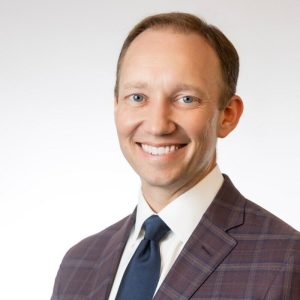
“The laws ended up coming out very fair and reasonable, both for operators like us but also for regulators. A number of consumer protections are built in, as well as licensing requirements and fair tax rates. We think it’s a great balance between what consumers want, what operators can do, and ultimately regulators protecting their interests.”
Barclay described the Illinois and Kentucky authorities as two of the most respected gaming regulatory bodies in the country and suggested that where those kinds of agencies lead, others may follow.
“I think other regulators are seeing that these two agencies have come up with a model for distinguishing fantasy sports from sports betting,” he said. “We think there will be a rapid adoption of these types of laws around the country in states that have not yet adopted them. For some of these bigger states — California, Texas, our home state of Georgia — these states immediately become models for how you can responsibly regulate license and tax fantasy sports.”
Is the DFS picture clearing?
For longtime DFS operators like PrizePicks, it’s not hard to grasp why the idea of seeing more states clearly define their stance on fantasy sports is appealing. If you’re not in a gray area, it’s either black or white; being regulated is worth the fees and the rules if the alternative is being prohibited.
As Barclay puts it, “we have as much incentive as anybody to make sure that this category is properly defined.” DFS regulation offers them certainty and a viable path forward.
That rings particularly true if one looks at what is happening in other parts of the industry right now. The stance on dual-currency sweepstakes gaming wasn’t explicitly defined until a swath of states decided it was time to push through legislation to ban those products over the last 18 months.
In even more recent times, sweeps have been replaced as the hot-button issue by state attempts to curb the spread of prediction markets into sports betting amid a cloud of confusion over where authority lies and litigation from coast to coast. PrizePicks is one of several gaming operators that has rolled out a new product line to capitalize on that particular gray area.
P2P-only as a dealbreaker?
Amid all that context, perhaps there is an opportunity for clear lines to be drawn around DFS.
A notable shift happened last year. Around the same time that California Attorney General Rob Bonta declared that all forms of paid-entry DFS should be deemed illegal, some operators including PrizePicks and Underdog accelerated a move away from against-the-house pick’em-style contests. PrizePicks chose to entirely abandon that offering, which often faced comparisons to player prop betting, and refocused on an entirely peer-to-peer model. That is the model Illinois, Kentucky, and Virginia now recognize as the only legal one.
Barclay told SBC Americas that PrizePicks has had continued conversations with state regulators and legislators about the best path forward, and there was an acknowledgment that P2P-only DFS was a critical way of distinguishing fantasy contests from sports betting. He stressed that PrizePicks’ typical fantasy player is not the same profile as a sportsbook’s average engaged user.
“Once you sit down with legislators and regulators, and say, ‘hey, that’s what we’re trying to accomplish and that’s the player we’re targeting’, they hear you, they get it,” he added. “They were motivated to clearly define this space.”