
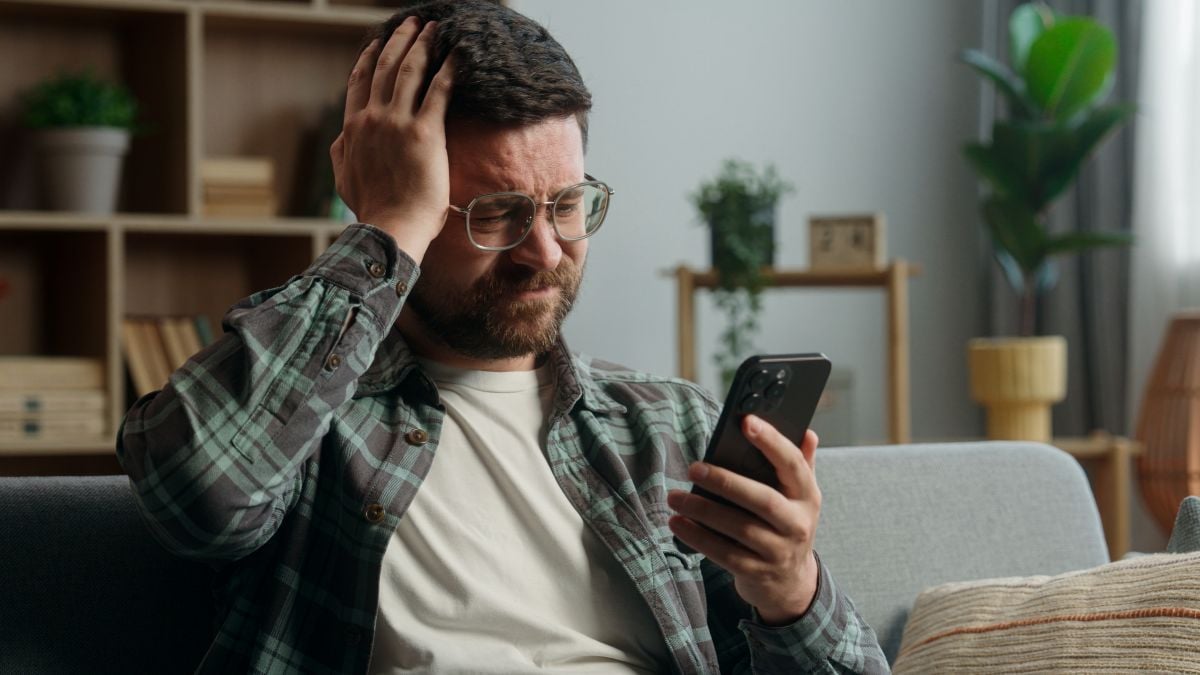
Read any reputable study about gambling disorders and one conclusion that will rise to the surface is that young men are perhaps the most vulnerable demographic. So why is that?
A webinar hosted by Kindbridge Research Institute as part of its Financial Stability and Responsible Gambling Initiative welcomed American Institute for Boys and Men Policy Lead Jonathan D. Cohen and UCLA Clinical Professor Dr. Timothy Fong to discuss the issue on an hour-long webinar on Thursday. It yielded an insightful and thought-provoking assessment of why the modern online gambling climate contributes to what Cohen called “a toxic cocktail” of factors and hardships.
The game has changed
In short, gambling is not what it used to be. As the session’s moderator, Kindbridge’s Dr. Daniel Kaufmann, put it, gone are the days when combating difficult gambling habits meant driving home from work via a different route to avoid the casino.
“The phone is the casino now,” Kaufmann said. “And you’re not going to live life without that.”
With online sports betting apps, online casinos, prediction market platforms, and other gamified mobile products, the ability to gamble has never been more accessible and the options have never been more numerous.
“You’re not getting what the industry promised us when we were legalizing, which is picking up all the illegal market and dropping into the legal market,” said Cohen. “No, clearly we are expanding the pie of people, of young men, who might not have gambled otherwise.”
Does gambling play into young men’s nature?
For young men who are already inclined to other social behaviors or tendencies, explained Cohen, it can create a perfect storm.
“Young men are already inclined to risky behavior. They’re not exactly known for being the most judicious and careful, especially when it comes to money,” Cohen said. “Now, they have these supercharged gambling apps on their phone. Young men are more likely to say they have no close friends, more likely to have mental health issues. So there’s this toxic cocktail of social, biological, economic circumstances for men, and then you’ve handed them free-for-all gambling apps that are designed, almost, to make all those situations worse.”
Fong, who is co-director of the UCLA Gambling Studies Program as well as clinical professor of psychiatry, suggested that men then turn to the endorphin rush of gambling as a way to try to “soothe” their mental health.
“They’re using gambling as a way of feeling better, trying to feel normal, trying to cope with the life that (Cohen) just mentioned,” he said. “It’s hard out there. And we’re seeing gambling making their mental health worse, more depressed, more anxious, more troubled … The crisis of loneliness, the crisis of isolation? The availability and access [of gambling] drives that over and over and over and over again.”
Fong added that in the last three years that he has spent helping to treat gambling issues, he has not seen a woman who is addicted to sports betting come into his office. “The last 100 folks I’ve seen about sports betting, it’s all 18-to-40-year-old men.”
Peer pressure in the world of sports betting, prediction markets
In his day job and as an author, Cohen has spent plenty of time studying how sports betting has exploded in America since the 2018 repeal of PASPA. Part of the problem now, as he sees it, is that there is a large cohort of mostly young men who do not remember the way things were before 2018.
“There are 18-year-olds who don’t remember a time before a ‘seventh-inning stretch brought to you by FanDuel’,” he remarked. “People who don’t remember that this used not to be a part of sports.”
The panelists referred multiple times to the concept of peer pressure, too. For young men in today’s world, gambling is just part of life. If you don’t do it, do you risk excluding yourself societally?
“I think, in a lot of ways — in fraternity culture, certainly — there is almost an expectation of engaging in sports betting,” said Cohen. “‘This is something that men do, this is something that makes you a man.’
“… If you’re on Instagram or TikTok, especially once the algorithm figures out that you’re a man and you like sports, which it will do in five seconds, you can very quickly and very frictionlessly go from watching an NBA highlight to getting fed a bunch of Kalshi influencers who are touting their big wins from over the weekend. And that can really easily get you into a spiral of, ‘oh, I’m the only one of my friends who’s not betting on Kalshi.'”
‘The excuse for ignorance is running thin’
All of this extends far beyond sports, the panelists argued, and into other facets of everyday life, such as seemingly innocuous game platforms.
“It’s clear that, for better or worse, we’re finishing our beta test on social media and kids,” Cohen continued. “It turns out the results are terrible, but we’ve finished that beta test, and now we’re gonna do whatever comes next … People don’t realize that there’s a slot machine built into Roblox. I think we’re still coming out of a time of ignorance, but the excuse for that ignorance is running thin.”
Knowledge is power
So how do you treat it? Not only clinically speaking, but in terms of providing an antidote to the gambling culture that has been created so ubiquitously and so quickly for young men?
Fong believes reframing the conversation may hold the key.
“The proper question is, ‘How much financial strain and harm has gambling caused you?’” he said. “How much money have you spent from your savings account? That seamless part of being able to spend money insanely quickly from bank accounts, credit cards, online payday loans is so fast …
“The messaging I’ve been giving to a lot of young people is this: learn how the sausage is made. Learn how these gambling apps work, how the odds work. Let’s demystify some of your false beliefs about gambling. This can be a really interesting form of entertainment. But would you pay $1,000 to go to a movie? No. So why would you pay $1,000 on the sports betting app? Reframe it as a pure entertainment, as an expenditure.”
Strap on the seatbelts
Ultimately, Fong pointed to other hobbies and vices like alcohol and cigarettes as proof that change can be made. People still drink and still smoke, but regulation is tight, access is not quite as constant, the experience includes more friction. That may take governments stepping up, whether at a state level, federal level, or a combination.
“Getting back to the adults in the room, which unfortunately is still the government,” Fong concluded. “Governments need to do better, just like they did with seatbelts and smoking on airplanes. I tell young people, ‘Do you know there was a time in my lifetime that seatbelts were not law?’ Things change. We learn more. We can do things better.”