
The growing popularity of prediction markets is creating new opportunities in gaming and finance, but the vertical is causing friction for states and tribal communities in the U.S.
On Thursday, the impact of prediction market regulation and its impact on federally recognized tribes was discussed on The New Normal webinar hosted by Indian Gaming Association (IGA) Conference Chairman Victor Rocha and IGA Executive Director Jason Giles.
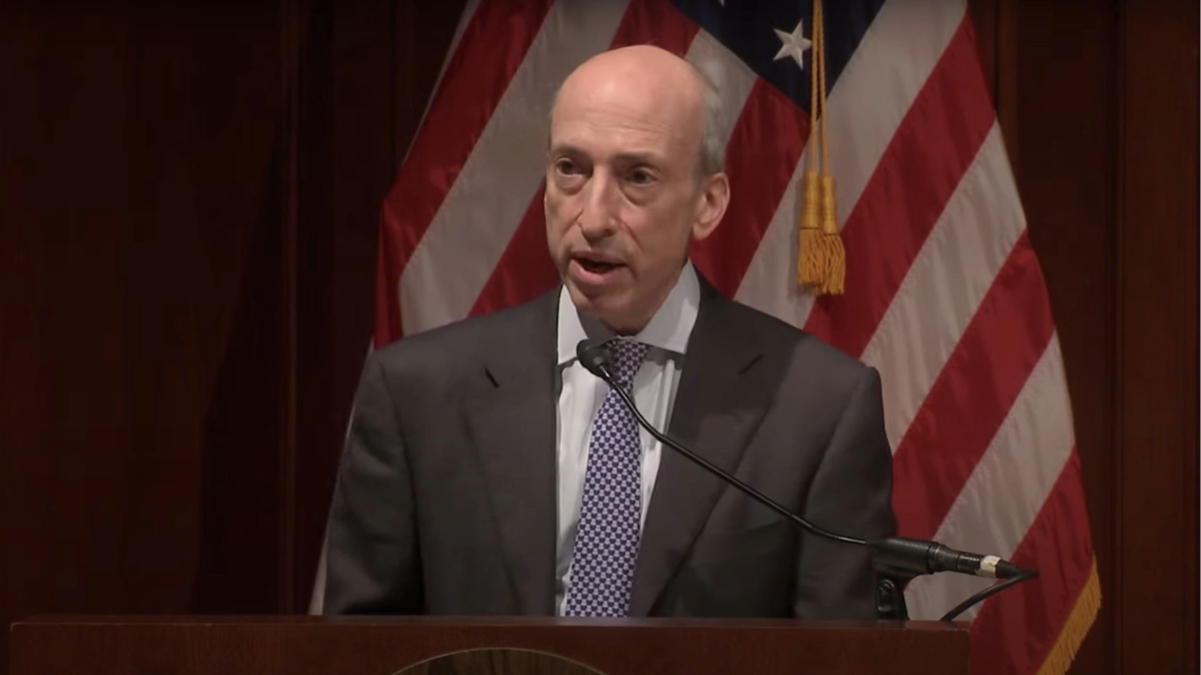
This week’s webinar featured former Commodity Futures Trading Commission (CFTC) Chairman Gary Gensler, who is a professor at the MIT Sloan School of Management.
The group discussed the emergence of sports event contracts and the CFTC’s history and responsibility of regulating event contract trading. The controversial topic of sports event contracts was raised as Gensler challenges the CFTC’s backing of the products in an amicus brief filed with the Sixth Circuit Court of Appeals in a legal dispute with Kalshi.
The suit concerns sports event contracts, with Gensler arguing that they do not fall under the definition of swaps. He also argues that the Dodd-Frank Wall Street Reform and Consumer Protection Act does not preempt gaming laws to facilitate gambling through the delivery of sports event contracts through prediction markets.
Disputes comparing sports event contracts to swaps
In legal filings across the country, prediction markets argue that the CFTC has the exclusive authority to regulate sports event contracts under the purview of the Commodity Exchange Act (CEA), with the offerings being considered swaps. Meanwhile, there are arguments that offerings are gambling and do not fit under the definition of “swaps.”
“’Prediction markets, as pointed out in the brief, continue to insist that ‘sports betting’ falls under the definition of a swap, but a swap has a 12-part definition,’” said Rocha.
Gensler mentioned that the multi-part definition of swaps is rooted in the broad coverage of the offerings, with interest rates and credit default swaps also being considered.
Another piece of the multi-part definition includes event contracts, with Gensler breaking down the CFTC’s initial definition of the trading products and the agency’s approach to regulation following the 2018 financial crisis that affected markets across the world.
The financial crisis allowed the CFTC and key stakeholders to understand the impact of event contract trading on global markets.
“An event contract was based upon an event, a recurrence that was associated with a potential economic, financial, or commercial consequence,” Gensler told webinar attendees. “In 2010, we wanted to bring it into federal jurisdiction as swaps had been part of the financial crisis, and a big part of that was these event contracts being associated with potential economic, financial, and commercial consequences or risks.”
Dodd-Frank Act examined amid legal disputes
The delivery of sports event contracts under the authority of the CFTC is supported by the Dodd-Frank Act not including sports event contracts in its rules, creating a pathway for prediction markets to offer the products nationwide under a federal regulatory body.
“This was buried in a statute from 16 years ago, this Dodd-Frank statute,” said Gensler.
“Unbeknownst to anyone who worked on it at the time, there was this provision taking sovereignty away from the 50 states, taking sovereignty in a sense away from tribes. It gives oversight of sports betting to this little-known financial regulator [CFTC].”
Gensler also discussed the arguments that the manner in which swaps and sports event contracts are delivered. He pushed back against the CFTC’s arguments that swaps are only delivered through prediction markets and not other mediums that could include casinos.
“Let me tell you: there is no definition in the statute or in the courts that is venue specific,” continued Gensler. “If an event contract based on sports is a swap on a prediction market, it is also a swap in your tribal casino and in a Las Vegas casino. There are no venues.”
Congress, CFTC take action
Former President Barack Obama’s administration examined swaps and their impact on U.S. economics and mandated that only certain platforms can offer swaps to consumers.
“We decided with Congress that the general public would not be able to trade swaps unless they were on a regulated, registered exchange, and when I say the general public, this was anyone with less than $10 million,” said Gensler.
He raised the confusion of the rules for swaps compared to sports event contracts.
“So, if sports bets are swaps by law, they’re prohibited unless they’re on an exchange, and that would have been as of October 2012 because of the implementation schedule of Dodd-Frank. That means the last 14 years of sports bets in Vegas and within your tribal casinos were illegal,” continued Gensler.
The former CFTC chair will continue to raise arguments against sports event contracts in court filings, while the topic will continue to be discussed amongst tribal communities.