FT LAUDERDALE, Fla. — America’s commercial gaming industry is undergoing constant change, and tribal stakeholders across the country want to remain at the forefront of gaming.
The emergence of new and innovative gaming verticals requires tribal nations to ensure their voices are being heard as the U.S. gaming industry continues to diversify and expand.
The discussion of tribal sovereignty and how it fits into federal and state regulatory frameworks continued at SBC Summit Americas 2026 in Fort Lauderdale.
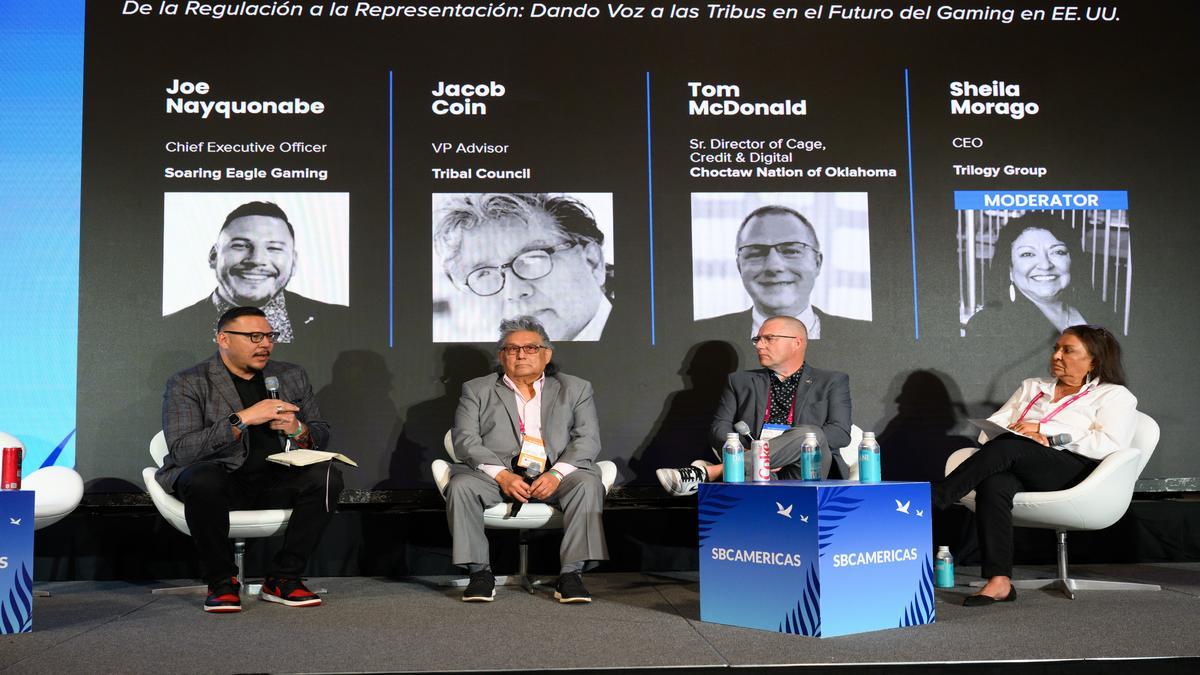
A panel of industry experts spoke about giving tribes a voice in the future of U.S. gaming.
The panel included:
- Tribal Council VP Advisor Jacob Coin
- Choctaw Nation of Oklahoma Senior Director of Cage, Credit & Digital Tom McDonald
- Trilogy Group CEO Sheila Morago
- Soaring Eagle Gaming CEO Joe Nayquonabe
Shifting tribal roles in US gaming industry?
Tribal nations across America have solidified their footprint in gaming through brick-and-mortar casinos. The growing popularity of online sports betting and innovative offerings, including sweepstakes and prediction markets, requires tribal gaming to decide if it wants to get involved and, if so, how.
“If you’re a giant casino that is benefiting from the status quo, you’re going to be taking less risks, and that kind of stifles some of the conversations when it comes to different technological advances that we [stakeholders in tribal gaming] can have,” said Nayquonabe. “A lot of tribes are led by people benefiting from the status quo.”
The playing field is changing for tribes that offer gaming, creating competition as tribal nations explore online sports betting, while also keeping a pulse on prediction markets. Emerging verticals potentially could create new opportunities for tribes, but embracing such areas comes with the risk of losing unity among tribes amid stiff competition in the industry.
“We are getting to this place where we cross over this line from being tribal nations and tribal governments to now being corporations,” said Coin. “Once you cross that line, then your interests inevitably change from protecting sovereignty to protecting your market.”
Tribes facing threat of prediction markets
Developing and delivering new gaming products and experiences to players at the expense of cohesion between tribal communities is a risk discussed by panelists.
“We have huge operators in Indian facilities, and now suddenly their priorities have changed,” continued Coin. “Instead of focusing on protecting tribal government gaming rights and tribal gaming exclusivity in their respective states, we are now talking about, how do I offer a better game than my neighbor?”
Coin mentioned the unity displayed amongst California tribes when FanDuel and DraftKings made a push to bring online sports betting to the Golden State in 2022. The cohesion must also be deployed when discussing prediction markets and their legality.
“We are targeting the wrong people,” added Coin. “Instead of targeting regulators that have already made up their mind on what they’re going to do, the group that we need to be focusing on is those 535 members of the House and Senate. They are the policymakers.”
The topics of emerging verticals and prediction markets will continue to be discussed amongst stakeholders in tribal gaming. The proliferation and controversy surrounding prediction markets will shape how tribes develop and execute their strategies.
“We’ve seen a lot of this stuff [emerging verticals] come and go,” said McDonald. “This [prediction markets] has actually gone further than anything else that I’ve seen.”