
Americans are finding it hard to believe in sporting integrity amid ongoing betting scandals in multiple leagues, particularly when they themselves are bettors. At least, that’s the suggestion from new survey results published this week by YouGov.
In late October, YouGov and The Economist conducted 19,000 interviews of U.S. sports bettors and non-bettors alike to gauge how they were feeling about sports in the wake of scandals involving leagues including MLB, the NCAA, the NBA and now the UFC. The survey was carried out “in the immediate aftermath of the FBI’s match-fixing announcement” regarding now-suspended NBA player Terry Rozier and other personnel.
Americans hold cynical opinion on athlete manipulation
One of the things respondents were asked was the somewhat leading question, “How often do you think current professional athletes alter the way they play to help sports gamblers win bets?”
Around two-thirds (64%) believe that professional athletes at least occasionally alter their performances in order to win or help others win bets, and nearly half (45%) think it’s not a rare phenomenon.
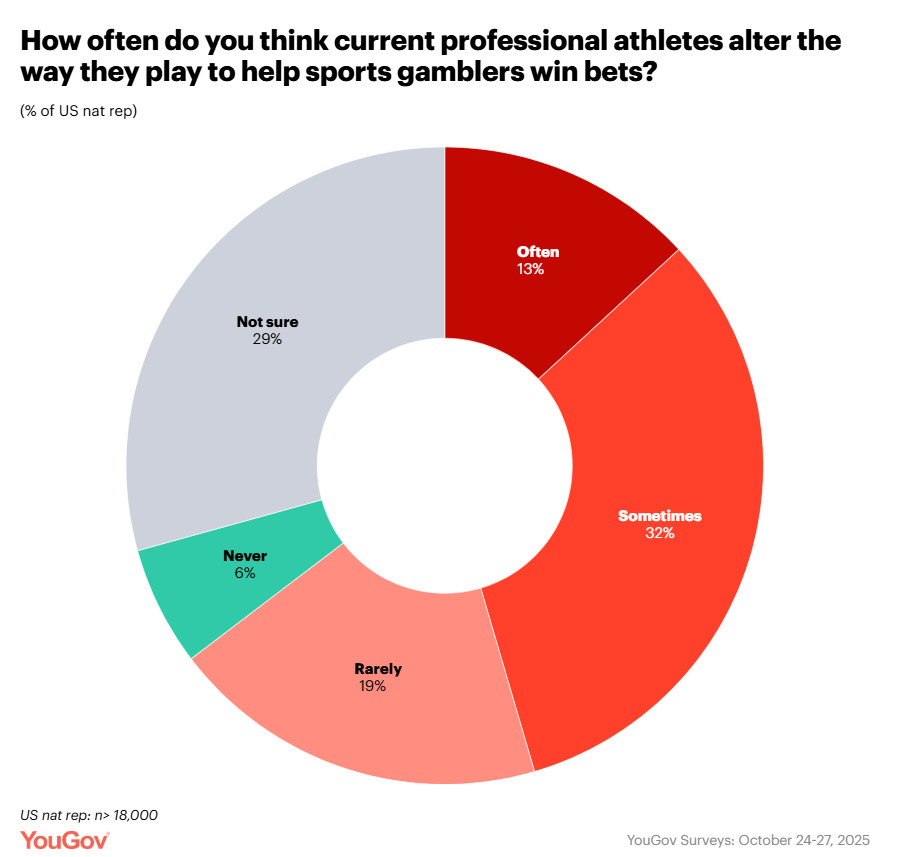
Only 6% said they think it never happens in sports, 29% said they were unsure, 19% said they think it happens rarely, 32% believe it happens “sometimes” and 13% think athletes do it often.
Or, to put it another way, twice as many Americans believe it happens as believe it never or even only rarely happens.
YouGov noted that throughout this report, some numbers may appear to be off by one due to rounding.
Sports bettors more suspicious
The results also suggested there is a significant difference between how sports bettors feel about sporting integrity compared to the general U.S. population.
The 28% of respondents who said they have bet on sports before are, to use YouGov’s terminology, “more distrustful” of athletes, with 18% of that cohort believing performance manipulation related to betting happens often and 38% saying it happens sometimes.
Only 5% of sports bettors surveyed thought it never happens.
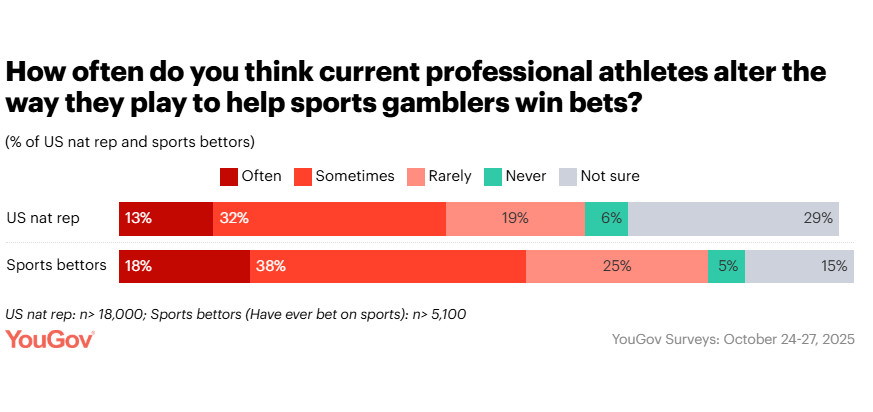
“In total, combining respondents who said often, sometimes, or rarely, more than four-fifths of U.S. sports bettors believe athletes alter how they play because of sports betting,” concluded YouGov. “This suggests that those more closely involved with sports betting have a higher level of skepticism about the integrity of professional sports.”
UFC betting scandal adds to list
YouGov presented the results this week after the headline NBA indictments. But even since that happened, another scandal has come to light, as UFC CEO Dana White confirmed that the organization is working with the FBI to investigate allegations of betting and manipulation involving fighter Isaac Dulgarian’s featherweight loss to Yadier del Valle last Saturday at UFC Vegas 110.
As the industry and the public catch wind of incident after incident, both the perception of gambling and the reputation of renowned sportsbooks are suffering.
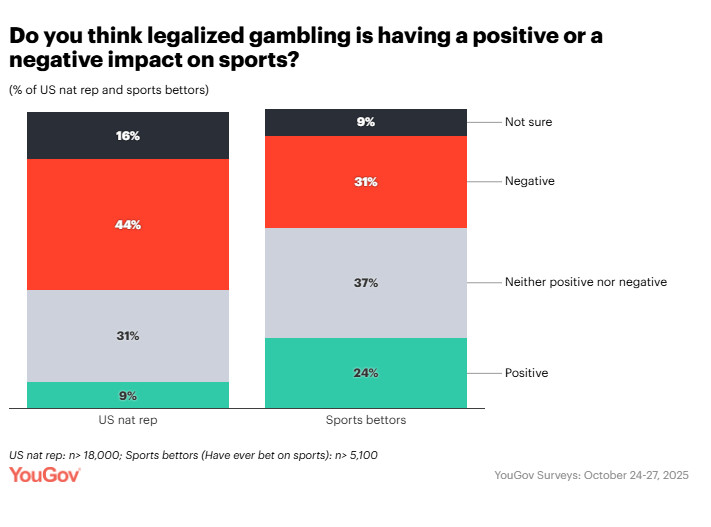
YouGov found that only 9% of the general population said that legalized gambling is having a positive impact on sports and while there is a notable difference between their opinion and sports bettors’, even only 24% of the betting respondents said the same. Nearly half (44%) of the public and almost one-third (31%) of sports bettors believe legal sports betting is making sports worse, with the rest hedging their bets in their responses.
Meanwhile, YouGov’s BrandIndex data suggested that opinions of sportsbooks are sliding.
By asking respondents which sportsbooks they would be either proud of or embarrassed to work for, YouGov determined that the net reputations of FanDuel and DraftKings have each slipped by more than three percentage points in the last year. None of the nine sportsbooks listed posted a posted trend, with the industry average at -1.2 percentage points.