Most stakeholders who spoke at a hearing of the Wisconsin Senate Committee on Agriculture and Revenue on Tuesday seem to support the idea of legalizing online sports betting in the state. It’s just a question of how.
At a Nov. 4 hearing, Sen. Howard Marklein presented Senate Bill 592, which would legalize digital sports wagering on federally recognized tribes’ land in accordance with state tribal gaming compacts under the Indian Gaming Regulatory Act (IGRA), essentially following the “hub-and-spoke” concept used in states like Florida where the servers are located on tribal lands and considered to be where the bets are taking place.
“If we do this, it will legalize what a lot of people are doing right now illegally,” Marklein told his fellow committee members. “Based on the data we’ve seen, this is an activity that’s not declining; it’s increasing. And I think it’s appropriate for us to deal with this now, before it gets even bigger.”
Bill would expand existing retail WI sports betting
Marklein noted that if the bill were to be passed, the next step would be to renegotiate the compacts and have them approved by the federal Bureau of Indian Affairs.
The sponsor believes the legislation is a no-brainer, as he and other senators acknowledged that sports betting is already rife in Wisconsin, either via residents crossing borders into states like Illinois or Michigan to bet legally or by simply doing it in-state on the black market. Without legal sports betting within the state, members argued, Wisconsin’s residents, tribes and economy get no benefit.
“People are going to continue to search this out,” noted another committee member.
Sports Betting Alliance voiced objections
Sports Betting Alliance (SBA) representative Damon Stewart said that, while its five member sportsbooks support the idea of tethering online sportsbooks to the 11 Wisconsin tribes, handing over the bulk of their revenue to tribes is not going to work for the likes of FanDuel and DraftKings. The SBA counsel said that the bill’s approach under IGRA would mean that operators would have to pay at least 60% of all revenue to their partner tribe.
“It’s a bit odd because I’ve been listening to the sponsors and I think we agree on many of the goals, we just don’t think this vehicle gets us there,” he added. “Online sports betting is a low-margin and capital-intensive business. It is simply not economically feasible for a commercial operator to hand over 60% just for the right to operate in the state.”
As a result, he said, the likes of FanDuel and DraftKings would not offer online sports betting in Wisconsin under such a model. He pointed to Arkansas as an example of a state from which major operators are absent because “the math just doesn’t work in that system.”
Such a framework, he suggested, would do little to curb the illegal market, as a small number of Wisconsin-specific sportsbooks would not cut it for bettors who want to use the national brands that they’re familiar with. He did not offer a number when asked what revenue-share percentage would make it viable for the SBA’s members, but stressed that the alliance wants to work with tribes to keep them in a leadership role.
Tribes happy to go it alone
That got a rebuttal from Forest County Potawatomi Tribe counsel Jeff Crawford, who suggested that Wisconsin’s tribes are perfectly capable of running the show themselves.
“It’s something that is a little bit concerning to us, that they are sort of implying that we don’t have the capability of operating statewide mobile sports betting,” the spokesman remarked. “If you’ve ever been to our facility and our retail sports betting, you know we do a pretty good job. We look forward to doing that on a statewide basis.”
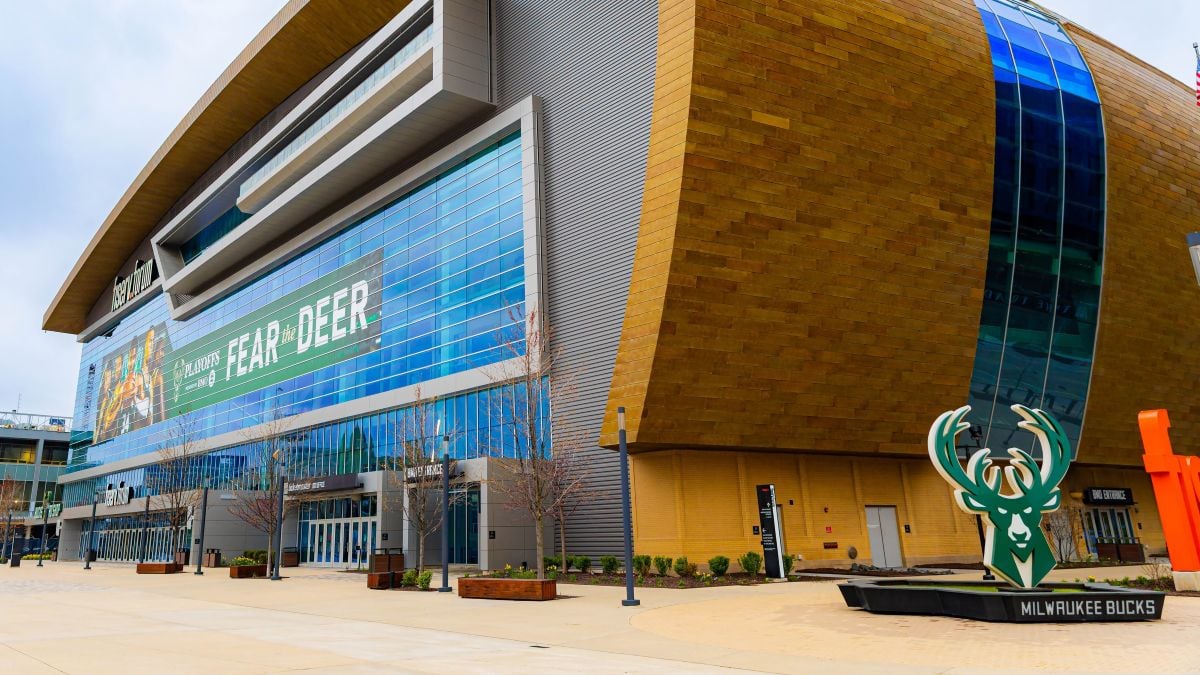
Crawford said that the in-state Milwaukee Bucks, Green Bay Packers and Milwaukee Brewers support the bill in its current form.
Like the Potawatomi, the Ho-Chunk Nation spoke in favor of the bill, pointing to the new revenue source it would create for tribes. The tribe’s representative Ed Mullen also noted the need to stamp out illegal betting in Wisconsin, specifically referencing Ho-Chunk’s lawsuit against Kalshi and Robinhood which alleges the partners are offering a sports betting equivalent on tribal land in violation of IGRA.