
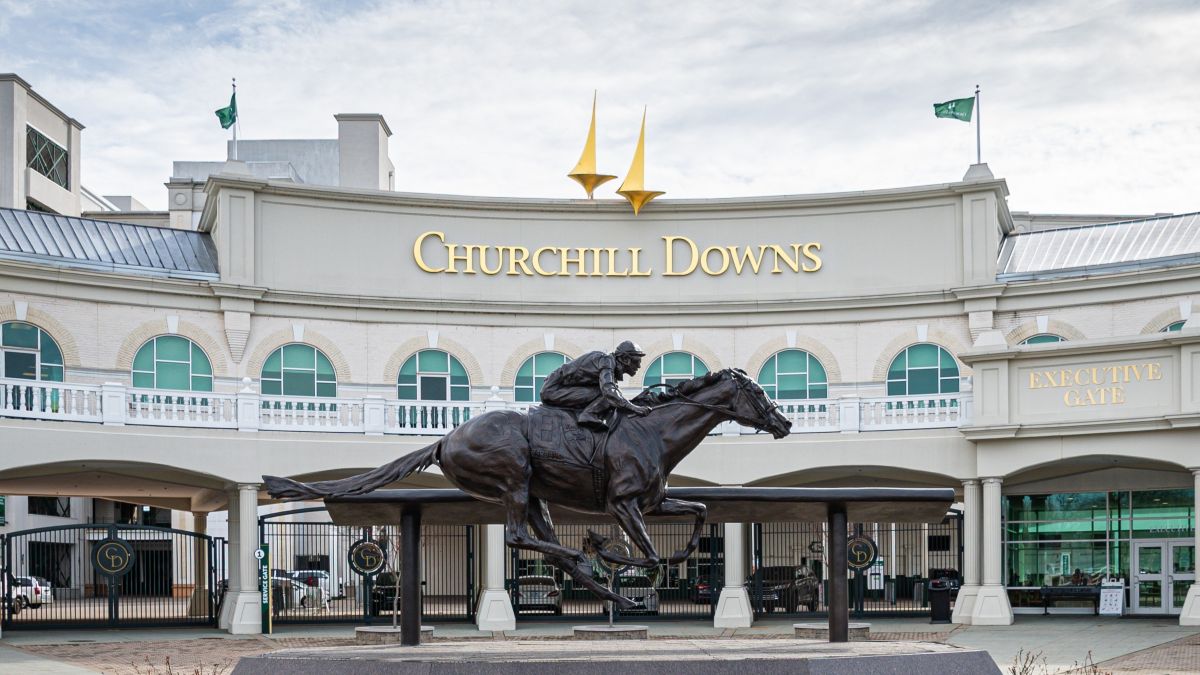
Churchill Downs CEO Bill Carstanjen took the topic of sports event contracts by the reins, stating publicly that he would be willing to fight back if prediction markets rode further into the world of horse racing.
Carstanjen was asked on a recent earnings call about the potential implications that sports event contracts could have on the Kentucky Derby and Churchill’s pari-mutuel wagering, as several exchanges continue to offer trading on a range of sports across the U.S. under the oversight of the Commodity Futures Trading Commission (CFTC).
Carstanjen reiterated the operator’s stance that horse racing regulation is starkly different from state-run sports wagering, and said he would be willing to have an open dialogue with prediction markets about the nuances.
“It’s very different than sports wagering, which is a state-by-state construct,” Carstanjen said on an earnings call on Oct. 23. “We are governed by a specific dedicated federal law about how wagering works on horse racing, and the requirements under that law are very clear about what it takes in order to take a wager on a horse race. You have to have a contract with the content provider, that’s us.
“Our philosophy on prediction markets is that we will approach them, we’ll explain to them the legal construct under which wagering activity on our sport happens, we’ll explain both the civil and criminal elements of the Interstate Horse Racing Act and why compliance with it is so clear, and we’ll take it from there. I think we’re different than the other players in the online wagering game.”
No discussions underway about prediction market expansion
Analysts on the call noted that offering trading on major racing events like the Churchill Downs-owned Kentucky Derby could be an attractive proposition for prediction markets such as Kalshi, which have already shown eagerness to take action from consumers on major leagues like the NFL.
Could Churchill Downs look to take a proactive step by working with prediction markets? Carstanjen is more concerned with what he sees as the education piece rather than a potential diversification of his company’s offering.
“We do not have a deal with any prediction market companies to take wagers on our product,” he stated. “We are not in discussions to do that at this time, but we do plan on approaching them and explaining to them the legal construct under which wagering happens on our product.”
Churchill once again invokes Interstate Horseracing Act
Should prediction markets saddle up and begin offering horse racing trading in earnest without working with Churchill Downs, Carstanjen suggested his company would be willing to take up the fight, as state gaming regulators have done against Kalshi and others in court. However, unlike those cases, which are generally arguing that state laws against the Commodity Exchange Act (CEA), this debate would pit two federal laws against one another.
“This is not a question like some of these other sports between state law and federal regulations,” he noted. “We have federal law that governs how we operate. And, certainly, to the extent people act counter to having a deal with us and act counter to the Interstate Horseracing Act, we will pursue all our rights and remedies under the Interstate Horseracing Act (IHA).”
Churchill Downs’ CEO was speaking on the same day that the Sixth Circuit Court of Appeals heard oral arguments in the ongoing case between his company and the Michigan Gaming Control Board (MGCB). In that case, Churchill argued that its advance-deposit wagering app TwinSpires is not governed by the state regulator and is solely dictated by the rules of the IHA. Many of the same topics at stake in the prediction market debate, such as preemption, are at play in this legal battle. Moreover, the horse racing firm was very firm in its argument that the IHA and the IHA alone was the law that governed interstate horseracing.