There have been updates in Kalshi’s court battles in two states this week as the saga around the prediction markets operator rumbles on.
In Maryland, the fight is on pause until a state court takes its next step, while Nevada has officially stated its case that a formal discovery process is necessary.
Maryland agrees to step off Kalshi for now
In Maryland, Kalshi has withdrawn its motion for a new injunction after agreeing with state officials to wait until the Fourth Circuit Court of Appeals‘ decision on Kalshi’s appeal against the ruling that denied them preliminary injunctive relief at the start of August.
According to a filing on Aug. 13 in Maryland District Court, Kalshi “received written assurances” from the defendants, Maryland Lottery and Gaming, that the lottery would not seek to enforce state gambling laws against Kalshi until the appeal court’s determination.
“That assurance of nonenforcement has rendered an injunction pending appeal unnecessary,” wrote Kalshi’s latest filing. As a result, the company has withdrawn its application for a new injunction.
It seems likely that Kalshi will now be able to continue offering sports events contracts in Maryland until at least October. In the appeal process, the opening brief deadline is Sept. 15 and Maryland’s response will be due by Oct. 15.
On Aug. 1, more than three months after Kalshi first filed to contest the legality of the Maryland Lottery’s cease-and-desist letter, Maryland District Court Judge Adam B Abelson denied Kalshi’s request for a temporary injunction.
Abelson was not moved by Kalshi’s arguments in the same way that Nevada and New Jersey judges were. In those two states, Kalshi was granted a temporary injunction. In one of his reasons for the decision, Abelson wrote that he sees no reason why Kalshi can’t just apply for a sports betting license in Maryland.
Nevada tells Kalshi to show its working
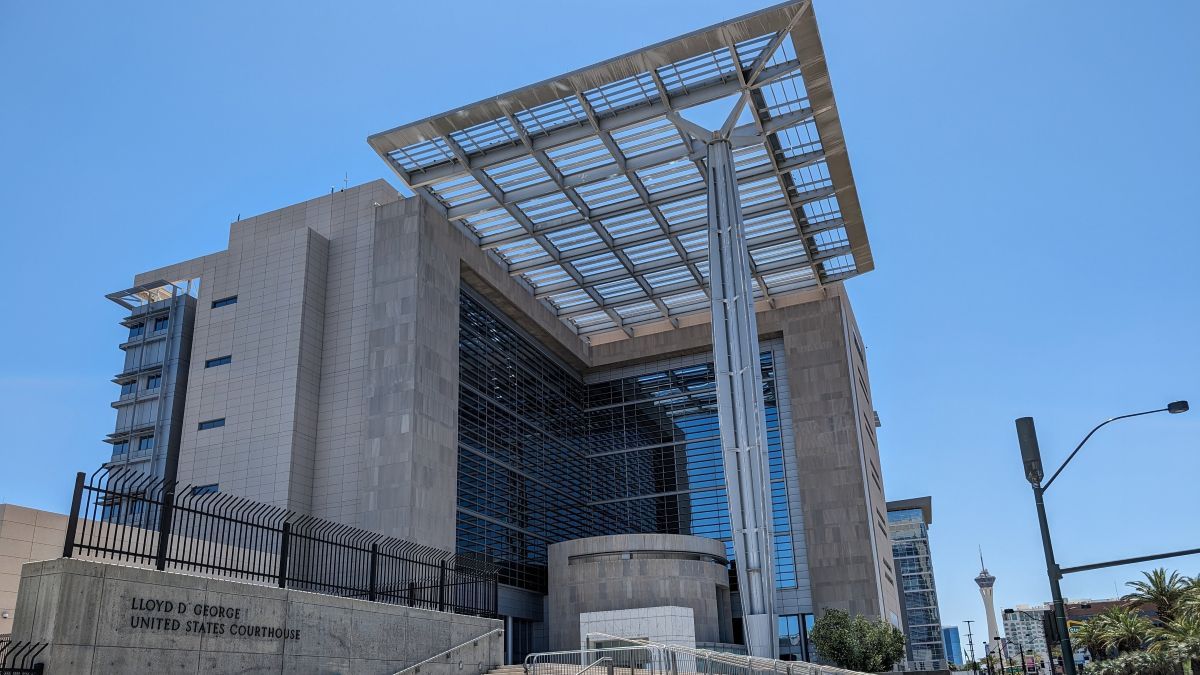
That Maryland update came one day after Nevada Attorney General Aaron Ford’s office contested Kalshi’s Emergency Motion to stay the discovery process and called for Kalshi to provide full transparency of their relevant communications in a Nevada District Court filing on Aug. 12.
Kalshi previously argued that discovery is not needed as the case centres on interpretations of federal and state laws rather than questions of fact. But the Nevada defendants stressed that the court needs to know all the facts about Kalshi’s products and operations in order to decide whether Nevada’s gaming laws are preempted.
The filing also asserts that there is no “emergency” that warrants skipping discovery, that Kalshi has unjustifiably claimed that the process of discovery would cause it “severe harm,” and that Kalshi is trying to hurry the case to a conclusion without allowing for full due diligence from all parties and the court.
“Kalshi seeks truly extraordinary relief — to prevent Defendants from taking any discovery to challenge its version of the facts,” wrote the defendants. “It has not come close to justifying that relief.
“Essentially, Kalshi wants to rush this litigation through to conclusion without affording Defendants or this Court the opportunity to discover facts about it, all while claiming that the cost of discovery will be so burdensome and harmful to it that it needs a decision within days. That is not how the adversarial system works; one side does not simply get to declare what the facts are and then ask the Court to enter judgment.”
The Nevada defendants vowed to formally request that Kalshi disclose, among other things, all filings and communications with the Commodity Futures Trading Commission (CFTC) and the federal government regarding Kalshi’s designation and operations as a Designated Contract Market (DCM), as well as testimonies to the financial or commercial consequences associated with Kalshi’s event contracts and the irreparable harm that the company claims it will suffer if required to comply with Nevada law.
Nevada also wants to see Kalshi’s communications with its board director Brian Quintenz, whose nomination as CFTC Chair remains a murky situation at the time of writing.
As it is in Maryland, Kalshi is currently still online in Nevada. In April, the courts granted it a preliminary injunction to prevent state authorities from enforcing a cease-and-desist order.