
States and stakeholders begging the U.S. federal government to take a firmer stance against unauthorized gambling is nothing new. But, given the industry shifts we’ve seen in recent times, and the strength of both the numbers and the evocations used this time around, the latest incident makes one sit up and take notice.
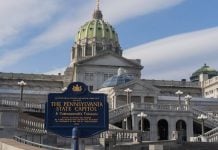
In their letter to the Department of Justice this week, a group of 50 U.S. attorneys general urged the DOJ to quell the “rampant spread” of illegal gambling by replicating online poker’s Black Friday of 2011.
Calling for measures such as the pursuit of injunctive relief under the Unlawful Internet Gambling Enforcement Act (UIGEA) and the seizure of website domains and other assets, the chief legal officers of 46 states are essentially egging on the federal government to smash doors and take names.
Their rhetoric sounds powerful, and 50 AGs coming together to urge such action is certainly meaningful. But the very fact that states are sending cries for help to federal AG Pam Bondi illustrates the truth that, in a patchwork of state gaming oversight, there’s little that can be done.
Louder voices, same message
The nature of the 2025 call may be unprecedented, but the message is not.
American Gaming Association (AGA) President and CEO Bill Miller has made it an annual habit to call on the DOJ and federal authorities to take a firmer hand. In spring 2022, for instance, he wrote to then-U.S. AG Merrick Garland, stressing that illegal sportsbooks and casinos’ “brazen and coordinated” operations required “significant federal attention,” and argued that the DOJ is the only law enforcement entity that has the status and resources to tackle the problem.
Months later, more than two dozen members of Congress sent their own letter calling on the DOJ to investigate and prosecute illegal offshore sportsbooks, led by Gaming Caucus Co-Chairs Reps. Dina Titus and Guy Reschenthaler.
And in May 2023, top gambling regulators in seven states including Nevada, New Jersey and Michigan wrote to Garland to stress that while they are doing what they can to preserve the integrity of legal gambling, “the many significant threats posed by offshore illegal gambling cannot be addressed by states alone and, therefore, require heightened federal attention and engagement.”
States recite their A, B, C&Ds
One of the lead AGs authoring this week’s letter was Massachusetts’ Andrea Joy Campbell, whose office’s statement stressed that Bay State authorities constantly work to combat illegal offshore gaming operations. Massachusetts is one of many states that have frequently taken just about the firmest action they have at their disposal: issuing cease-and-desist orders to gaming operators they deem to be illegal.
Bovada has been the poster child for this campaign, and it’s no accident that it was the only brand name-checked by Campbell’s office. While it is just one of many sites to receive a C&D from several states, it’s probably the first that would come to your mind.
But Bovada, like many of the operators the AGs are referring to, is based out of the Caribbean and has little presence in the U.S. besides taking Americans’ money. While Bovada and other offshores often quietly claim to have responded to a state C&D by blocking consumers’ access in the relevant state, the question remains about what can actually be done if they simply ignore an enforcement letter.
The Michigan Gaming Control Board (MGCB) was a lead author of the 2023 state regulators’ letter to Garland and has been another of the most active states in sending C&D letters since then. MGCB Deputy Director of Licensing and Investigations Tina Alagna said in April that the board has sent around 200 C&Ds to illegal operators. Around one-third of the recipients have complied. That’s around 70 operators theoretically ticked off the list, but what of the other 130?
In June 2024, around the time that Bovada went offline in Michigan following a C&D, AGA leaders said the development was proof that states have the tools to fight back against offshore operators, while in the same breath reiterating that those tools are not enough without federal help.
Help me, Pam Bondi, you’re my only hope
So, again, states are now calling for that help.
What do they want, specifically?
“Because the websites owned by unlawful offshore operations violate federal law, USDOJ can and should seize the websites and domain names of operators and retain any proceeds recovered as part of the seizure,” stated the AGs in their letter.
But a major problem is that offshore operators often don’t use U.S. banks or payment processors and have in many cases abandoned .com domains in favour of ones from overseas. And if you wade deeper, it doesn’t take long to realize the legal and logistical difficulties of conducting the kind of campaign the state AGs are hoping to see. The DOJ and other federal authorities may have more resources and clout to take action in theory, but in practice, huge barriers still exist. There’s also the question of whether there is the will from the federal end; is this going to be a DOJ priority anytime soon?
As for the timing of the AGs’ letter, sent now in August 2025, perhaps the state legal chiefs feel that the ever-evolving online gaming landscape has forced their hand.
While their letter did not specify which type of operator they are chasing, there’s no doubt that recent events around sweepstakes casinos and prediction markets have thrown things more firmly under a bright spotlight. What do the very different companies that are Bovada, VGW, and Kalshi have in common? In many cases, states don’t want them around.
We’ve seen other measures, such as Louisiana AG Liz Murrill issuing a formal legal opinion declaring that ‘casino-style’ online sweeps are illegal, and New York AG Letitia James publicly stating that a C&D campaign has “stopped online sweepstakes casinos” in the Empire State.
But the AGs’ letter to the DOJ is the latest sign that states do not feel sufficiently empowered to tackle what they see as a growing problem. It’s telling that even though some states like to say their enforcement has been successful, their AGs still felt the need to sign this letter.
This is the states calling. Is anyone home?
What happens next? We do not have any solid indication yet of how Bondi will respond. Or if she will respond, even. SBC Americas asked the DOJ, but there was no insight provided.
In the meantime, states will keep on doing what they always do: Whatever they feel they can.