
Is there such a thing as a quiet litigation week in prediction markets? If that week does exist, it was not this one.
- Underdog and other operators sued Missouri in federal court
- The Arkansas court battle got more complicated, with Polymarket and Crypto.com’s OG.com filing separate lawsuits
- In denying Novig an injunction against New York, a judge gave a scathing assessment of the Commodity Futures Trading Commission (CFTC)
- Louisiana Attorney General Liz Murrill obtained quick temporary restraining orders against 10 prediction market companies in state court
But the court updates were just some of this week’s news. This week’s ‘Prediction Markets Weekly’ roundup of developments you might have missed includes Donald Trump Jr., louder Democratic voices, Texas proposals, Polymarket layoffs, and more.
Donald Trump Jr. out as Kalshi advisor
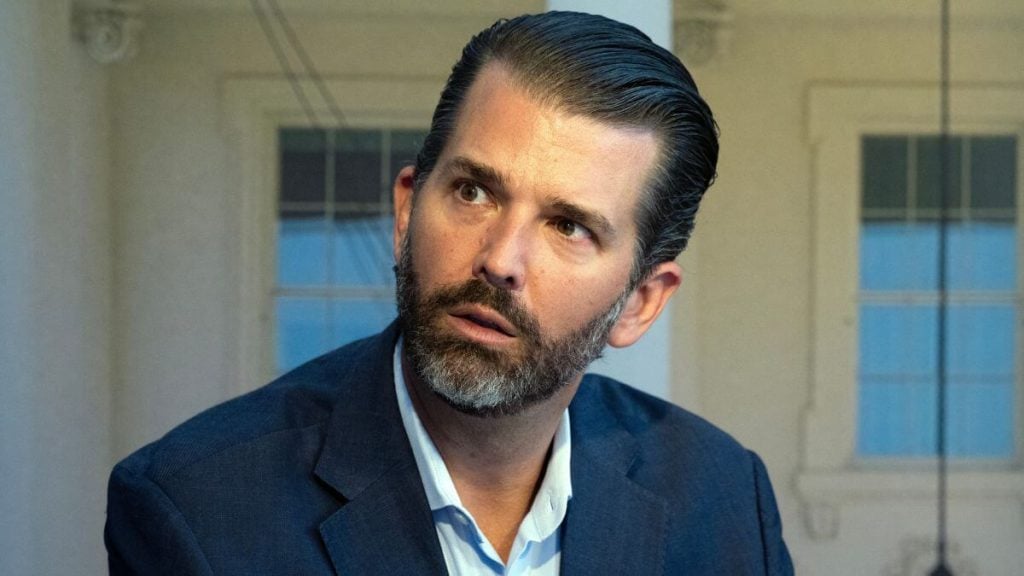
Donald Trump Jr.’s ties to both Kalshi and Polymarket have been a repeated point of discussion in the political whirlwind surrounding prediction markets, and they hit the headlines again this week.
As Bloomberg first reported on Thursday, Trump Jr. is no longer an advisor to Kalshi, a change the company positioned as a response to his venture capital firm’s recent investment in the company’s main rival.
“We have mutually agreed to end Don’s advisory role after his firm’s significant investment in a competitor this past summer,” a Kalshi spokesperson told Bloomberg. “We are grateful for his contributions in helping us market Kalshi to more customers.”
Trump Jr. became a paid Kalshi advisor in January 2025, but also joined Polymarket’s advisory board in August 2025, at which time the firm in which he is a partner, 1789 Capital, made its first “strategic investment” in Polymarket. 1789 Capital added another reported $300m in a Polymarket funding round this summer that valued the company at $21bn.
It is not clear what Trump Jr.’s exit as a Kalshi advisor means for the equity stake that he reportedly received as remuneration for his work as an advisor.
While Kalshi pointed to 1789’s recent Polymarket investment as its rationale, the timing of the Trump Jr. announcement was notable. It came a week after the Democratic Party flipped several states from red to blue in the midterms, and ensured they will control both chambers of Congress from January 2027 for the first time since 2023.
Under President Trump’s second administration and the rule of his eventual nominee Michael Selig as chair, the CFTC’s stance on prediction markets is not only permissive but also activist. The federal agency is embroiled in court fights in numerous jurisdictions, battling state governors, attorneys general, and regulators to defend its registrants’ rights to offer sports trading.
The New York Times reported earlier this year that Trump Jr. urged Republican state attorneys general not to sue prediction markets.
Democratic tide likely to amp up scrutiny
Now, the blue wave of the midterms may well change things for the CFTC and prediction markets. Already in the days since the elections, prominent Democratic politicians began cranking the heat even higher on prediction markets.
California Rep. Ro Khanna made waves on Nov. 10 when he posted on X to brand sports prediction markets as “sports betting disguised as financial trading” and urge Congress to ban them. SBC Americas contacted Khanna’s office Tuesday to ask if he plans to introduce legislation restricting or banning prediction markets in the new legislative session, but did not receive a response.
In Nevada, Sen. Catherine Cortez Masto accused the CFTC of serving the Trump family’s personal interests, writing on X that its “move to undermine tribal and state sovereignty is intended to create profits for the president’s family.”
Sen. Jeff Merkley (D-Ore.) told Politico this week that “dangerous bets” on elections and government actions are contrary to the public interest and that, with Democrats’ improved position in Congress heading into 2027, “now is the time for long-overdue legislative action.”
Merkley and Sen. Elizabeth Warren (D-Mass.) have been calling for more scrutiny on Kalshi’s political markets for more than three years, since before the company expanded into sports. This year, they led a group of legislators in authoring and filing the STOP Corrupt Bets Act, which would ban prediction market contracts on elections, government actions, war, and sports.
Also this week, Fortune reported that Merkley and Warren wrote to White House counsel Will Scharf on Monday to ask the Trump administration to detail the safeguards and restrictions that it has in place to prevent staff from using confidential information to trade or bet.
The senators cited the incident this summer, when President Donald Trump’s longtime teleprompter operator Gabriel Perez was found to have profited from using Kalshi to bet on what Trump would say in more than a dozen speeches. Perez settled with the Commodity Futures Trading Commission, including agreeing to pay a penalty and agree to a three-year trading ban.
“It has been four months since this White House insider trading scandal came to light, and we write to you to understand what further steps—if any—your office is taking to prevent abuses of power,” read a copy of Merkley and Warren’s letter, per Fortune.
Warren is the leading candidate to become the next chair of the Senate Banking Committee, a role that would allow her to intensify the inquisition into prediction markets.
Prediction markets on Texas legislative agenda for 2027
One of the biggest midterm swings came in Texas, where the window for pre-filing legislation ahead of 2027 opened on Nov. 9.
Incoming Lieutenant Governor Vikki Goodwin told local media this week that while she is not well-versed in prediction markets, “I’ve heard just how prevalent it is, how easy it is to access it on your phone, and the concern that young people in particular might go overboard.
“So, if we need to put some regulation in place, I certainly look forward to working with senators on that issue,” she added.
In the meantime, as well as renewed efforts to legalize commercial casinos and sports betting, prediction markets are on the agenda in the Lone Star State.
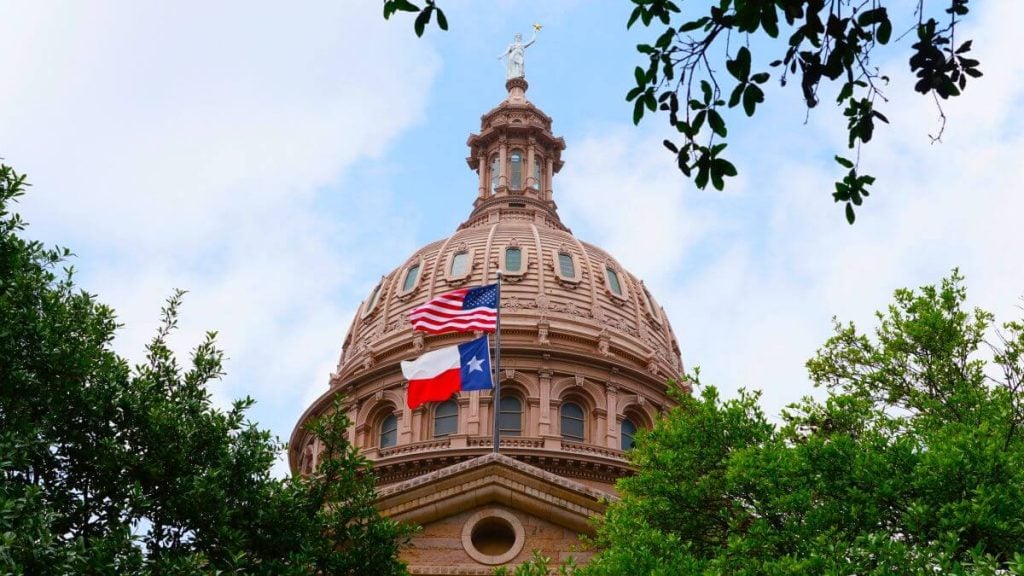
Democratic state Rep. Salman Bhojani submitted a bill that would impose state-specific regulations on prediction markets. His House Bill 598 would not ban sports or political markets, but focuses on prohibiting categories including war, terrorism, death, immigration enforcement, and natural disasters.
It would also implement other restrictions on prediction markets in Texas, including:
- Setting the minimum user age at 21
- Limiting advertising aimed at young users
- Banning operators from knowingly allowing users to circumvent geolocation restrictions through Virtual Private Networks (VPNs) or proxy servers
- Mandating that companies must use “commercially reasonable measures” to geolocate users and block prohibited access based on location
Texas has typically followed a conservative stance on gambling products, but it is one of relatively few states that has not taken legal action against prediction markets, or signed onto bipartisan multistate amicus briefs or communication with the CFTC.
Report: CFTC warns Kalshi over new weather markets
Politico reported that the CFTC warned Kalshi that it may sanction the company over how it notifies the commission about new products it intends to list on its exchange. A source told the outlet that an investigation has been under way for months and may result in the agency taking enforcement action.
CNBC reporting specified that the markets in question were weather-related contracts.
The current self-certification process allows CFTC-regulated exchanges to start listing new products without express approval from the commission, unless the CFTC formally objects within a short period of time. The companies themselves certify that the contracts satisfy regulatory requirements, including not being susceptible to manipulation.
Kalshi spokesperson Elisabeth Diana confirmed to Politico that the company received a warning from the agency, which she said was related to “a procedural error involving the submission of a handful of contracts, many of which weren’t live.” Diana said Kalshi was already addressing the issue.
Polymarket lays off employees, cuts contractors
Polymarket laid off some full-time employees and sharply reduced its contractors, especially in marketing, Front Office Sports reported Wednesday. Two sources told the outlet the reorganization aims to “professionalize” the company ahead of a possible IPO as soon as 2027.
“As we’ve grown and brought on new leadership, we’ve reorganized to set the company up for its next phase of growth, which has meant a lot of new hires, changes in personnel and letting some people go,” the company said in a statement to Reuters. Polymarket declined to share headcount figures.
The cuts follow the October firing of Chief Marketing Officer Matthew Modabber. Former Uber and Lyft executive and Bird founder Travis VanderZanden now oversees marketing as chief growth officer.
Warren Jenson, former CFO of Amazon, Electronic Arts, Delta Air Lines and NBC, joined in September as Polymarket’s first CFO. Other recently added leadership includes:
- Lisa Mantil, a 27-year Goldman Sachs veteran, leads institutional growth.
- Megan McGrath, a former Robinhood executive, serves as chief compliance officer.
- Malea Otranto came from Meta in August to run trust and safety.
- Paul Jordan, formerly of Nasdaq, serves as chief risk officer.
The changes come as Polymarket lost its spot as the largest prediction market to Kalshi, and investors pushed founder Shayne Coplan to bring more discipline to the business. Polymarket said annualized revenue topped $1.8bn, up from a run rate of more than $1bn in June.
With files from SBC Americas Business Journalist Pat Evans.